

2023 Mid-Atlantic Air Museum’s World War II Weekend Night-Engine-Run Photo Shoot
Story and photos by Corey Beitler
The Mid-Atlantic Air Museum held the 32nd annual World War II Weekend living history event and airshow on June 2, 3, and 4 at the Reading Regional Airport in Reading, Pennsylvania. World War II Weekend captures the essence of these pivotal years in world history with an event that has grown into one of the largest living history reenactments in the country and also one of the largest airshows featuring restored World War II Aircraft. The event features hundreds of restored military vehicles on display and over 1,500 reenactors from all over the United States portraying all aspects of life during the war. World War II Weekend also features live entertainment with an appropriate theme to the time period, special guest speakers, and World War II veterans in attendance as special honored guests. The event is a wonderful tribute to the “Greatest Generation” and honors not only those who served in the armed forces but also all those who worked on the home front to help the United States and its allies achieve victory.
This year, World War II Weekend featured over 30 restored aircraft including examples of fighters, bombers, trainers, and transports. For the first time ever, the Tunison Foundation’s D-Day and Battle of the Bulge veteran Douglas C-47 Skytrain “Placid Lassie” attended the event. Also attending the event were returning favorites such as the Delaware Aviation Musuem’s North American B-25J Mitchell “Panchito”, the Commemorative Air Force’s restored Boeing B-29 Superfortress “Fifi”, and their North American P-51D Mustang “Red Nose”. Rides were available in many of the historic aircraft present at the event, and several of the airplanes flew as part of an afternoon airshow on Saturday and Sunday.
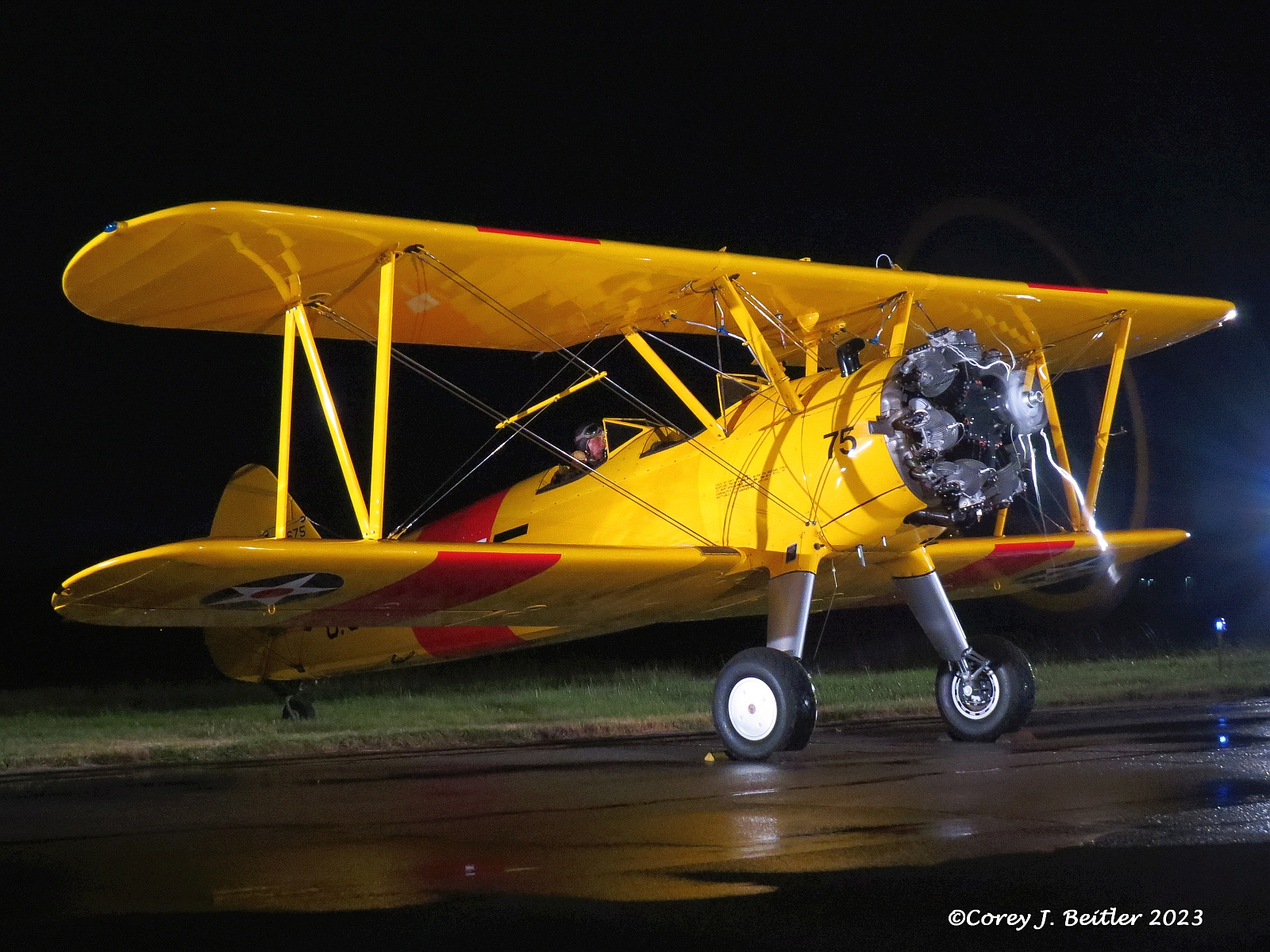
For the third consecutive year, an exclusive “Night-Engine-Run Photo Shoot” was offered on Saturday evening for professional photographers. Aviation night photo shoots have become popular with aviation enthusiasts in recent years and the Mid-Atlantic Air Museum decided to capitalize on that popularity by having a night photo shoot of their own at World War II Weekend. First held in 2021, the World War II Weekend “Night-Engine-Run Photo Shoot” was seen as an additional fundraising opportunity for the museum and a way to offer an exclusive event for professional photographers. The event is held under the guidance of the World War II Weekend Media Coordinators Dave and Christina Brown and participation is limited to approximately 50 photographers. Lighting for the event was provided by Pete Lerro from Lerro Photography. Lerro Photography has done many special night photo shoots throughout the country at lighthouses, railroads, and other airshows. The lighting expertise provided by Pete and his assistants greatly enhances the success of this night photo shoot. For this year’s photo shoot, the three aircraft chosen were the Commemorative Air Force Airbase Georgia’s Bell-P-63 Kingcobra, a Boeing VN2S-4 Stearman Kaydent owned by Christian Kappler, and the Mid-Atlantic Air Museum’s most recent addition to its extensive collection of aircraft, an Aichi D3A1 “Val” replica used in the 1970 film “Tora!, Tora!, Tora!”.
The “Night-Engine-Run” shoot was nearly canceled because of a thunderstorm that moved through the airport a few hours prior. Fortunately, the weather cleared and the night shoot went off without a problem. As the three aircraft were positioned for the shoot and Pete Lerro set up his lighting equipment, photographers checked in with Dave and Christina Brown. Supporting the event were members of the Greenfields Fire Company, who wet down the ramp prior to each aircraft being run to provide light reflection for photographers, and members of the Bern Township Police Department, who were providing security for the event. The Mid-Atlantic Air Museum ramp team also had the task of moving each aircraft into position for the shoot. Each aircraft would be run for approximately 10 minutes, allowing photographers ample opportunity to take several shots.


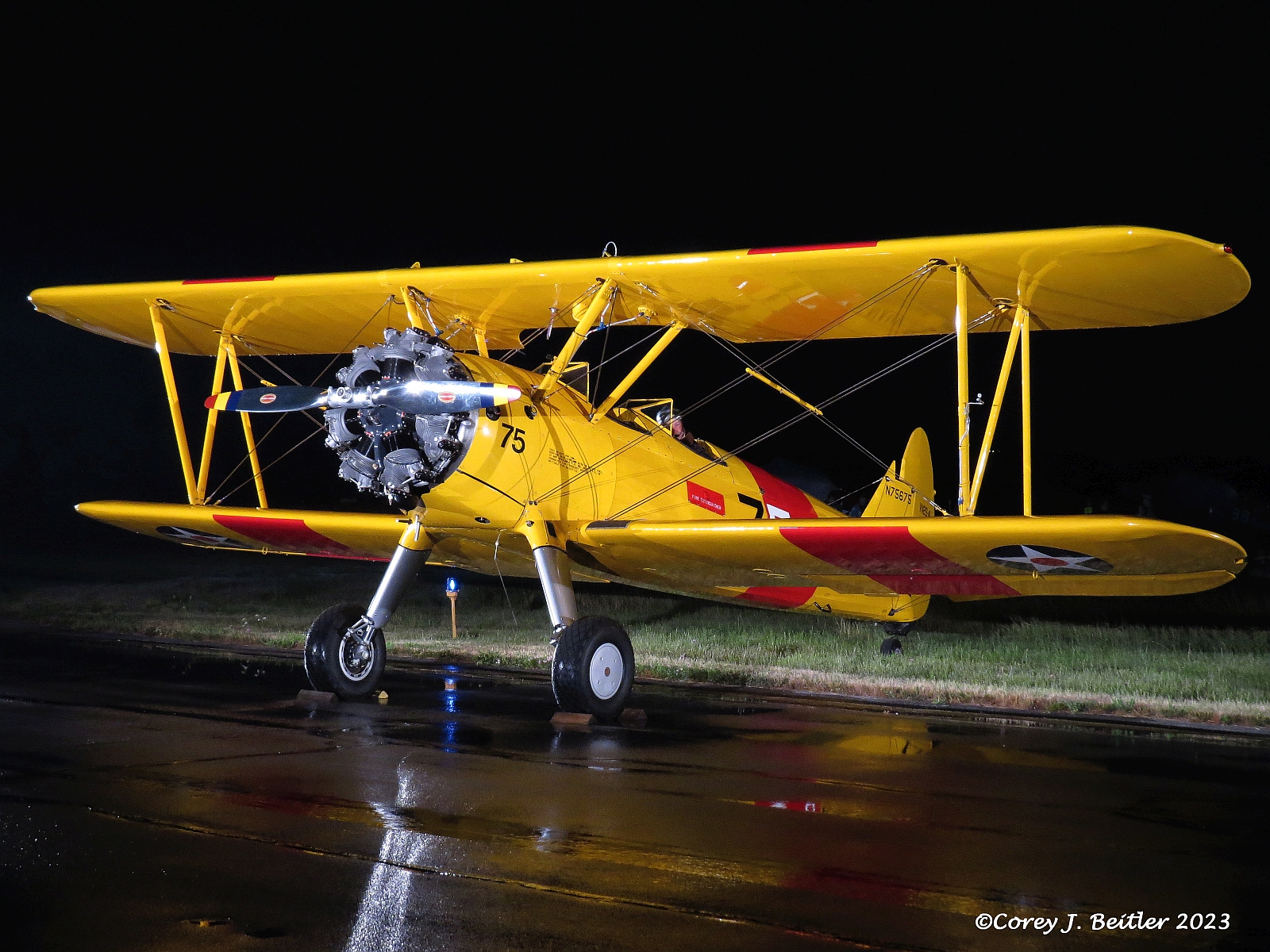


After the “Val” was shut down, the 3rd Mid-Atlantic Air Museum World War II Weekend Night-Engine-Run Photo Shoot concluded for the evening. The event was once again a success, with the photographers getting some great shots of the three aircraft under the lights and the weather clearing in time for the shoot to take place. Special thanks go to the Mid-Atlantic Air Museum, Dave and Christina Brown, the Mid-Atlantic Air Museum World War II Weekend Ramp Crew, Pete Lerro from Lerro Photography, Greenfields Fire Company, and Bern Township Police Department for helping to make the event a success. A word of thanks also goes out to John Currenti from CAF Airbase Georgia, Christian Kappler, and Betsey Carlisle from the Mid-Atlantic Air Museum for volunteering their time on a Saturday evening to run the aircraft for the photographers at the night shoot.


