Boeing B-737-100/-200 Series Scrapbook Part 1

Midway Airlines B-737-25A at the Hartford/Springfield Bradley International Airport (KBDL)
Story by Ken Kula and Don Linn, photos by Don Linn, Shawn Byers and Ken Kula
Boeing designed and built the early versions of their B-737 design for use on short distance city pairs. Powered by two Pratt & Whitney JT8D turbofan engines, it was a smaller transport which would complement the larger B-727.

Departing from its hub at Newark (EWR) is PeoplExpress (correct spelling) B.737-130, N403PE. It was another short-lived budget airline that existed for a brief 7 years, 1980-1987, and offered no-frills, ultra-low fares and rapidly grew to the fifth largest US airline in 1986. A year later deep in debit and over-expansion caused its acquisition by Frontier Airlines in 1987.
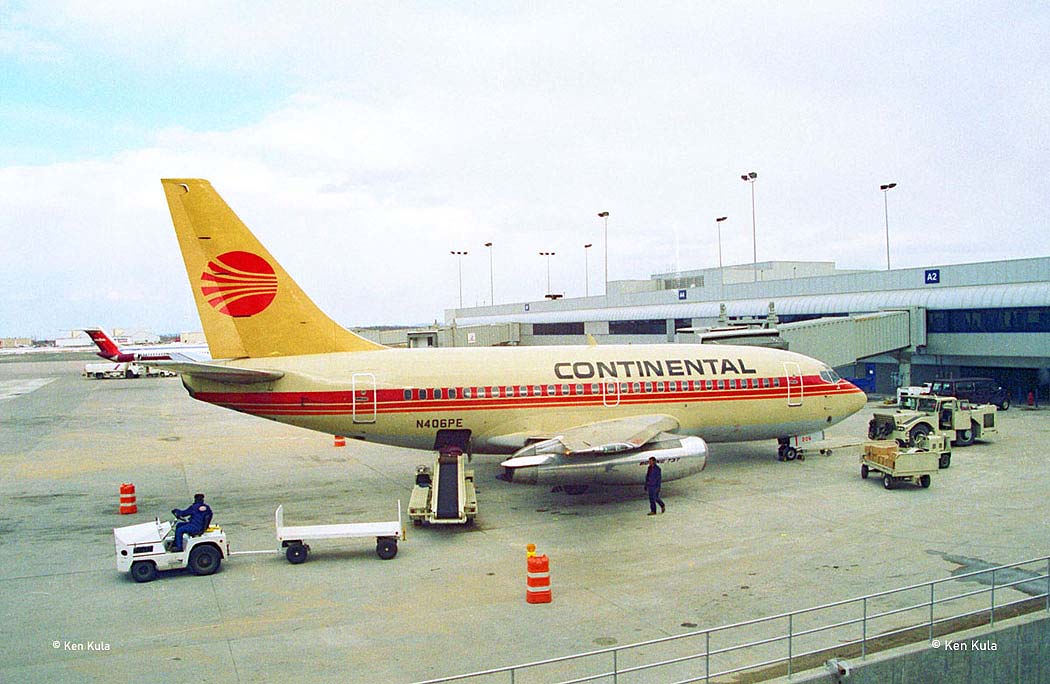
Continental Airlines B-737-130 at KBDL, Bradley International Airport… it’s a former PeoplExpress jet. This photo was taken after PeoplExpress failed in 1987.
Germany’s Lufthansa Airlines became the B-737’s launch customer in 1965, ordering 21 of the original design, called the B-737-100 series. Seating was offered for 100 passengers in this twin jet, whose competitors included the Douglas DC-9, Sud Aviation Caravelle, the BAC-1-11 and Fokker 28. The prototype’s first flight was completed on April 9, 1967 and the type was introduced into service ten months later. Only 30 airframes of this version were produced, the larger -200 series overshadowed it with better operating economy.

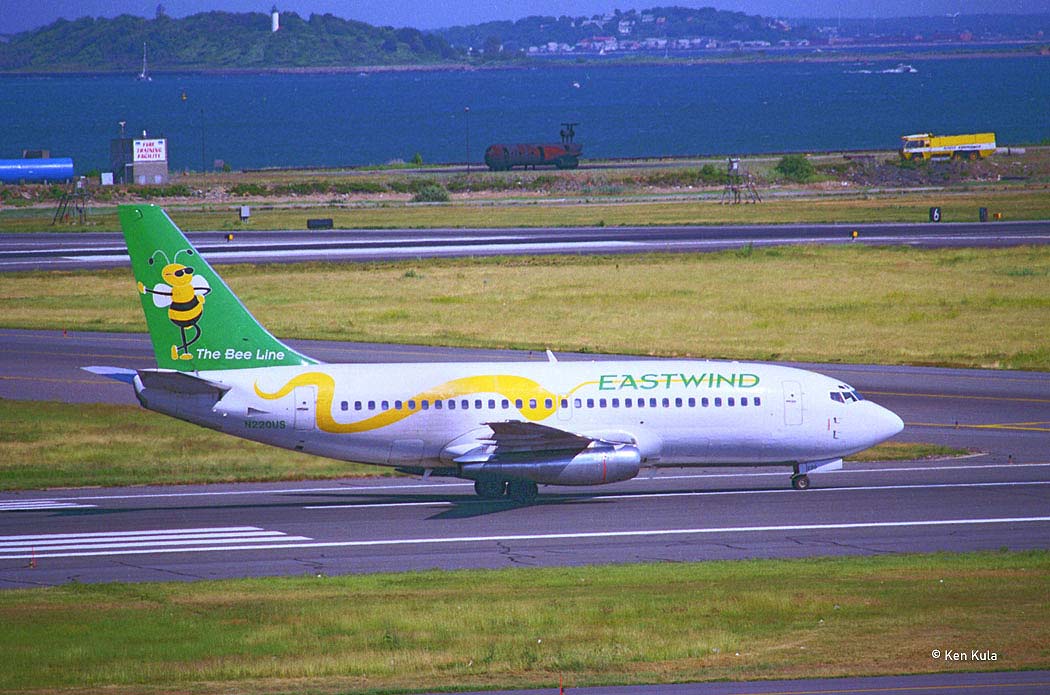
B-737-2H5 of Eastwind Airlines at KBOS Logan International Airport in Boston
United Airlines requested that Boeing build a larger version of the B-737-100 that offered increased seating. The B-737-200 version was stretched some six feet and added more fuel for a longer range. Up to 118 seats could be fitted. This -200 version, with operating improvements over the smaller -100 series, was ordered in much larger numbers (1,114 airframes) by airlines.

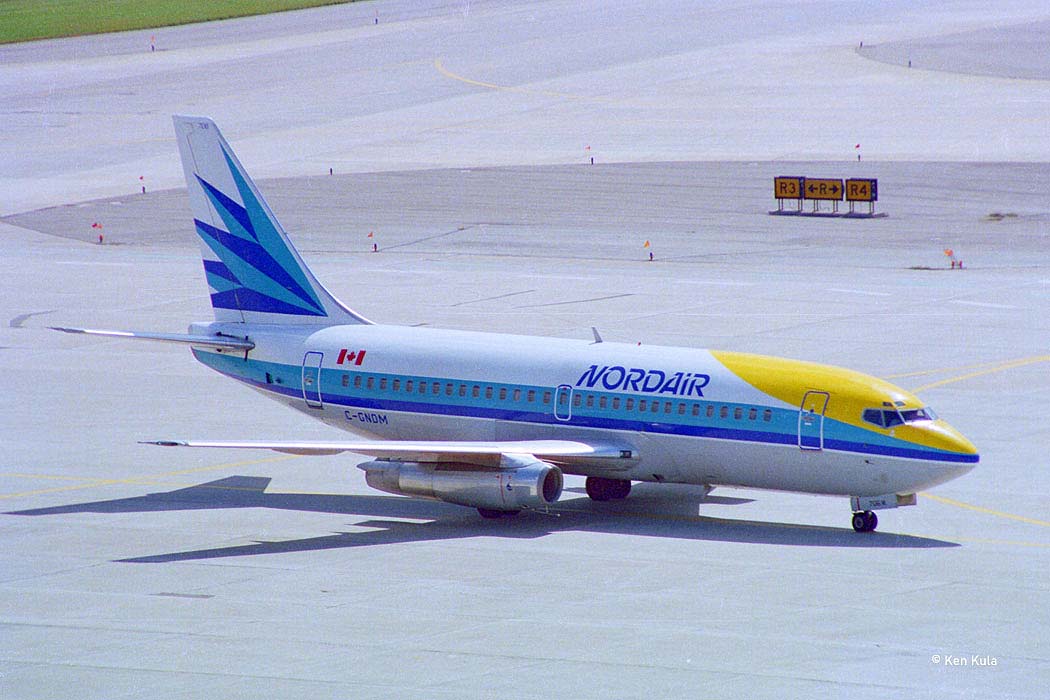
Canadian Pacific, B.737-200C, departing Toronto (YYZ) 3 June 87.

This Canadian North B-737-242C is equipped with compressed air pipes which enable gavel runway operations, the “C” denotes a Combi version with a forward cargo door and a smaller amount of passenger seats. This Canadian North jet was at rest at CYEG – Edmonton International Airport in Alberta. Above this photo is the same aircraft in Canadian Pacific colors about a decade and a half earlier.
Short field and gravel runway versions were offered, and their utility proved to be the reason that most of the final -100/-200 operators used these options in Arctic and near-Arctic operations.

CP Air B.737-211 ADV, C-CKCP, departing Toronto Pearson (YZZ) The -211 was configured for seating between 115-130 passengers. This B.737-2”11” is interesting in that the “11” was Boeing’s customer code for Wardair Canada, who never operated B.737s.

US Air B.737-209, N230AU, PHL, 19 May 90, transition scheme after Piedmont 1989 merger.

The striking red scheme of US Air Metro Jet, B.737-201, N253AU, stands out against a cloudless blue summer sky while landing at BWI on1 June 98. Metro Jet service offered no-frills low-cost fares competing with other low-cost fares offered by Southwest, Delta Express , PeoplExpress and others. The short-lived service began on 1 June 1998 and ceased operations during December 2001, following the sharp decline in ridership resulting from the events of 9/11.

A long-serving Delta Air Lines B-737-200 series jetliner starts its climb out of BWI
Here is a gallery with a small number of “Original” (the B-737-100/-200 series) versions of the B-737. Later versions would be categorized as the “Classic” (the B-737-300/-400/-500 series), the “Next Gen” series (the B-737-700/-800/-900 series) and finally the “MAX” series (MAX8/MAX9/MAX10 series).
We’ll be publishing another scrapbook with more “Original” series jet photos on April 15, 2026… see you then!