Story and photos by Scott Jankowski
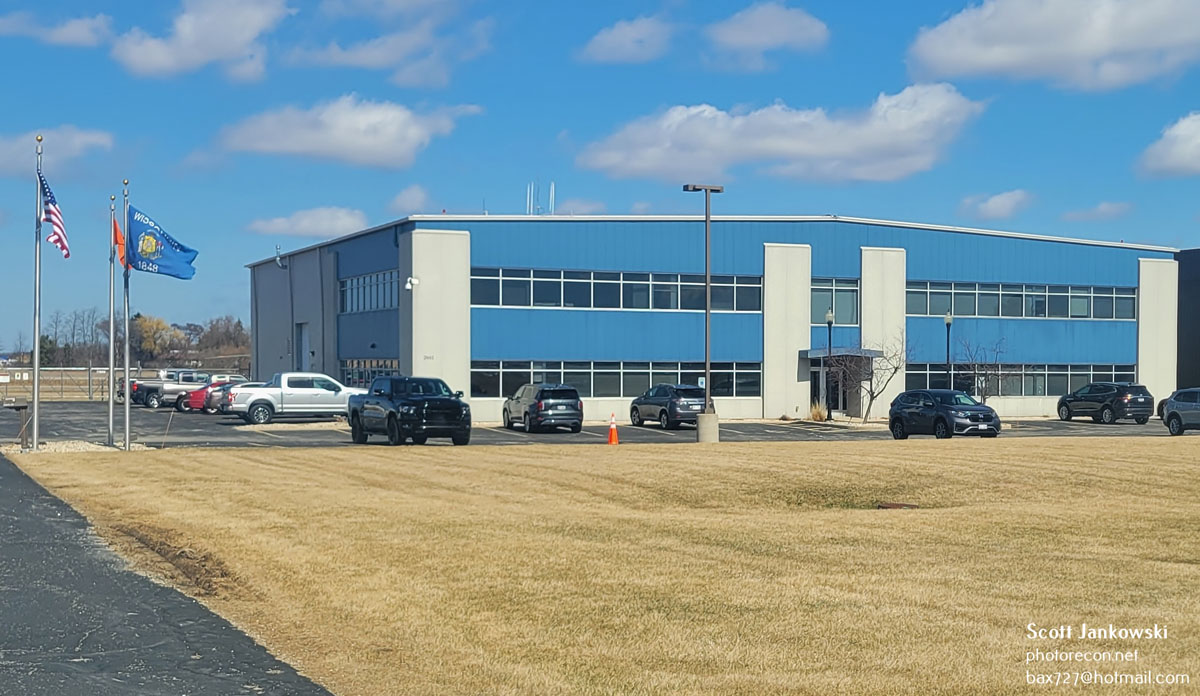
You see and hear them in your community, 24 hours a day, 7 days a week, 365 days a year. You see and hear them during the day, at night, on weekends, holidays, and in all sorts of weather conditions. You see and hear them on the news, most of the time under the most unpleasant of circumstances, when time is critical and when lives are on the line. These are the men, women, and the aircraft that make up your locally based Critical Care Helicopter Air Ambulance Transport program. Here in the Southeastern Wisconsin area that would be Flight For Life with its Headquarters at the Waukesha County Airport with bases at the Burlington and Hartford Wisconsin Municipal Airports. I recently had the privilege of spending some time at the Burlington Wisconsin Base and the Waukesha Wisconsin Headquarters, Maintenance Facility and Communications Center. I had the opportunity to sit down and talk with the extraordinary men and women about their story and vision to be the premier Critical Care Air Medical Transport Program. Their vision is to serve our communities by linking those with illness or injury to resources which provide the optimum in medical care and outcomes.
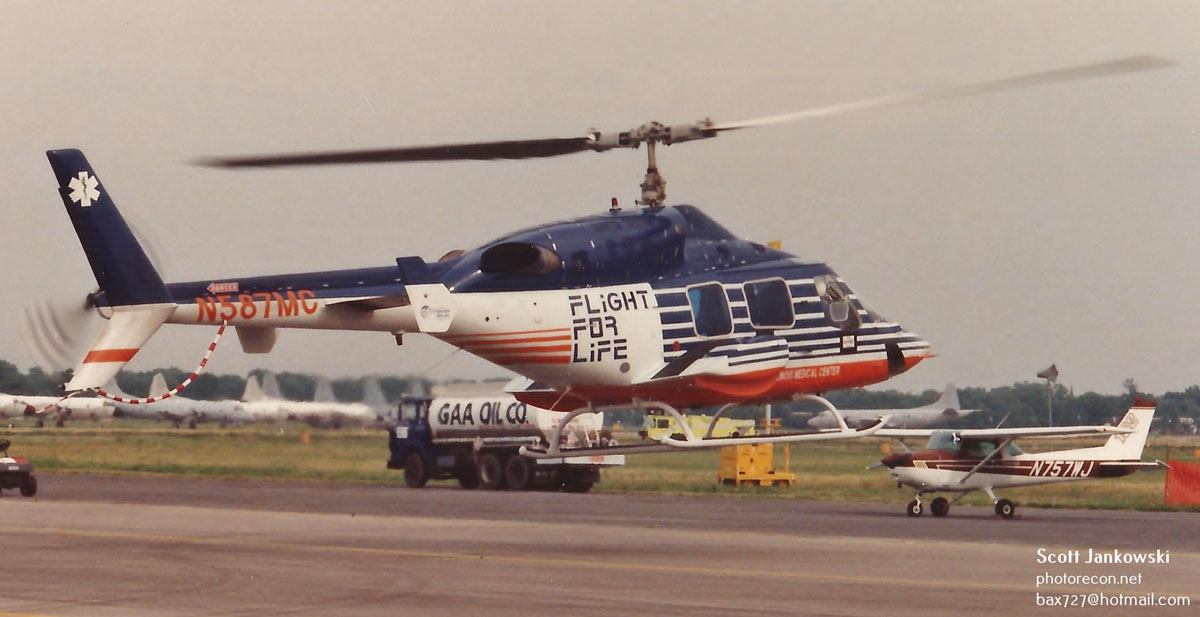
Our story starts 41 years ago, in 1984, when the Flight For Life Founders Barbara Hess, the first director, along with Joseph Darin, Chairman of Emergency Medicine at the Medical College of Wisconsin and Jim Ryan, the President of the Milwaukee Regional Medical Center started the program. The Flight For Life program, the first of its kind in the state of Wisconsin, along with their first helicopter, a Bell 206L completed its first patient transfer from Eagle River Wisconsin in January of 1984. Flight For Life initially operated out of the Froedtert Hospital complex from their sixth-floor heliport, refueling facility, and hangar, a facility they still maintain for their use as well as other Air Ambulance companies. In 1986 they transitioned to a MBB BK-117 helicopter. Fixed wing aircraft were added in the form of the Beechcraft King Air B90 which allowed Flight For Life to operate anywhere in North and South America. The King Air’s would be withdrawn in order to allow Flight For Life to focus on helicopter operations. In 1987, a second base opened at the Northern Illinois Medical Center located in McHenry Illinois using the Bell 206L helicopter. More growth and change would follow when in 2008 Flight For Life would move from its base at Froedtert Hospital to its current home and headquarters at the Waukesha County Airport, Crites Field. The decision for this move was two-fold according to Flight For Life Executive Director Mr. Leif Erickson, “The first was weather related as Waukesha does not see as much fog and limited visibilities than locations closer to Lake Michigan which makes operations difficult, also the population growth West and North of the City of Milwaukee contributed to this decision.”
*The photo of the Bell 206 is courtesy of Flight For Life*
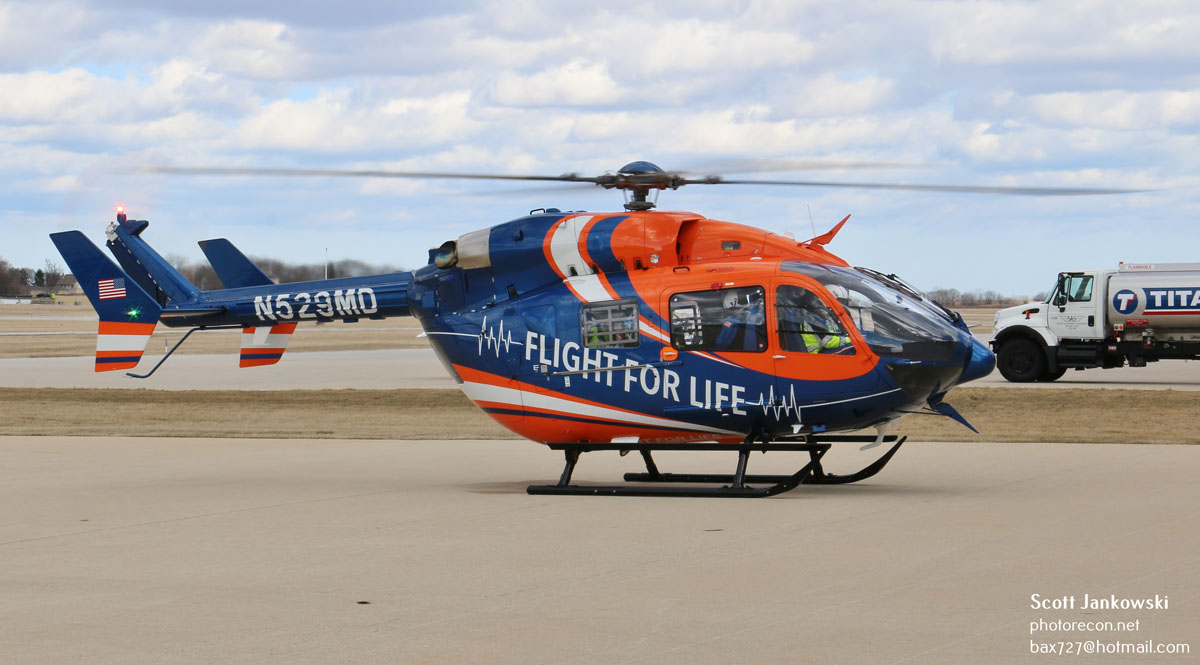
In 2008 a third base would be opened at the Fond du Lac Wisconsin County Airport along with a third helicopter. In time the bases at McHenry and Fond du Lac would be closed but new bases would be announced located at the Hartford and Burlington Wisconsin Municipal Airports. Another milestone was reached in February and March of 2022 when two brand new Airbus EC145C-2e helicopters were delivered in the new and current color scheme. The Burlington base would open in November 2022 and the Hartford base would open in September of 2023. Both of these locations feature a complete inventory of medical supplies including a supply of whole blood and plasma. Mr. Erickson commented that “fifty percent of our transport volume is North of Interstate 94 and fifty percent is South of Interstate 94 so the Hartford and Burlington locations made sense. With these locations we have significantly improved our response times to the surrounding communities.”
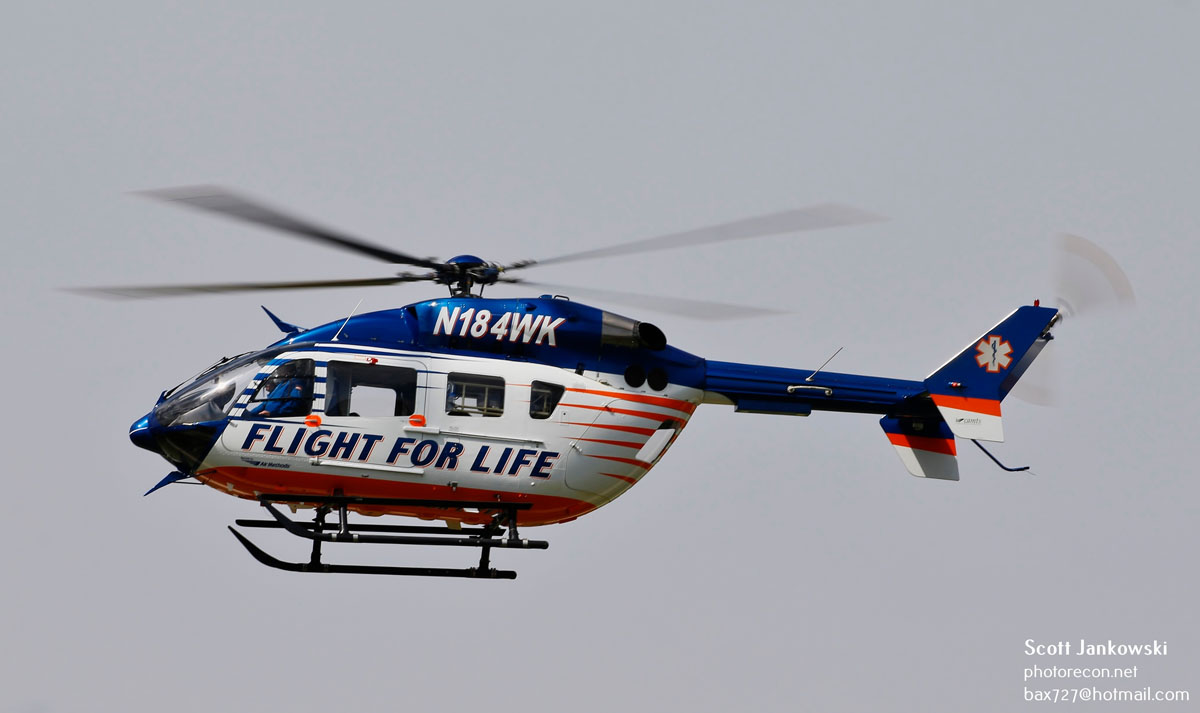
The two EC145C-2e aircraft, manufactured in 2021 and are part of the current fleet are registered N648BH (C/N 9869) based at Burlington and N529MD (C/N 9870) based at Hartford. With the addition of these two helicopters, it allowed Flight For Life to move its 2008 manufactured Airbus EC145C-2 registered N184WK (C/N 9171) into a dedicated backup roll based at the Waukesha Headquarters. Having a dedicated backup is something very few Air Ambulance companies have, allowing Flight For Life to continue operating at the same capacity when maintenance needs arise. The “E” model is powered by twin Turbomeca Arreil 1E2 Engines which give the helicopter a top speed of 167 miles per hour and a range of 423 miles. The “E” model has several enhancements over the “C-2” model and features the Genesys Aerosystems’ instrument flight rules (IFR), and the HeliSAS Autopilot and Stability Augmentation providing a safety upgrade and workload reductions for the pilots. The helicopters are also equipped with the Outerlink Global Solutions IRIS combined voice, video, and flight data recorder. This system allows better pilot training opportunities as well as providing more real-time operating information, which is a major safety improvement. Both of these helicopters are also equipped with the Genesys Aerosystems’ IDU-450 EFIS system. The Integrated Display Units (IDU) and Electronic Flight Instrument System (EFIS) allows the pilot to configure the helicopters display screens to show flight instruments, moving maps, traffic, terrain and more. This all-glass cockpit, along with digital avionics displays increases safety by centralizing the pilot’s scans to one or two areas.
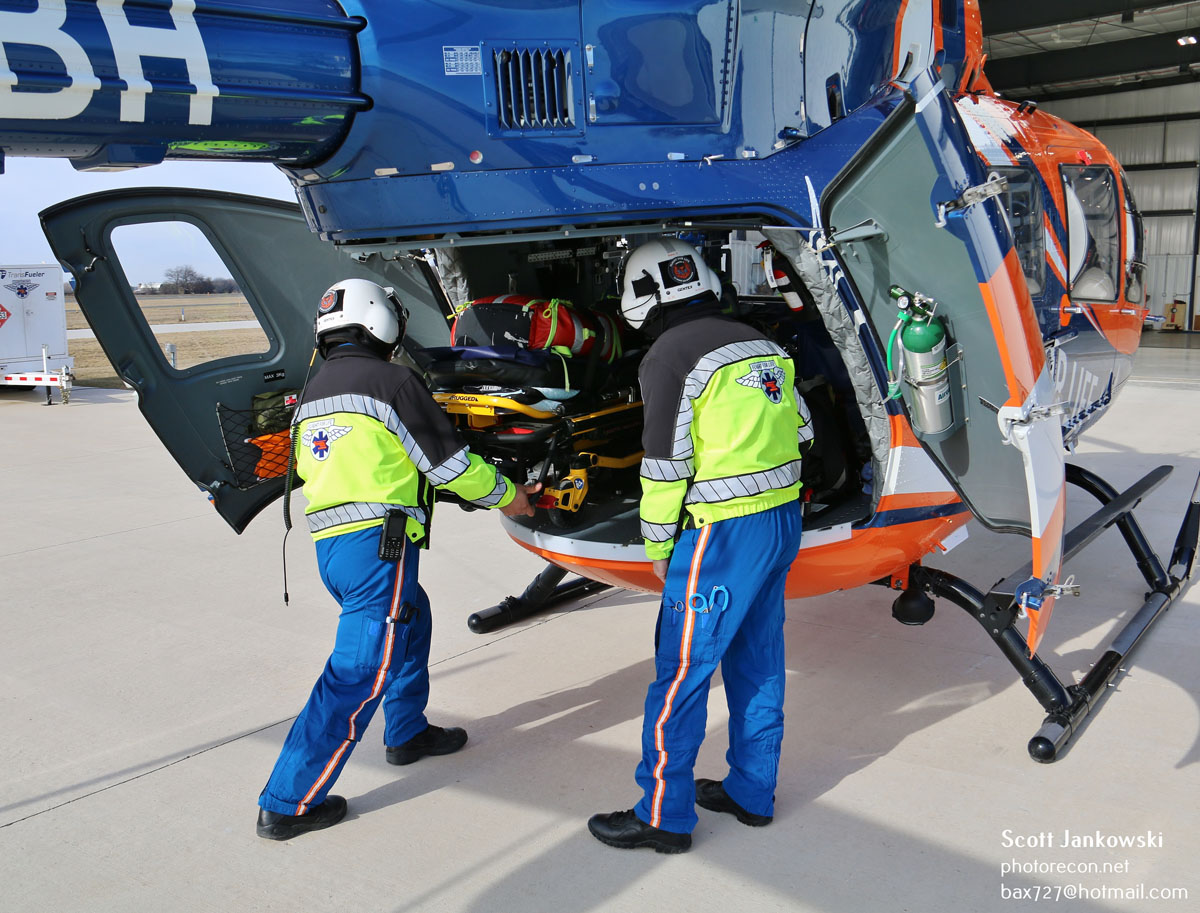
Mr. Erickson offered his comments on why Flight For Life decided to stick with an Airbus product as opposed to a competitor such as Boeing. “The 145 is a great aircraft due to its durability, payload, and lift capacity. With our volume split roughly 70% inter-facility/hospital transfers and 30% on scene or trauma calls (more volume in warmer months) we can transport accident, cardiac, or stroke patients. We can also transport neonatal patients in an Isollette which is a type of incubator for pre-mature babies that provides a controlled environment for them. We are also able to fly Extracorporeal Membrane Oxygenation (ECMO) patients.” ECMO is a lifesaving device that provides temporary support to the heart and lungs when they are unable to function properly. When ECMO patients are transported a Perfusionists who specially trained to run the ECMO machine is also on board. The large clam-shell style rear doors and self-contained Stryker stretcher with portable oxygen aids in patient loading and unloading. Flight For Life’s goal is to be airborne within ten minutes of getting the initial call.
The Flight For Life mission is to provide safe, high quality, customer-orientated, evidence- based medical transportation, with a commitment to education. Pilot Pete Buck, retired Marine Corp Colonel, offered his comments on their mission; “We have four pilots here at the Burlington Base and two dedicated mechanics. We run two shifts, a 0730-1930 and a 1930-0730 shift. FAA Regulations limit us to twelve hours of duty time or fourteen hours if we are in flight with a patient. The pilots that live in the local area work seven days on and seven days off. The nonlocal pilots will work two weeks on and two weeks off. We are here 24/7 365 days a year and cycle between days and nights, so everyone stays current with day and night flying. We are Visual Flight Rules (VFR), and Instrument Flight Rules (IFR) qualified and are able to fly GPS (Global Positioning System), ILS (Instrument Landing System), and VOR (Very High Frequency Omnidirectional Range) approaches. We are also certified to fly GPS approaches into eight local hospitals.”
Colonel Buck continued; “We fly with different crew members every day but with established Standard Operating Procedures (SOP’s) everyone knows their part of the mission inside and out keeping safety in the forefront.” Safety is of utmost importance in the Flight For Life organization “Scott Rinzel, Flight For Life Market Development Manager spoke about the safety culture. “At Flight For Life we believe in Just Culture and use it as our guiding principle.” In healthcare Just Culture promotes open reporting or errors and near misses focusing on learning and improvement rather than blame, and fostering a safe environment where individuals feel comfortable speaking up about safety concerns. Colonel Buck added the following about the safety culture. “At the start of every shift we have two briefings. One is a combined briefing with every team and location involved, the second is just between the three on duty crew members. We cover our SOP’s as well as a weather briefing for the local area and the surrounding states. We service all of Wisconsin, out to the Iowa border, into the Rochester Minnesota area, Chicago Illinois and the Upper Peninsula of Michigan.
Colonel Buck added “A typical mission for us is approximately ninety minutes with roughly .8 or .9 actual flying hours. The balance of the time would be on scene time stabilizing the patient or time in the hospital facility before or after the flight. One of the longer flights we routinely make is up to Marquette Michigan in the Upper Peninsula, which is roughly a five-hour mission with four hours of flight time total. A mission of this nature will see an extended amount of ground time for the nurse/medic at the pickup point as the pilot will need to refuel prior to departing Marquette. One of the more challenging aspects of our operations is landing at night on a hospital rooftop helipad which could be twelve to sixteen stories in the air where winds are stronger, air currents off surrounding buildings are more pronounced, and you have fewer visual references.” Due to these factors all crew members are trained and use Night Vision Goggles (NVG’s) which are identical to the military grade Anvis 9’s.
Flight for Life handled seven hundred and thirty service calls in 2024 and handled 41,077 total patient transports in its 41 years. Flight Nurse Zachary Baker and Flight Paramedic Abraham Fuentes, both based out of Burlington, provided some additional context on their side of the mission. “We are a full Intensive Care Unit (ICU) and Emergency Room (ER) in the back of the aircraft with not a lot of room to operate. We have ten minutes to be in the air after the initial callout, most of our flights are pretty short, so we will get our patient briefing once we are in the air, and sometimes right as we are beginning our 360 reconn. for landing. Once on scene we will stabilize the patient prior to transport, all the while we keep the rotors turning in order to keep ground time to a minimum. We look at what is called the Golden Period, if you can get a patient, especially a trauma patient, to definitive care within an hour it increases survivability.
Mr. Baker and Mr. Fuentes also spoke about safety and always keeping focused on patient safety and their own safety. “While focused on patient care, we are routinely assisting the pilot with “Eyes Outside” the aircraft, we are constantly looking out for additional air traffic when airborne. We are watching for obstacles in the landing zone (LZ) especially at night when landings are more difficult. We pride ourselves in being safe and do not take it for granted.” Mr. Baker also commented on other mission aspects, “We have a total of twelve Flight Nurses and Flight Paramedics at the Burlington Base, we work a twelve hour/twenty-four-hour shift for a total of thirty-six hours a week with a minimum of ten hours off between shifts. It does not matter if we get a call 30 minutes prior to the end of our shift, we are going, we didn’t get into this to sit around the base.”
Flight Nurse Ann Mirsberger, who is actually based at Hartford, was at the Waukesha Base swapping helicopters at the time I was there and offered the following comments about their mission. “Our on-scene calls increase in the warmer months through Summer. Some of these calls are more memorable than others as they are never routine, but some endorse all of your senses, smell, and appearance. You will recall a conversation you had with the other crew members, the number of agencies involved, multiple aircraft involved, and if the patient was an adult or a child. For every mission we follow the same procedures, load up, get airborne, and once in the air we will get some basic patient information. The reason behind that is we do not want to cloud our sense of safety. Once we are aware of the situation with the patient we collaborate with the Pilot and the Flight Paramedic. We talk over any of the one off’s that could throw a wrench in the works, bottom line we want to ensure a favorable outcome. If you consistently keep that state of mind, it reaps a higher performance value rather than skipping a step or fast forwarding. If you keep it step by step with safety in mind things work out much better, just like the Burlington-based crew it is always safety first. Ms. Mirsberger finished her comments by adding that she has flown quite a few missions to the Upper Peninsula of Michigan including Marquette, Hancock, and Manistique. I have also been out to Rochester Minnesota and the Mayo Clinic in my eight years of service with Flight For Life.
In 1996, Flight For Life became the first program in the state of Wisconsin to achieve accreditation from the Commission on Accreditation of Medical Transport Systems (CAMTS). CAMTS is an independent, nonprofit agency that audits and accredits medical transport services worldwide to ensure patient safety and quality of care. Flight For Life has full CAMTS accreditation status currently. Flight for Life is equipped to handle the most critical patients with all medical team members receiving extensive training in advanced techniques and procedures to ensure they provide optimal patient care in any setting. Flight For Life can and does transport the most complex of patients including Cardiac, Stroke, Trauma, Pediatric, Neonatal, burn and neurological injuries among many others. Mr. Rinzel commented “Our crews are in a constant state of readiness; it is pretty cool to see.”
What does the future hold for Flight For Life? According to Mr. Erickson “It all depends on volume, if the volume dictates, we may look into fixed wing aircraft again. If we do the top choice is the Pilatus PC-12. Its large door, range and durability make it a perfect choice.” Mr. Baker offered these final comments “People know we exist, but they know nothing about it, what we do and how we do it.” The next time you see one of their helicopters or crew members this article should give you a brief glimpse into who these “Angels with Rotors” are, what they do, and how they do it. Until next time, “Blue Skies To All!”
I would like to extend a very sincere thank you to the following people for their time and hospitality in making this article possible. Mr. Scott Rinzel, Mr. Leif Erickson, Colonel Pete Buck, Mr. Zachary Baker, Mr. Abraham Fuentes, and Ms. Ann Mirsberger. Thank you as well to all the other Flight For Life personnel that are dedicated to their mission.