Back to the Beach: NAS Oceana Airshow 2022

Naval Air Station Oceana hosted their first public airshow since 2019 on September 17th and 18th, (the 2021 event was held but remotely). Spectacular weather, save a few cloudy moments, made it feel great to be back onboard at one of my favorite airshow venues, affectionately referred to as “the Hornet’s Nest”.
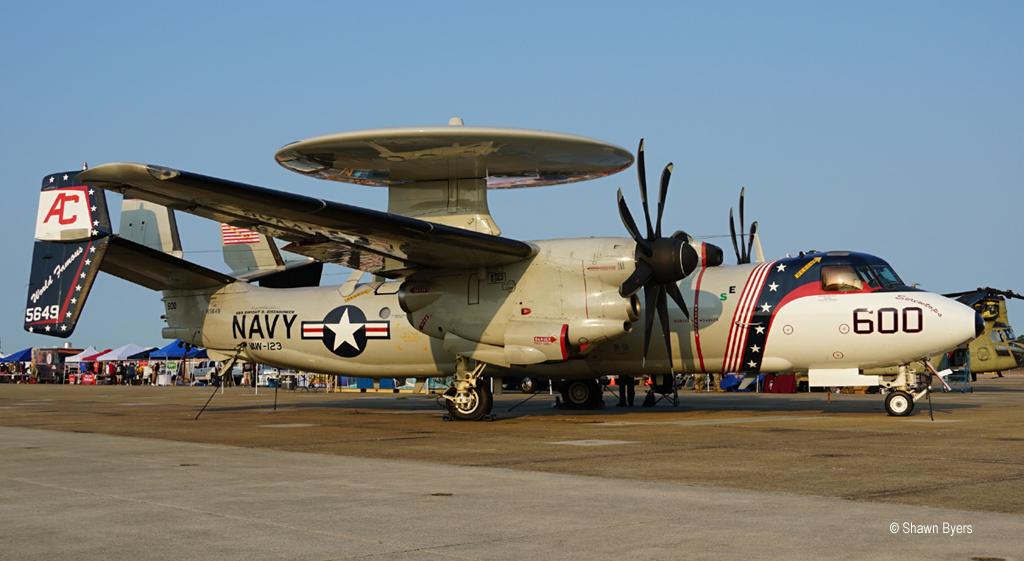
This was part two of the Maryland/Virginia airshow split so I did not take part in the Friday Media/DOD/STEM activities. I entered Saturday morning through the main entrance. The first aircraft encountered on static was a CH-53 but the second encounter was with a boldly painted E-2C Hawkeye from VAW 123, “Screwtops”. Also at this end of the ramp was a C-2 Greyhound and a CH-47 Chinook displayed with all the panels open.
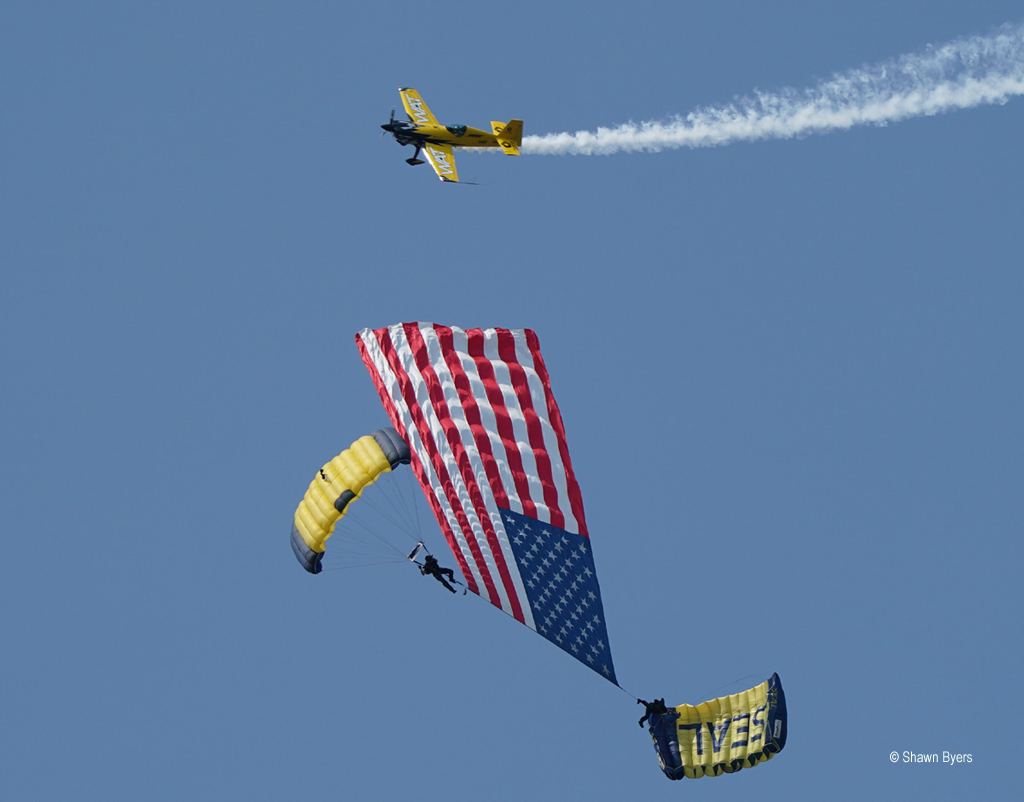
The flying started at 1000 on Oceana’s Runway 05R/23L. Morning sun is excellent starting behind and slightly to the right. The first aircraft airborne was a CH-53 from the Sea Dragons of HM-12 with two groups of jumpers aboard. A traditional salute to veterans features motorcycles of the Patriot Guard and Corvettes that ride from the west end ramp to show center. Then the Navy’s Leap Frogs opened the show with the flag jump. A second jump with the Explosive Ordnance Disposal Team took place utilizing very different and much larger canopies. On Sunday, the Leap Frogs delivered the flag vertically between two jumpers, only breaking off at about 200 feet. They performed an afternoon jump too and suffered an actual chute failure. All landed safely.
Jesse Panzer performed next in her purple Pitts biplane.
The jet noise started with the USAF Viper Demonstration Team featuring “Venom”, a specially painted demo jet, piloted by Captain Aimee “Rebel” Fiedler. Bob Carlton then performed in his Salto Sailplane which has a small jet engine assist.
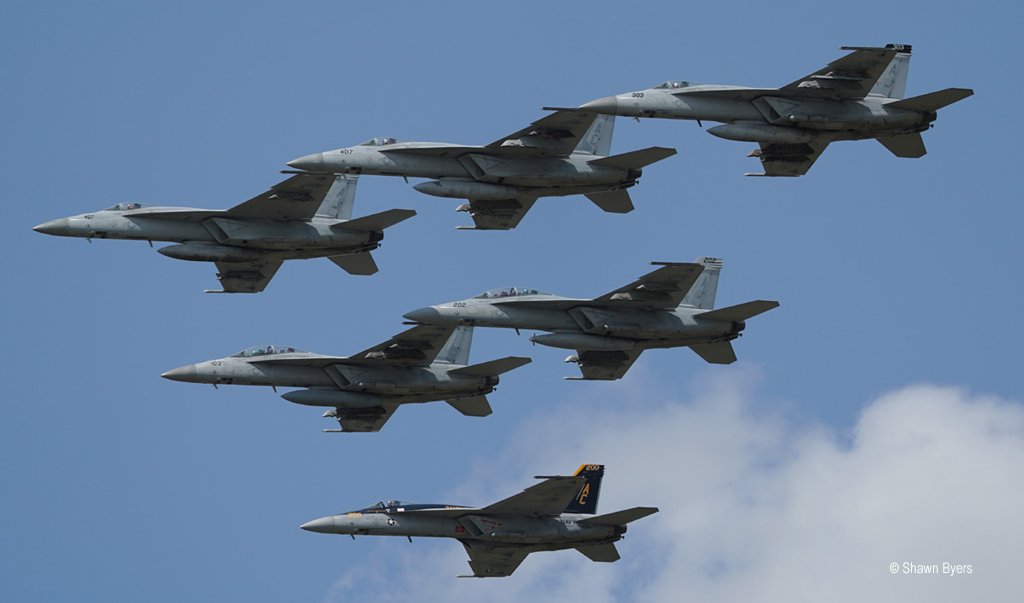
Around 12PM, the Fleet Airpower Demonstration launch consisted of seven F/A-18E and F Super Hornets. Airshow Right is the place to be as some of the Hornets get airborne and turn out early showing off their topsides. Multiple squadrons were represented with no two from the same squadron. That was a nice change from the norm. I just wish more of them were color birds. Represented were the Black Lions, Golden Warriors, Gunslingers, Rampagers, Swordsmen, Tomcatters, and Wildcats.
While the fleet was assembling, the Coast Guard visited from Coast Guard Air Station, Elizabeth City in North Carolina with a C-130J and HH-60J in formation. They reversed course and returned to Elizabeth City. On Sunday, only the helicopter flew by.
The Fleet Airpower Demonstration begins with a head-to-head engagement of two Hornets. One is designated as the aggressor, which is soon gunned down in a horizontal, circling fight. Another set appears and engages in a vertical fight with the same result. When the skies are clear, the other Hornets can attack the location. In sets of two, the Hornets, in tactical separation, pop and roll into precision bombing runs or strafing. Pyrotechnics were a big part of this demonstration. Other passes demonstrated the show of force, a low, fast and loud pass employing no weapons but announcing the presence and potential of American Muscle.
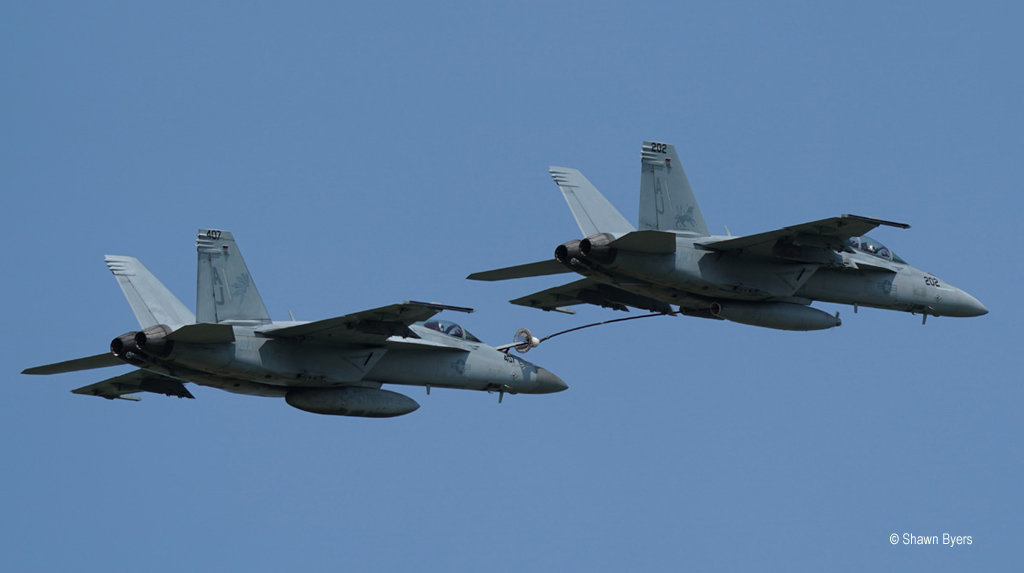
Air-to-air refueling was also demonstrated with an E model Hornet drogueing off an F model Hornet with a centerline tank. The Fleet returned in a six-ship delta formation. The seventh Hornet trails behind making a high speed pass in front of the unsuspecting crowd. All aircraft then return in smaller formations in a break to land. The jets then taxi by the crowd to parking.
After catching your breath from that 30 minutes of jet business, Skip Stewart begins his high energy routine as his Pitts biplane skims perpendicular along the runway in a nose high attitude. At the 2019 show, in ad hoc fashion, Skip flew loops through a smoke ring created by the pyrotechnics about 25 times. That was recreated this year by a designed pyrotechnic discharge.
Matt Younkin performed graceful aerobatics in his 1943 Beech 18, maneuvers this cargo plane was never designed for. Matt utilizes two smoke canisters, one under each Pratt and Whitney engine. This aircraft belonged to his father, airshow legend, Bobby Younkin.
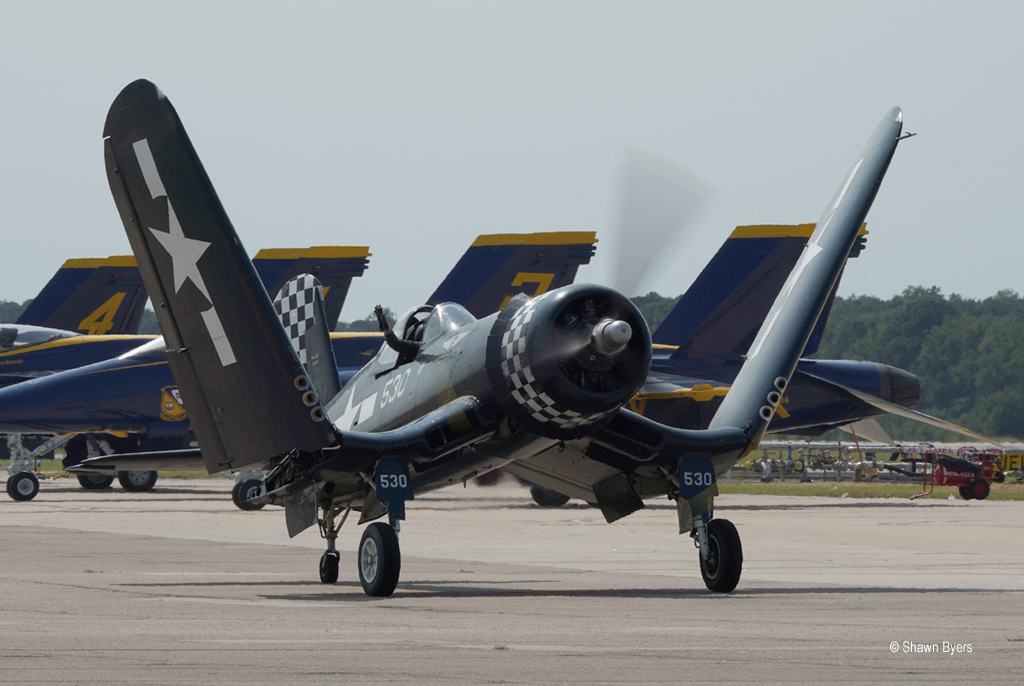
An F-4U Corsair launched into the hold for the Navy Legacy Flight. Next to launch were two F-35C Lightning IIs. It has been a routine for the Navy’s F-35C Demonstration Team to launch a primary and a spare aircraft. All aircraft went into a hold. Finally, it was time for the F/A-18F Super Hornet demonstration as the last aircraft to launch in a VFA-106, “Gladiators” color scheme and a signature dirty roll.
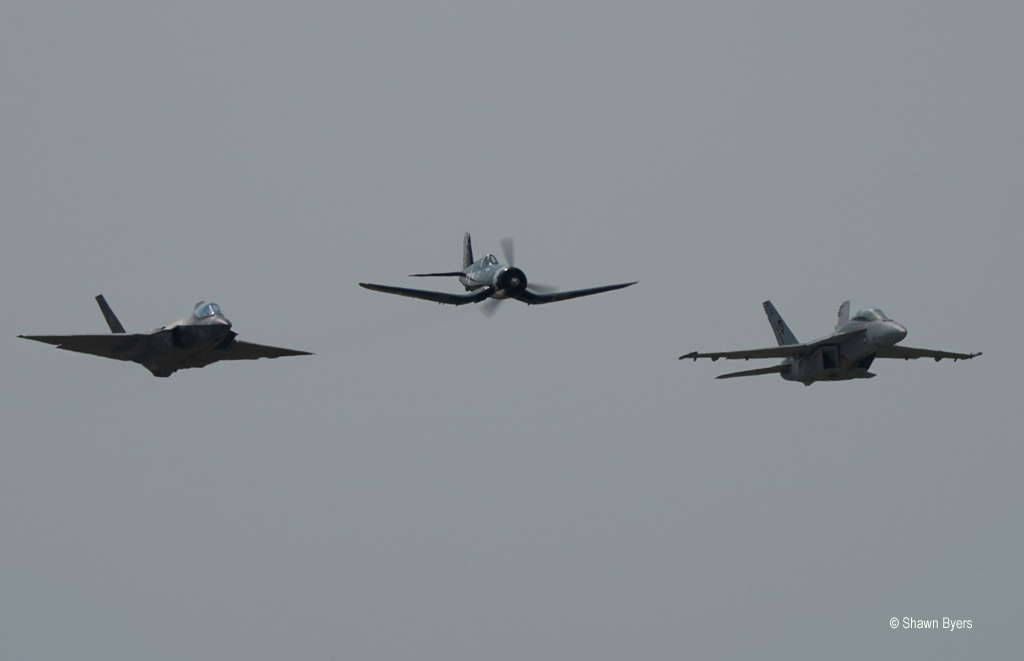
After the demonstration, the Super Hornet joined up with the Corsair and one of the F-35Cs for the Navy Heritage Flight. After the former aircraft landed, the F-35C performed a demonstration. Toward the end, the spare F-35 makes a high speed pass in the opposite direction, which I am never ready for, even though I have seen the routine 3 times. After recovering, the F-35s folded the wings for the taxi back.
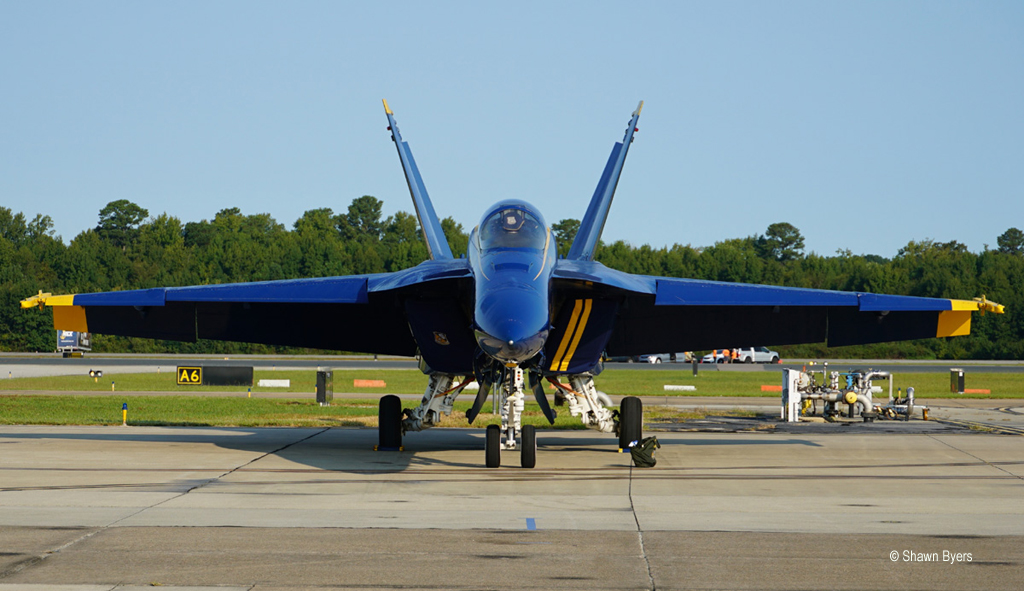
In the final slot before the Blue Angels, Michael Goulian performed in his yellow Extra 300C and had a race with the Hot Streak jet truck. After some delay for reasons I am not aware, the Blue Angels eventually closed the show.
Fast forward to Saturday night, the Beach Blast has returned. Fat Albert was seen flying around and was the jump platform for the Leap Frogs. A Super Hornet made a few afterburner passes along the beach. A U.S.Navy Band played music and the Blue Angels were in attendance.
On Sunday, the schedule was the same except for a reordering of some of the civilian performers.
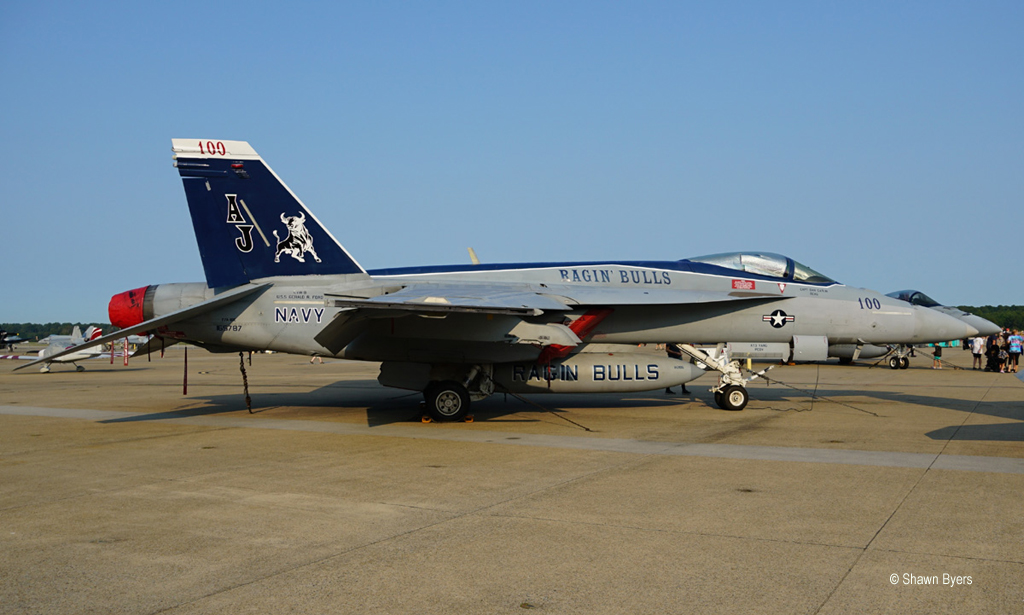
Static aircraft on the west end of the ramp included color Super Hornets from VFA 37, “Ragin’ Bulls”, VFA 32 “Swordsmen”, VFA 34 “Blue Blasters”, VFA 11 “Red Rippers” and a no color from the VFA 211 “Checkerboards”. VFA 11 and 211 recently returned from a deployment that got extended to 9 months. One last Hornet was from VFA 213 “Black Lions”, who were the winners of the MUTHA award as the best Strike Fighter Squadron at Oceana. That means their colors adorn the F-14 static aircraft off Oceana Boulevard. The attractive trophy was displayed on their merchandise table.
Additional statics at this end were a 7th Fighter Training Squadron T-38 Aggressor in blue from Langley Air Force Base, a T-6 Texan II, a Skyraider and Wildcat from the Military Aircraft Museum down the road and a PT-19. A VFC-12 Super Hornet from the “Omars” was close by on the hot ramp but did not fly.
As mentioned in the opening, it was great to be back onboard Naval Air Station Oceana. This airshow has been an annual event for more than 20 years of my life. I have attended more shows here than anywhere. I wish to thank Public Affairs Officer, Ms. Jackie Parashar for her help, especially early on Saturday morning. Fly Navy!