The National Soaring Museum at Harris Hill, New York
Story and photo by Corey Beitler
Located on historic Harris Hill near the town of Elmira, New York, the National Soaring Museum is a transportation museum dedicated to preserving the history of soaring and the design and development of sailplanes and gliders. The National Soaring Museum’s mission also includes promoting a greater knowledge of the sport of soaring, aeronautics, and related physical sciences through education, special events, and community outreach programs.

Elmira and Harris Hill have been connected to the sport of soaring for decades. In 1927, John “Jack” K. O’Meara was the first to soar at Elmira. In 1930, Dr. Wolfgang Klemperer, a German soaring pioneer who had immigrated to the United States in 1924, discovered that Elmira was an excellent location for the development of soaring as a sport in the United States. This was due to the geographical features of the region, which included rolling hills and long ridges that promoted the development of thermals and wave lift, rising air that glider and sailplane pilots can use to fly long distances. For this reason, Elmira was chosen as the site to develop a national soaring program in the United States, and soaring sites began dotting the landscape throughout the region. In 1934, a Works Progress Administration (WPA) project developed Harris Hill. The project included building an airport for flying gliders and sailplanes, hangars, and cabins for pilots and crews. Through a partnership between the Soaring Society of America, Harris Hill Soaring Corporation, and the local chamber of commerce, Elmira hosted the first 13 National Soaring Contests in the United States from 1930 to 1946. When World War II began, Elmira was chosen as one of the first sites for training glider pilots. Elmira’s close connection to soaring in the early years of its development in the United States helped earn it the nickname “The Soaring Capital of America”.

The first museum display of artifacts dedicated to soaring in Elmira was a small exhibit that was on display that was part of a local history museum at Strathmont Estate. During the National Soaring Contests of the 1950s, the competitors and organizers began discussing the building of a national museum dedicated to the history of soaring. During the 1960s, the small collection of soaring artifacts on display at Strathmont Estate was moved to Harris Hill. This movement of the artifacts was organized by the Harris Hill Soaring Corporation and Paul A. Schweizer, co-founder of Schweizer Aircraft. For decades, Schweizer Aircraft was the nation’s most well-known glider and sailplane manufacturer. The company produced gliders and sailplanes for civilian and military use and had a factory and test facilities near Elmira in Big Flats. Schweizer Aircraft produced gliders, agricultural aircraft, and helicopters at this location for over 60 years until it was closed in 2012 by Sikorsky Aircraft, which bought Schweizer Aircraft in 2004.
In 1969, the Soaring Society of America chose Harris Hill as the official site for the future National Soaring Museum. Initially, the museum was established as an independent non-profit corporation in a partnership between the Harris Hill Soaring Corporation, the Soaring Society of America, and Chemung County. In 1972, the museum was officially chartered as a non-profit educational institution by the New York Department of Education. The Soaring Society of America transferred the Soaring Hall of Fame and the corresponding records to the custody of the National Soaring Museum in 1975.

The museum officially opened in 1978. Initially, the National Soaring Museum was located in an old building that was part of the WPA project when the airport was built in the 1930s. This building had been damaged in a fire and was not a permanent home for the museum. In 1979, the National Soaring Museum replaced the building with a new 6,000 sq. ft. (1,500 m²) facility. In 1984, the museum expanded once again, with a 12,000 sq. ft. (1,100 m²) addition to the facility. This was followed by the construction of a 3,200 sq. ft. (300 m²) Collections Annex added to the museum in 1993.
Following the opening of the National Soaring Museum, soaring contests returned to Harris Hill and Elmira in the 1980s. In 1995, the National Soaring Museum and the Harris Hill Soaring Corporation hosted the first International Vintage Sailplane Meet held in the United States. The event drew 91 pilots and 49 vintage sailplanes and gliders from around the world to fly off of historic Harris Hill. The ten-day event drew over 5,000 people and drew international media coverage. The National Soaring Museum sponsored the event again in 2000, 2005, 2009, 2012, and 2016.

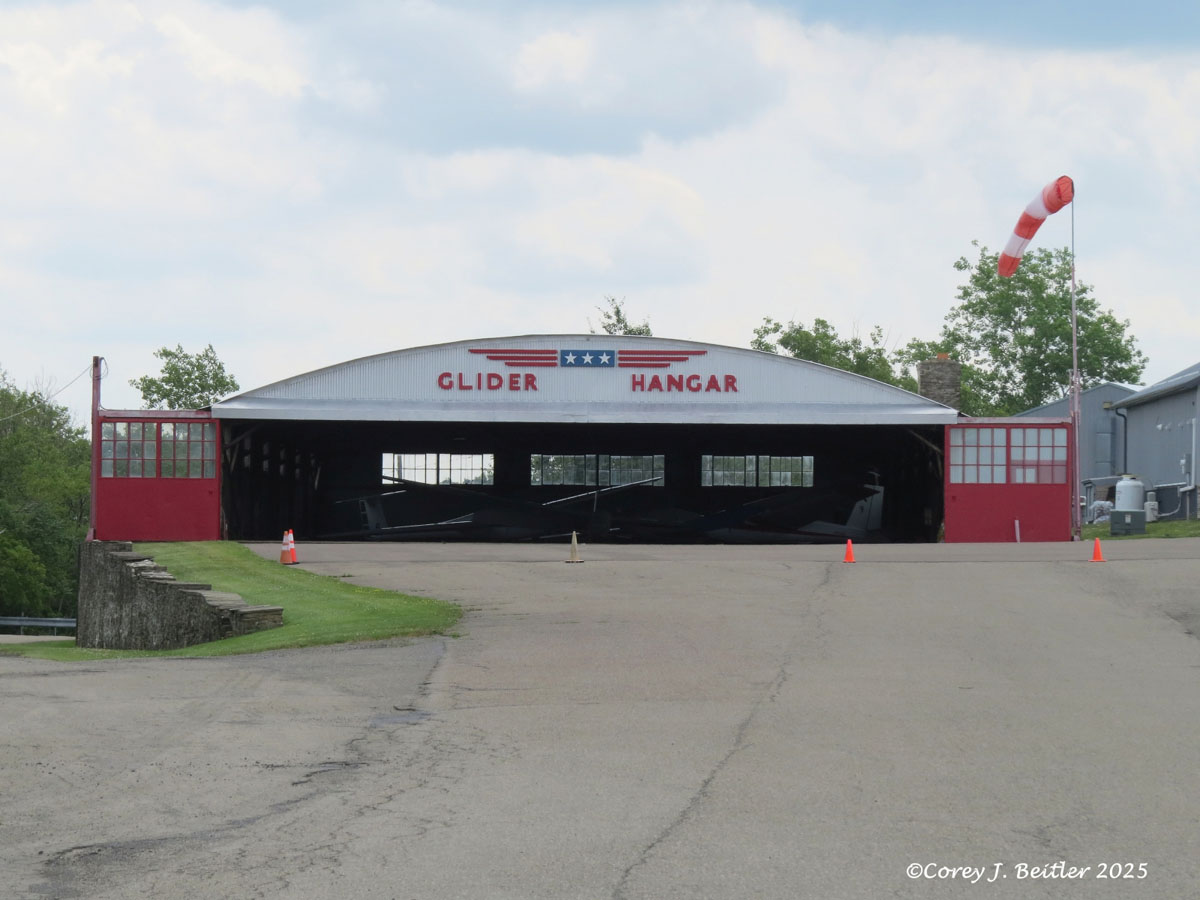
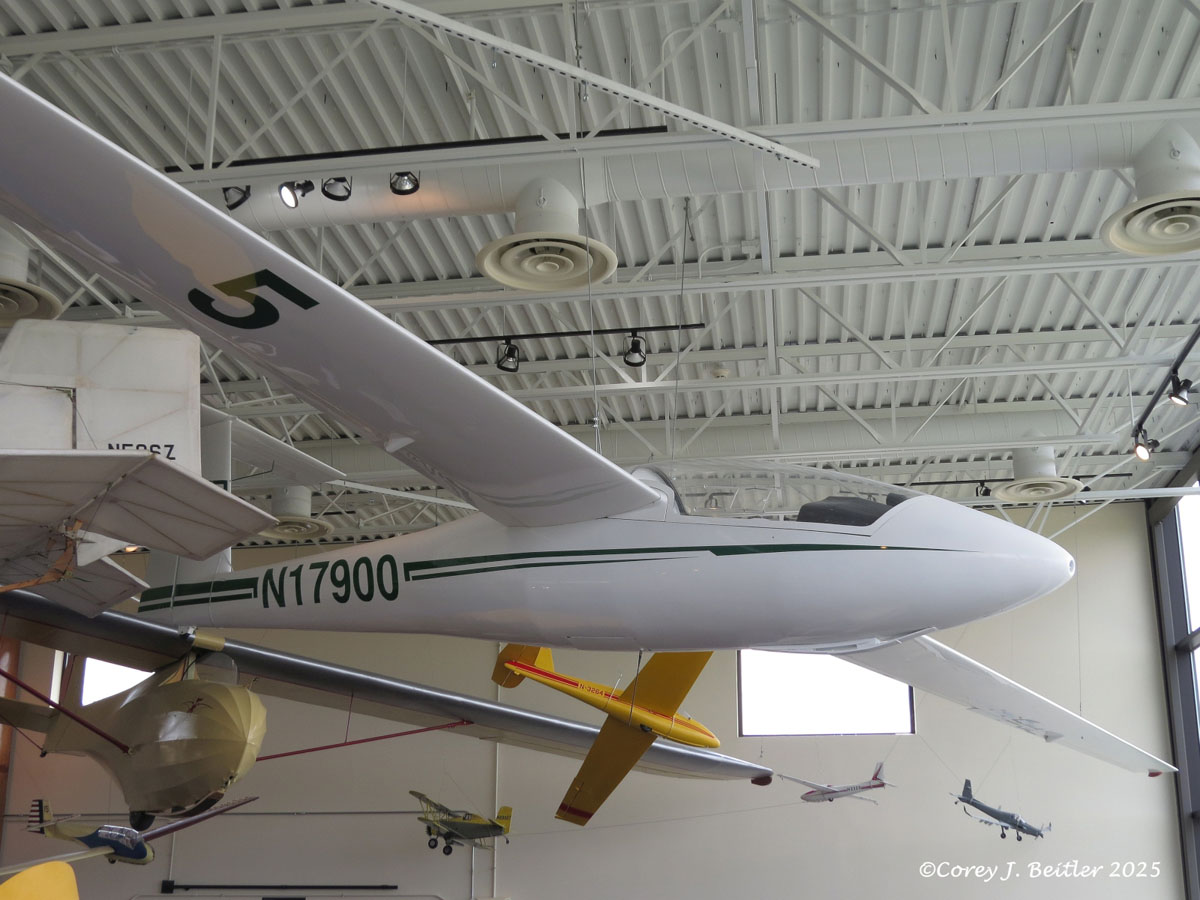
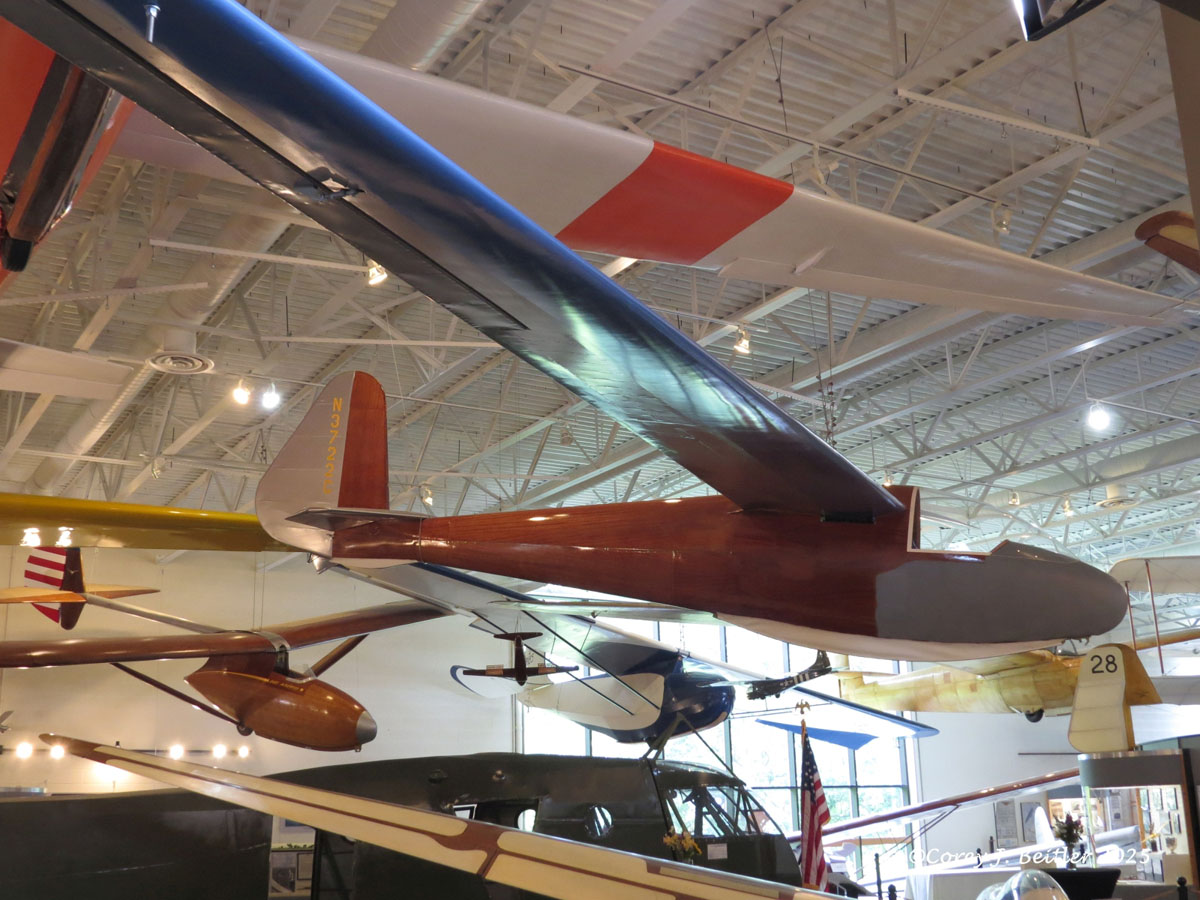
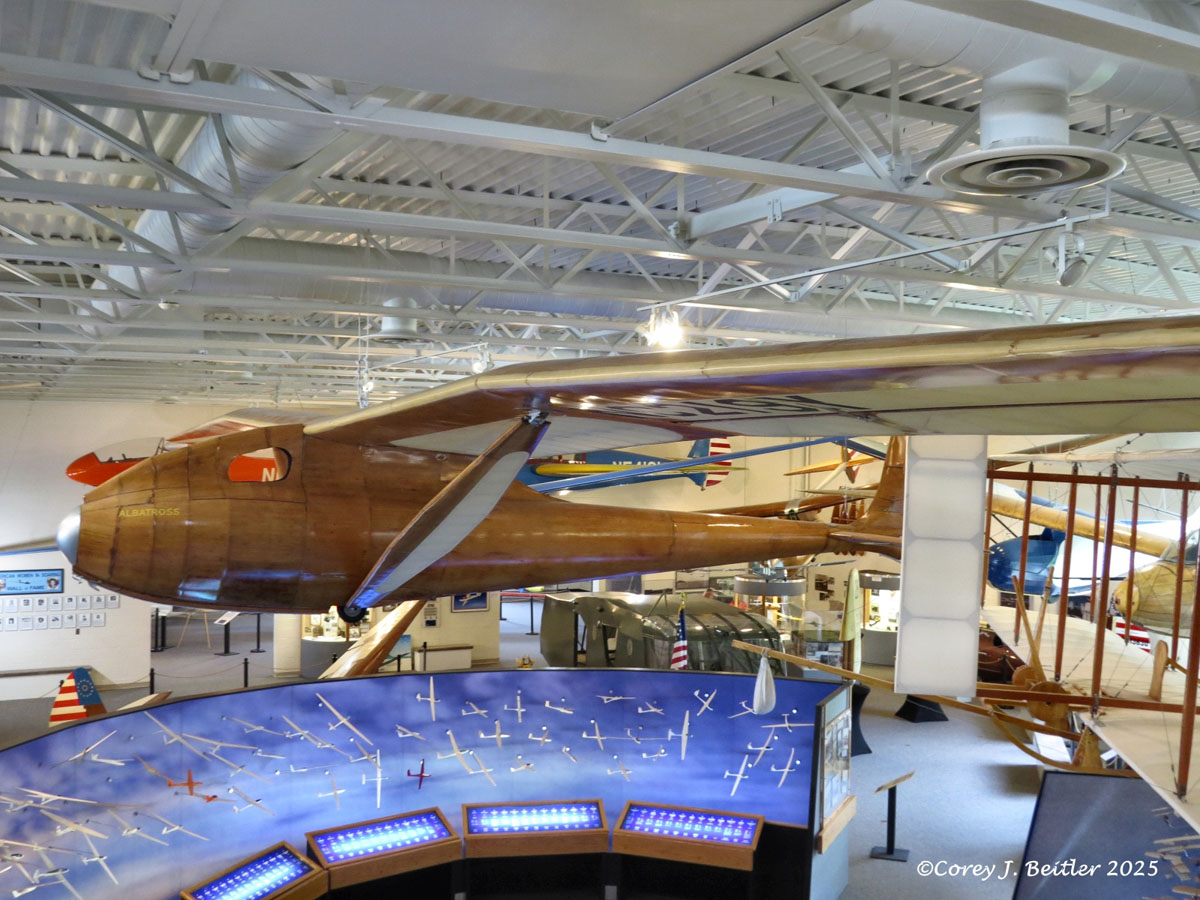
Today, the National Soaring Museum is recognized as the primary historical institution for the sport of soaring in the United States. The museum has 76 gliders and sailplanes in its collection and hundreds of smaller artifacts that tell the story of the sport of soaring and the design and development of gliders and sailplanes. Although most of the items are on display in the museum building, several are in storage, awaiting restoration, or loaned out to other aviation museums. The museum is regularly visited by aviation enthusiasts, historians, academic scholars, and glider and sailplane pilots. Harris Hill Soaring Corporation still operates at the airport on Harris Hill and offers sailplane and glider rides as well as flight training to pilots. Along with the nearby Glenn H. Curtiss Museum in Hammondsport and the Wings of Eagles Science and Discovery Center, also in Elmira, the National Soaring Museum is a popular stop for aviation enthusiasts and tourists visiting the Finger Lakes region of New York. The National Soaring Museum hosts several special events throughout the year, including festivals, glider and sailplane meets, summer workshops, and STEM activities for all ages.

The National Soaring Museum has several significant artifacts on display related to the design and development of gliders and sailplanes and the sport of soaring in the United States. One of the unique artifacts on display is not a glider or sailplane, but a truck. On the first floor of the museum is a 1937 GMC du Pont winch truck. The winch, designed by Stephen du Pont, is mounted to a 1937 GMC pickup truck. To get a glider or sailplane airborne, the truck would drive at high speed down the runway, with the glider or sailplane being winched into the air to get it airborne. When the pilot reached a safe enough altitude, the pilot would disconnect the tow rope and ride the air currents off the ridge. In an emergency, the tow cable could be snapped from the winch by the operator. The truck on display was used on Harris Hill to get gliders and sailplanes airborne during the early National Soaring Contests in the late 1930s and early 1940s. From the 1930s to the 1950s, winch tows and auto tows were the two primary ways to launch gliders and sailplanes. Today, using an automobile or truck to launch gliders and sailplanes is still a common practice at many airfields worldwide when an airplane is not available for towing purposes.

Another noteworthy item on display in the National Soaring Museum is the fuselage of a Waco CG-4A Hadrian troop glider from World War II. The CG-4A Hadrian was used throughout World War II to land paratroopers and cargo as part of airborne infantry forces. CG-4As were used with varying success during the Invasion of Sicily, the Invasion of Normandy, and Operation Market Garden. Although over 13,000 CG-4As were built during World War II; very few examples survive today in museums. Although many of the gliders used in combat operations could have been recovered, many Allied commanders simply left them behind in the fields where they landed to rot or be scavenged for wood or other useful materials. In the United States, many of the CG-4As that were sold as surplus at the end of the war were bought for the wood in their construction and shipping boxes. Others were bought and converted into towed cabin homes or hunting and vacation cabins. Since Elmira played an important role in the training of glider operations during World War II, the CG-4A fuselage is an important and natural addition to the museum exhibits.

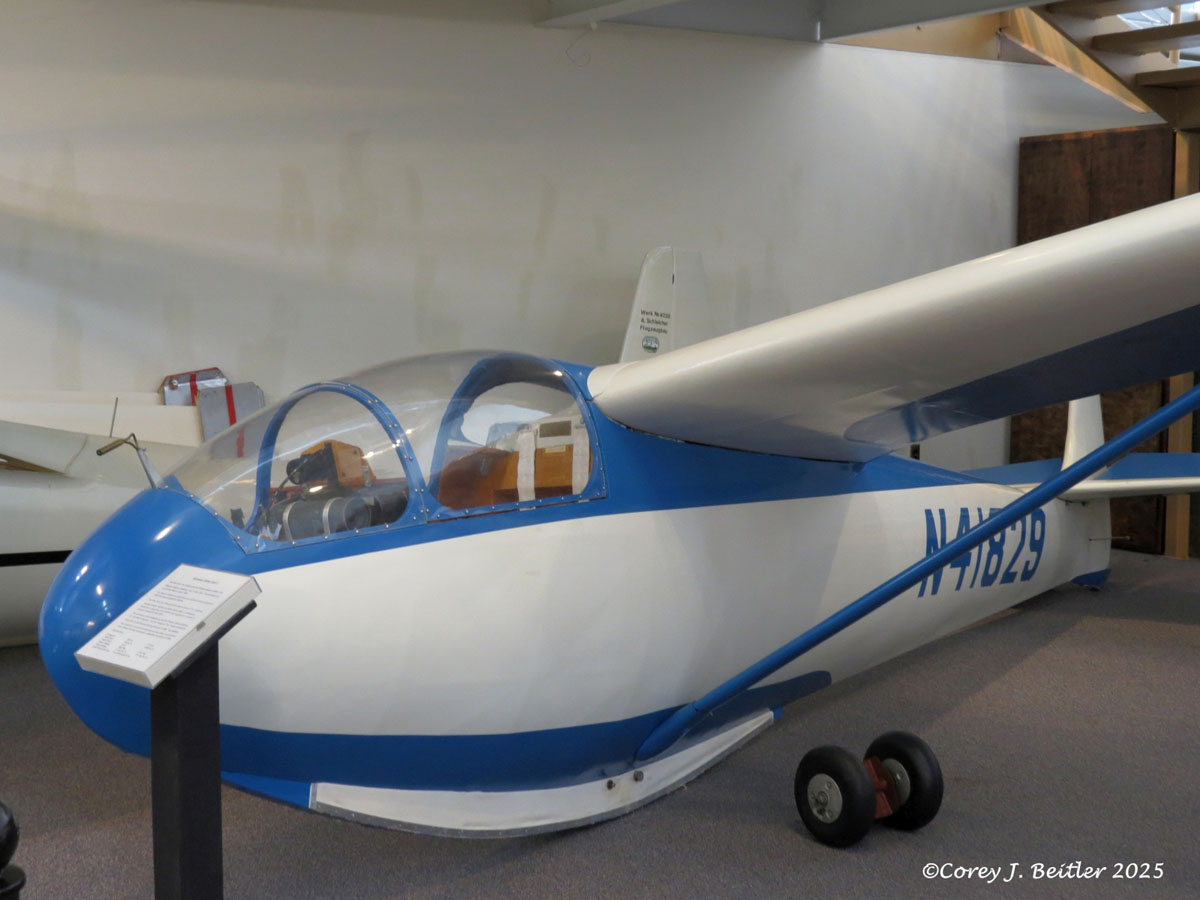
Due to Schweizer Aircraft Corporation’s importance in the history of sailplane and glider development in the United States and the company’s long ties to Elmira, an entire room in the National Soaring Museum is dedicated to sailplanes and gliders built by Schweizer Aircraft. There are several gliders and sailplanes on display that were manufactured by the company, and a fascinating display of models, which represent every glider and sailplane built by the company during its existence. Another interesting item displayed in this exhibit is a model of a Grumman Ag Cat, an airplane designed for agricultural work. Schweizer Aircraft had a production license to build the Ag Cat from the airplane’s original designer and manufacturer, Grumman, and built over 2,500 examples of the aircraft between 1959 and 1981.

In addition to gliders and sailplanes, the National Soaring Museum has dozens of smaller exhibits featuring artifacts related to the history of soaring in the United States. Interestingly, one of these exhibits has nothing to do with the museum’s theme of soaring, but instead features artifacts dedicated to the achievements and career of NASA astronaut Eileen Collins. Originally from Elmira, Eileen Collins served in the U.S. Air Force, rising to the rank of Colonel before joining NASA and becoming an astronaut. During her successful career as a NASA astronaut, Collins became the first woman to pilot the Space Shuttle and later, to command a Space Shuttle mission. Collins flew a total of four Space Shuttle missions and spent a total of 56 days in space during her NASA career before retiring in 2006. The exhibit about Collins features some magazines, which did feature articles about her, a model of the Space Shuttle, a photograph of her landing the Space Shuttle, and a shirt and patch worn by Collins on one of her shuttle missions.

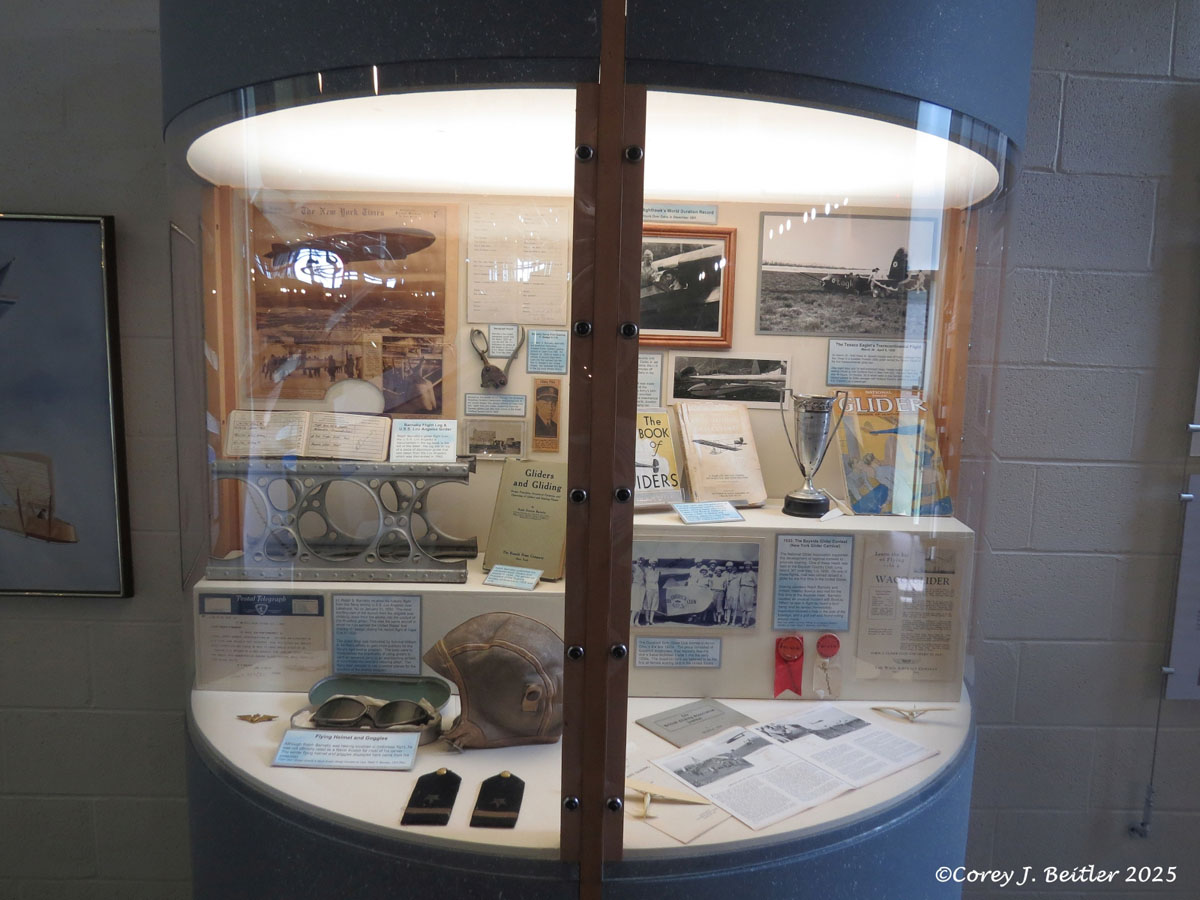
There are many other interesting exhibits throughout the National Soaring Museum. A map hanging from one of the walls shows the locations of early soaring sites around Elmira. Another exhibit features trophies and medals won by pilots in soaring contests held at Harris Hill. A beautiful painting on display shows the famous RS-1 “Zanonia” sailplane high in flight over the Finger Lakes region. This sailplane won the National Soaring Contest in 1940, 1941, and 1946. “Zanonia” also set two national records for distance flown by a sailplane and a world sailplane record for altitude in 1949. when it flew to a height of 33,500 ft (10,210 m). The sailplanes and gliders, despite space limitations, are all wonderfully displayed, and the smaller exhibits are all kept behind glass cases or in frames to keep them dust-free and protect them from ultraviolet light. The museum makes the most of its available space to display the gliders and sailplanes by displaying only the fuselages of some and others with just one wing attached. The museum facility and exhibits are clean, well-kept, and easy to navigate and explore. The museum staff is very knowledgeable and will provide a guided tour of the exhibits if requested. On some days, sailplane and glider operations take place at the nearby airstrip operated by the Harris Hill Soaring Corporation. Visitors to the museum are free to watch these flights from the grass area next to the museum or from the museum parking lot.

The National Soaring Museum is located on historic Harris Hill next to the airstrip operated by the Harris Hill Soaring Corporation. The museum is open seven days a week, with the exceptions of Easter Sunday, Thanksgiving Day, Christmas Eve, Christmas Day, New Year’s Eve, and New Year’s Day. The museum is open from 10 am to 5 pm April 1st to October 31st, and 10 am to 4 pm November 1st to March 31st. The museum has a gift shop with some snack options, but no restaurant in the facility. There are several restaurant options available in the nearby towns of Elmira and Big Flats. Admission prices to visit the museum are $10.00 for adults, $5.00 for Youth (Age 7-17), FREE for Children (Under 6), and $9.00 for Seniors (Age 60+). The National Soaring Museum also offers a special admission rate of $25.00 for a Family (2 Adults & 2 or more Youth). Group tours are available by appointment by calling the museum. Additional information about the National Soaring Museum and its collections can be found at www.soaringmuseum.org