

Panavia Tornado Scrapbook

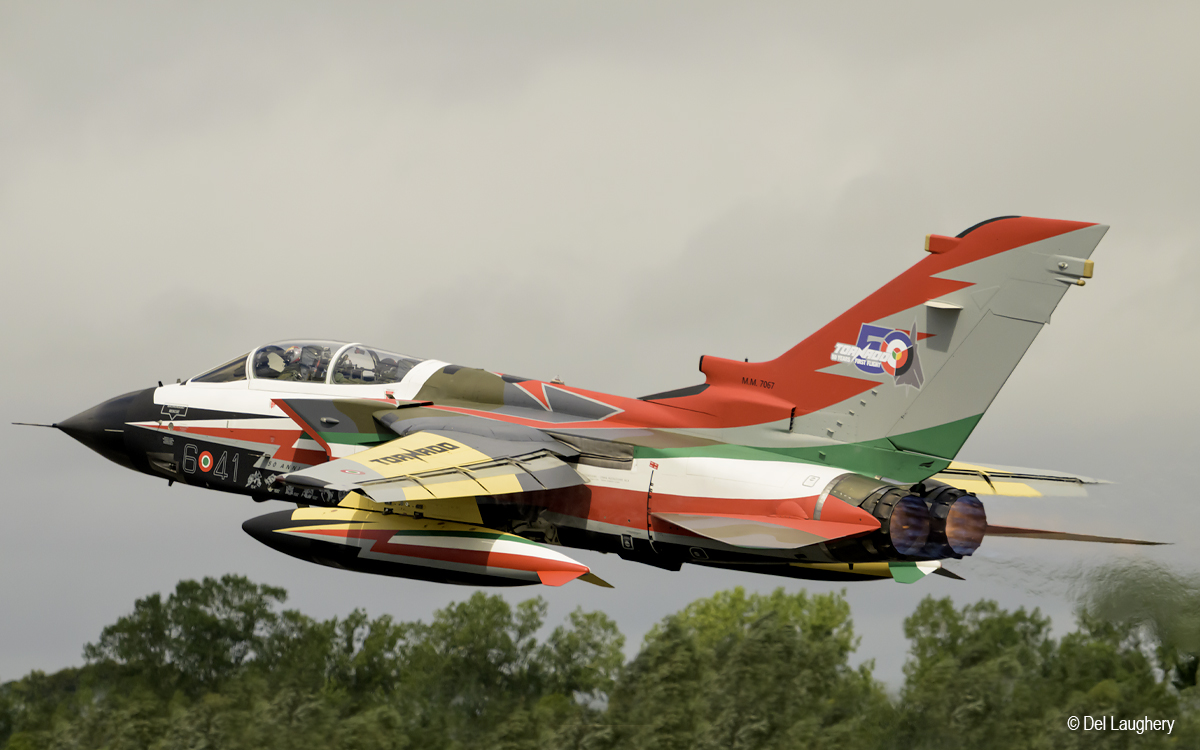
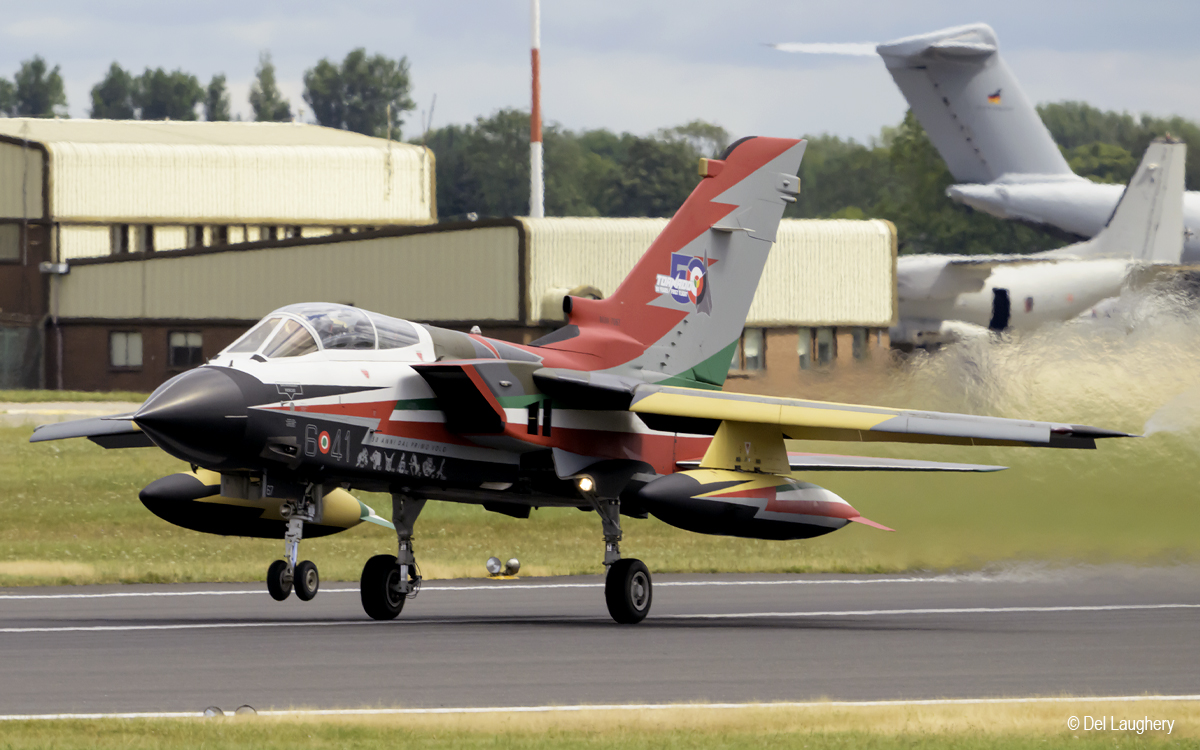
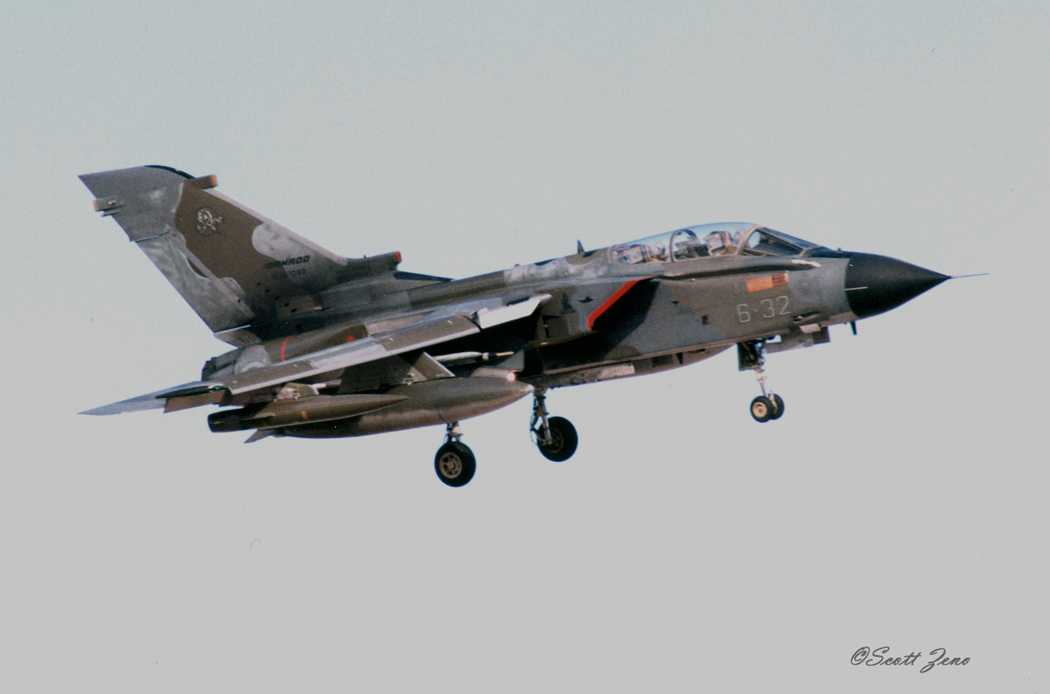
Italian Air Force Tornado IDS (A-200A) in 50th Anniversary colors
Photos from Steve Lewis, Ken Middleton, Ken Kula, Don Linn, Del Laughery, Scott Zeno and Bob Finch; story by Ken Kula.
A three-nation consortium partnered to form the Panavia Aircraft GmbH, with the goal of designing and building the military swing-wing fighter-bomber known as the Tornado. In 1969, Germany, Italy, Great Britain and the Netherlands formed the company to develop an aircraft ultimately known as the MRCA (Multi-Role Combat Aircraft). The Netherlands left the group a year later, reportedly because the MRCA didn’t suit their needs. Another tri-country unit, called Turbo-Union, was formed to design the powerplants for the new jet, designating it the RB199. By 1971, Panavia Aircraft GmbH received approval to begin work on the initial test aircraft.

The initial prototype first flew on August 14, 1974 in Germany. Ultimately, 990 airframes would be built, in three main versions.

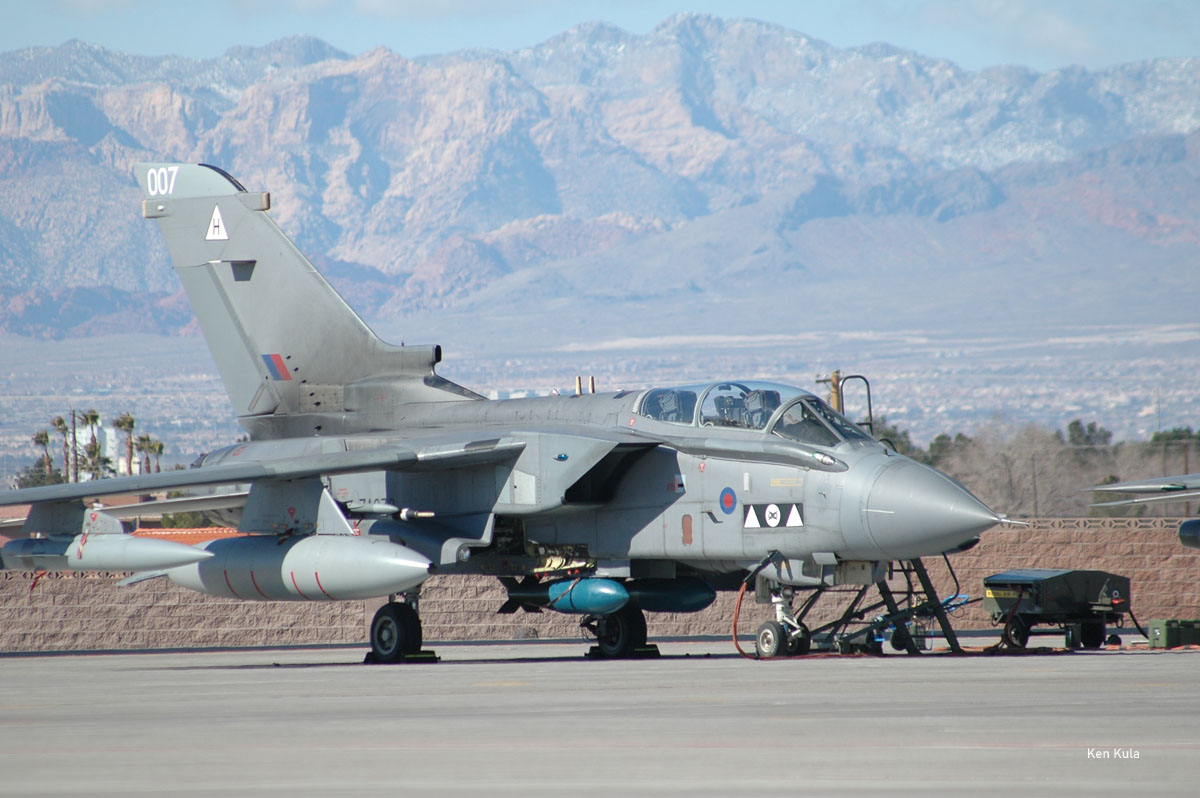
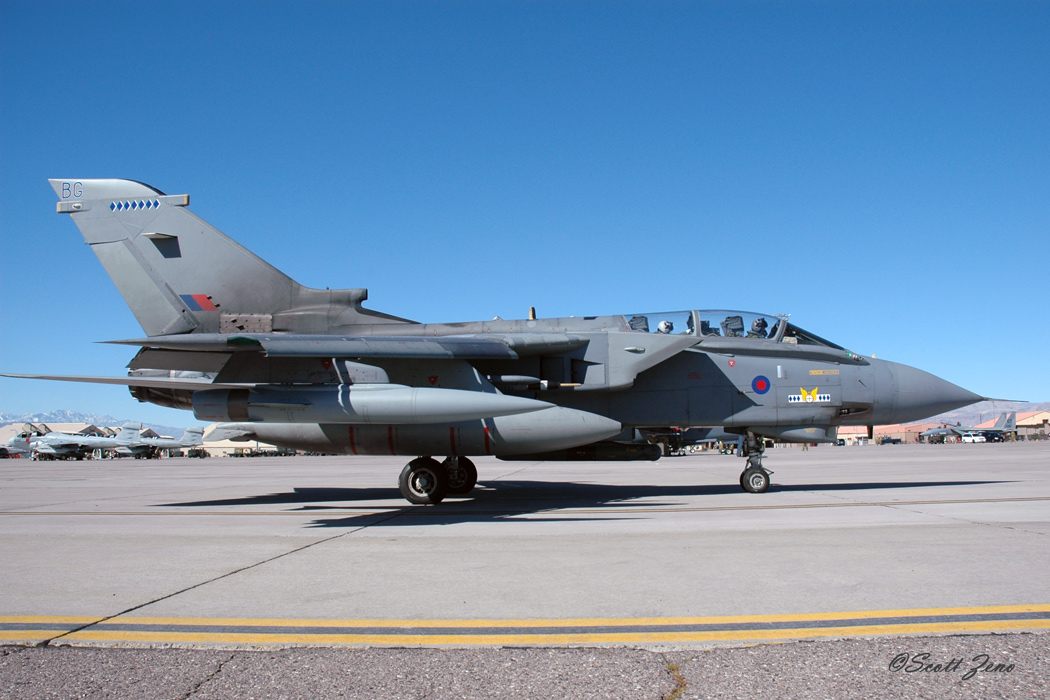
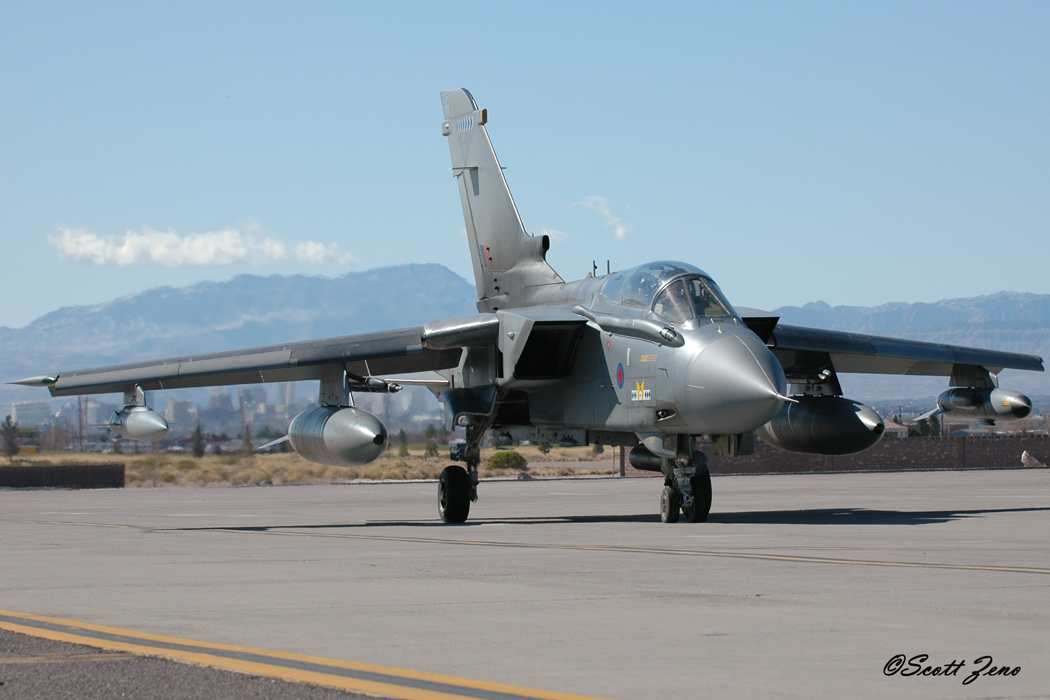
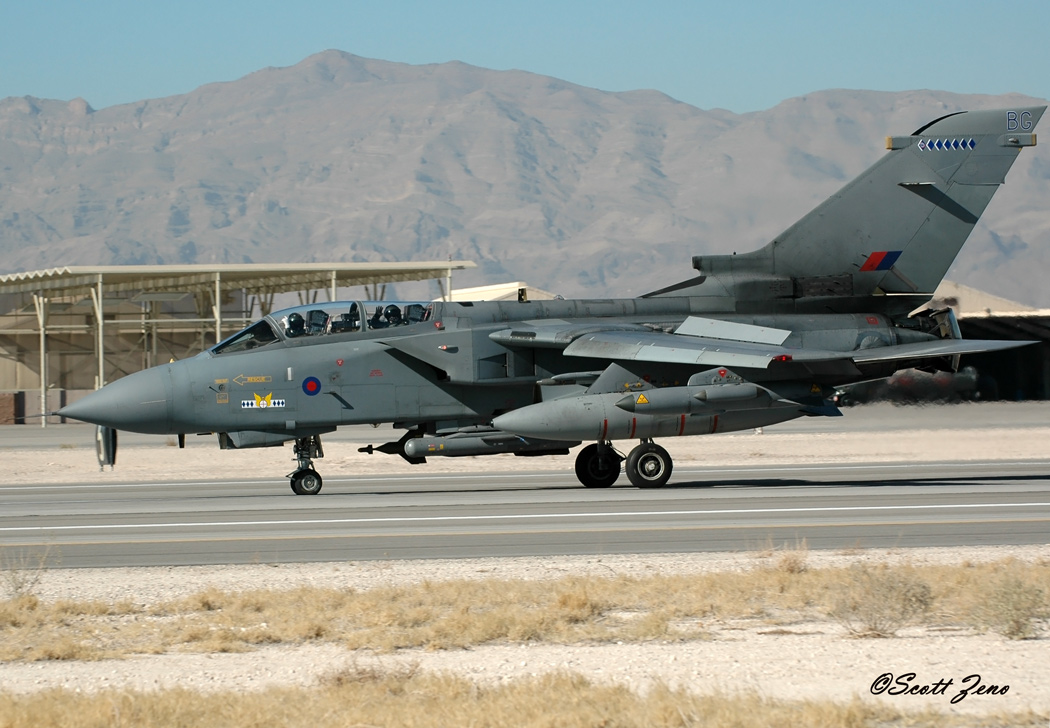
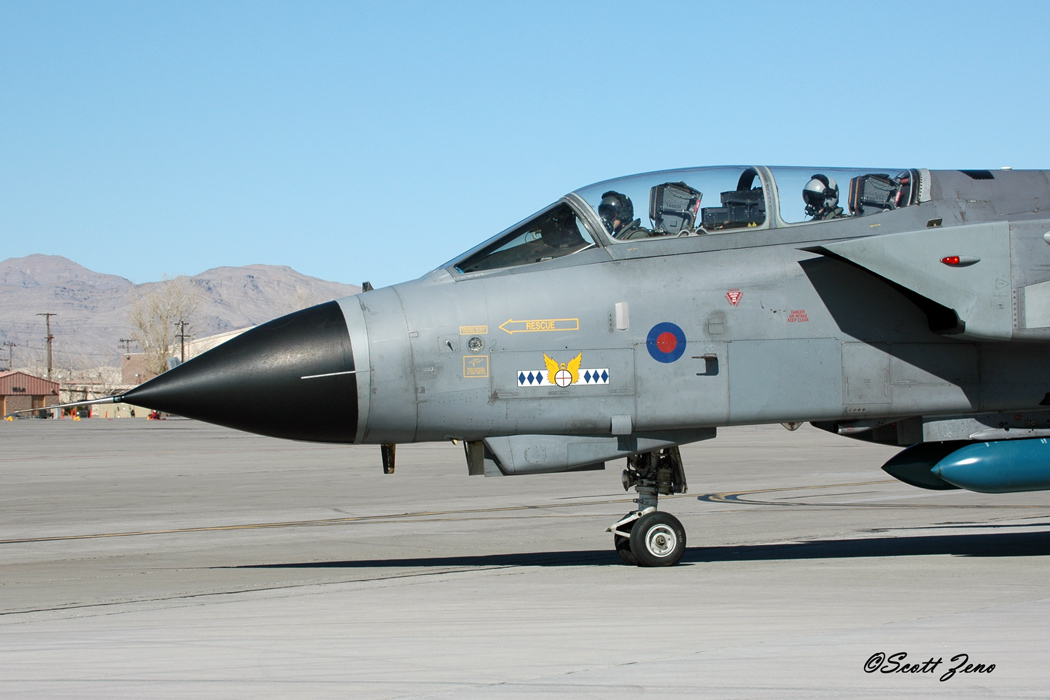
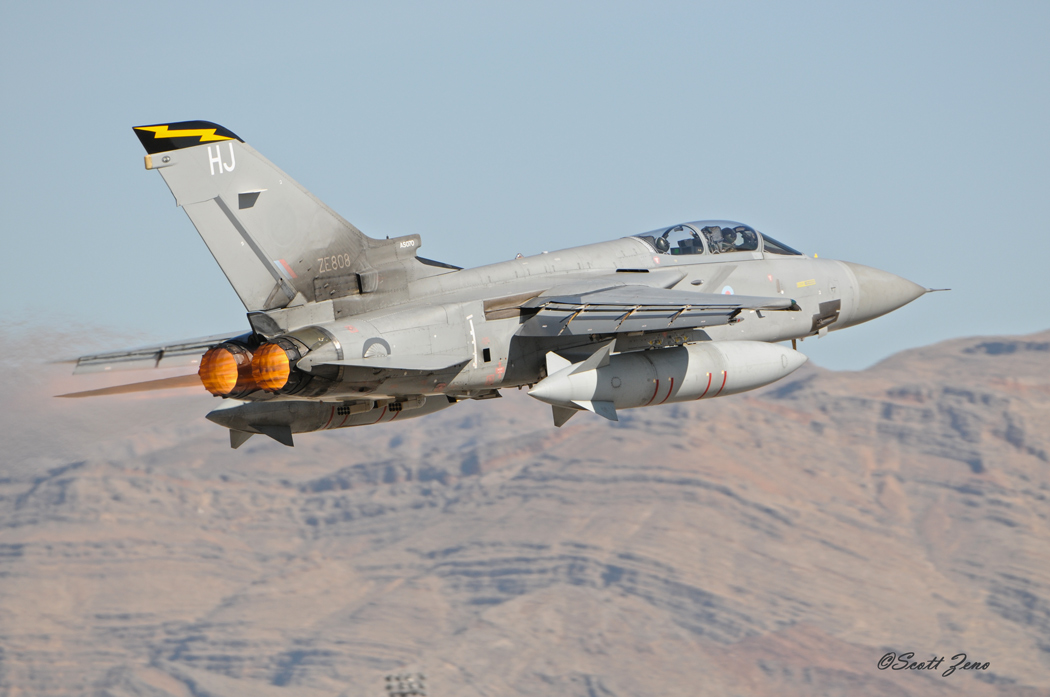
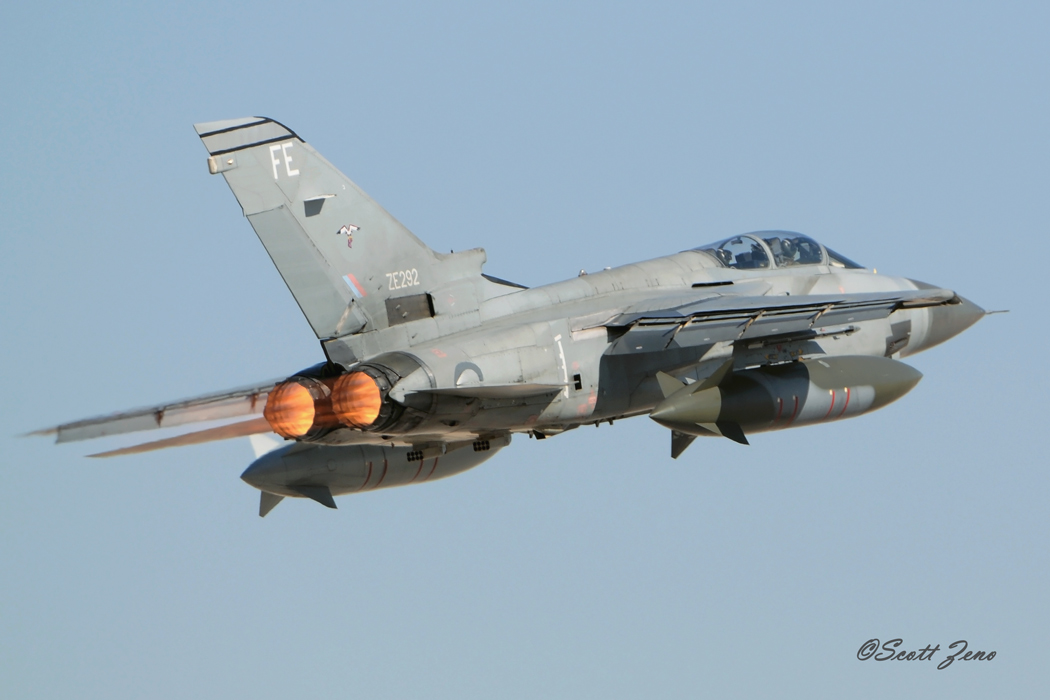
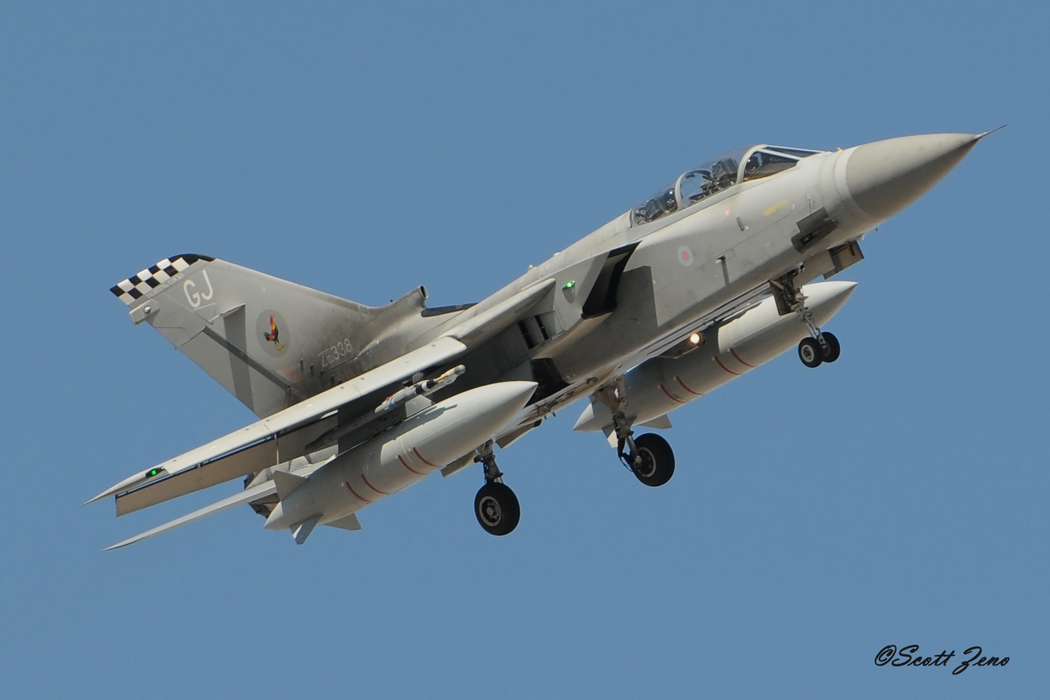
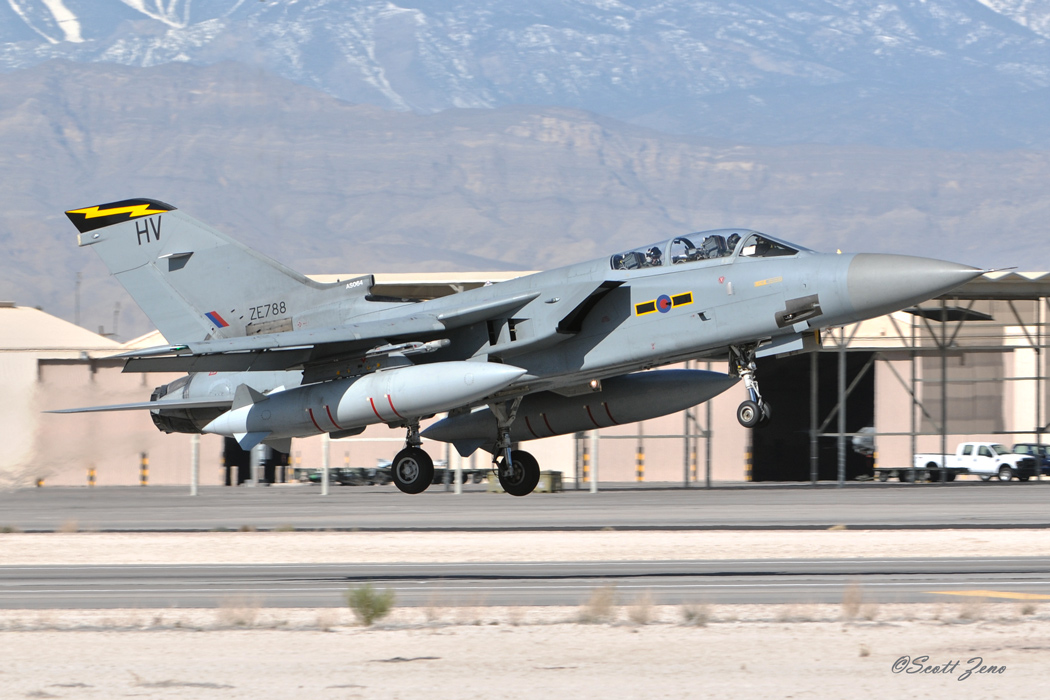
Royal Air Force Tornado GR4 at a Nellis AFB Red Flag exercise
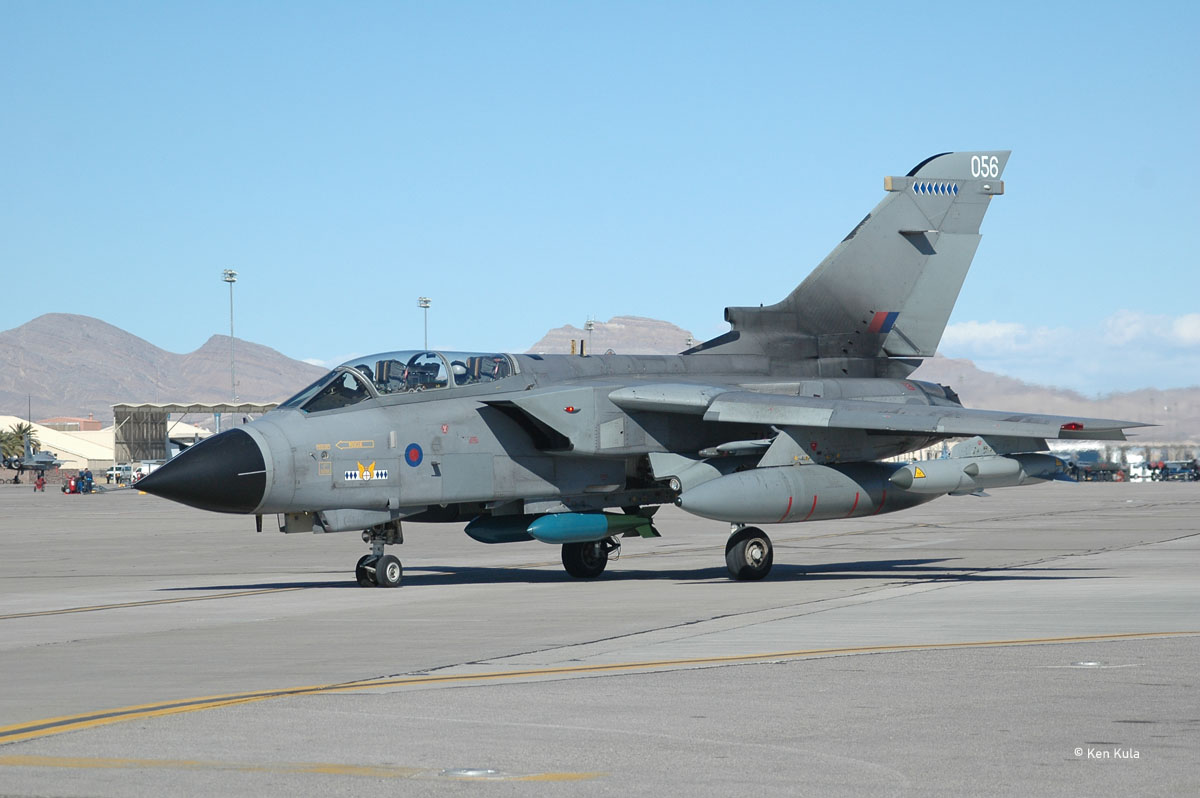
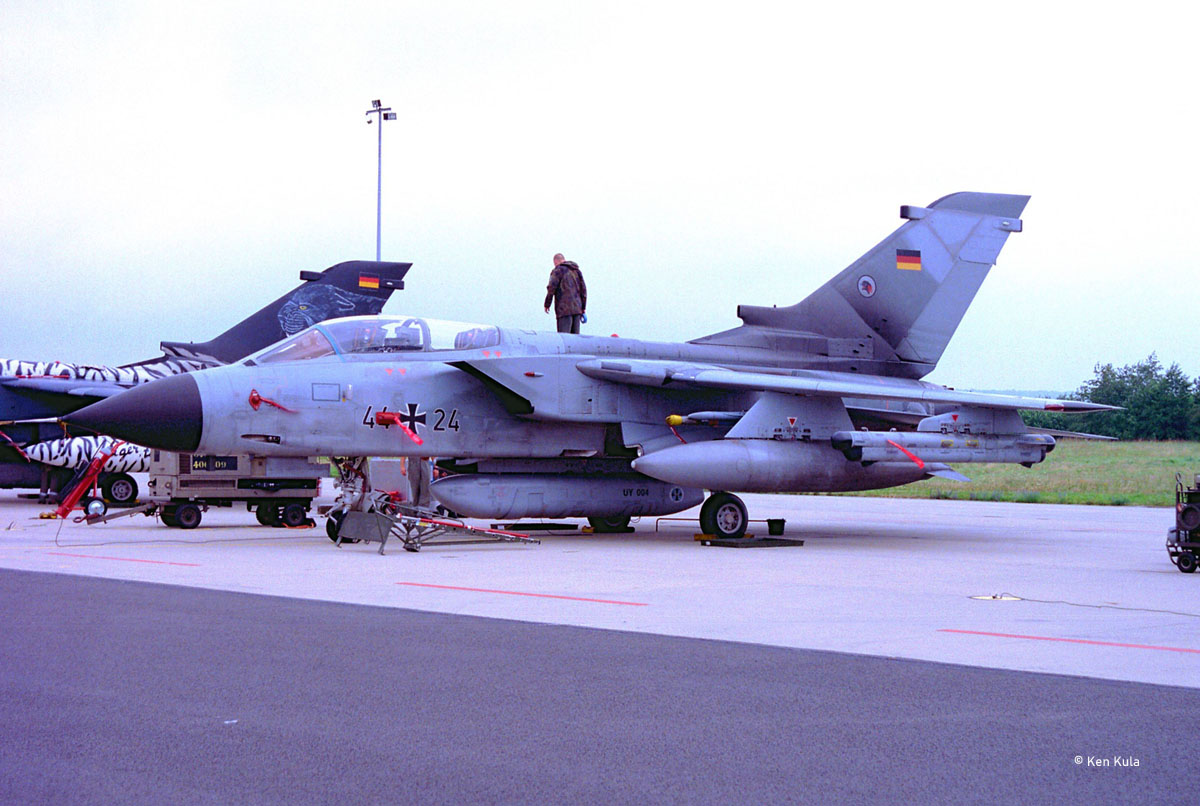
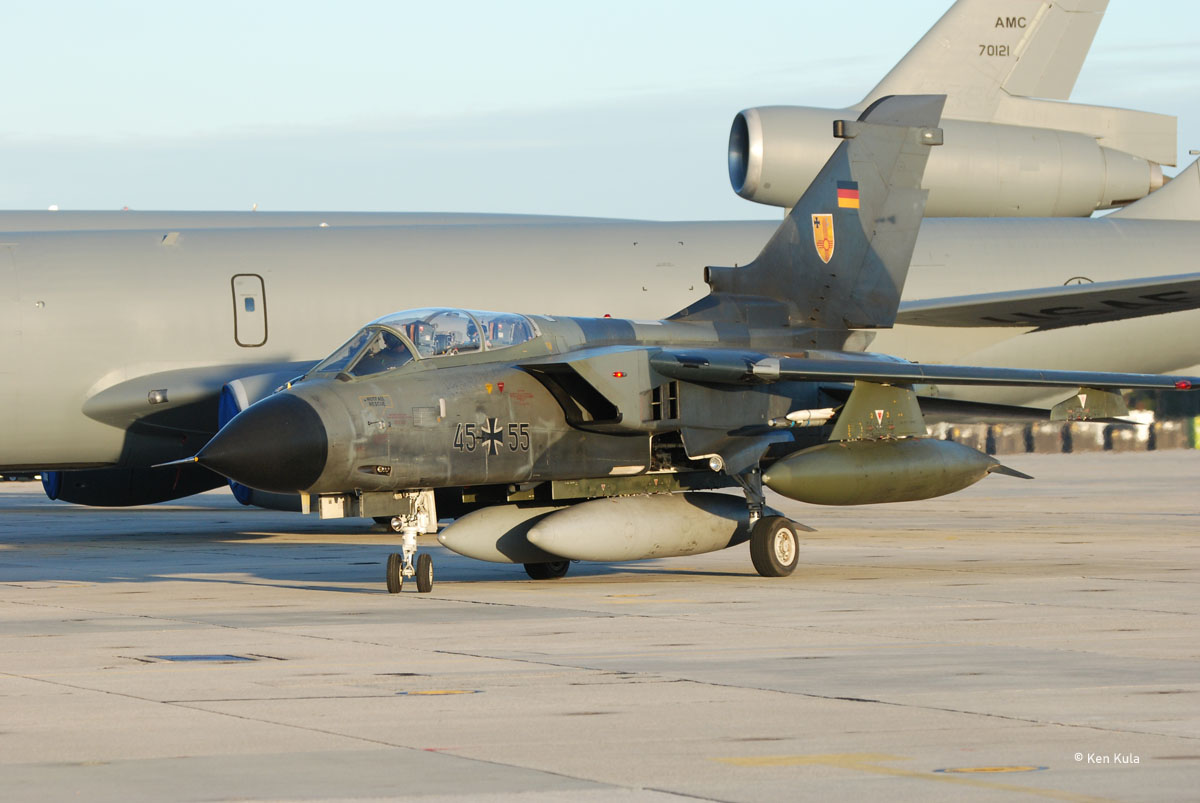
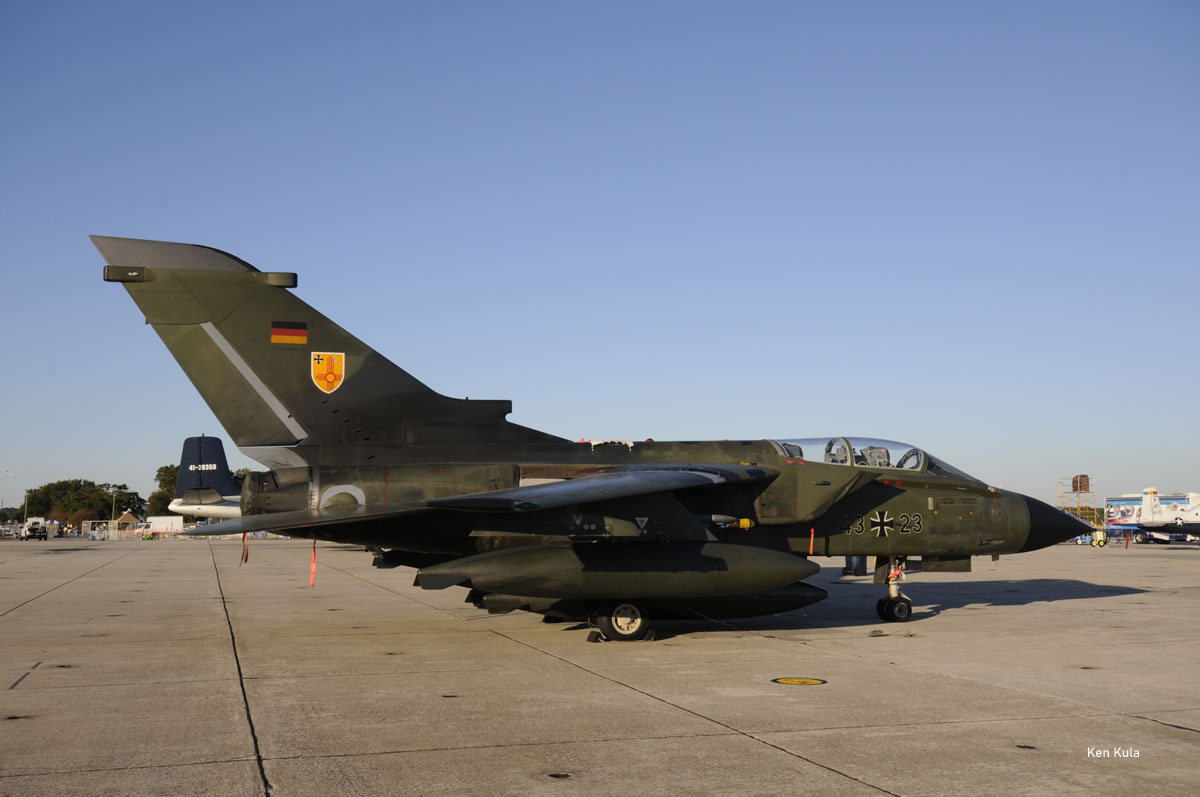
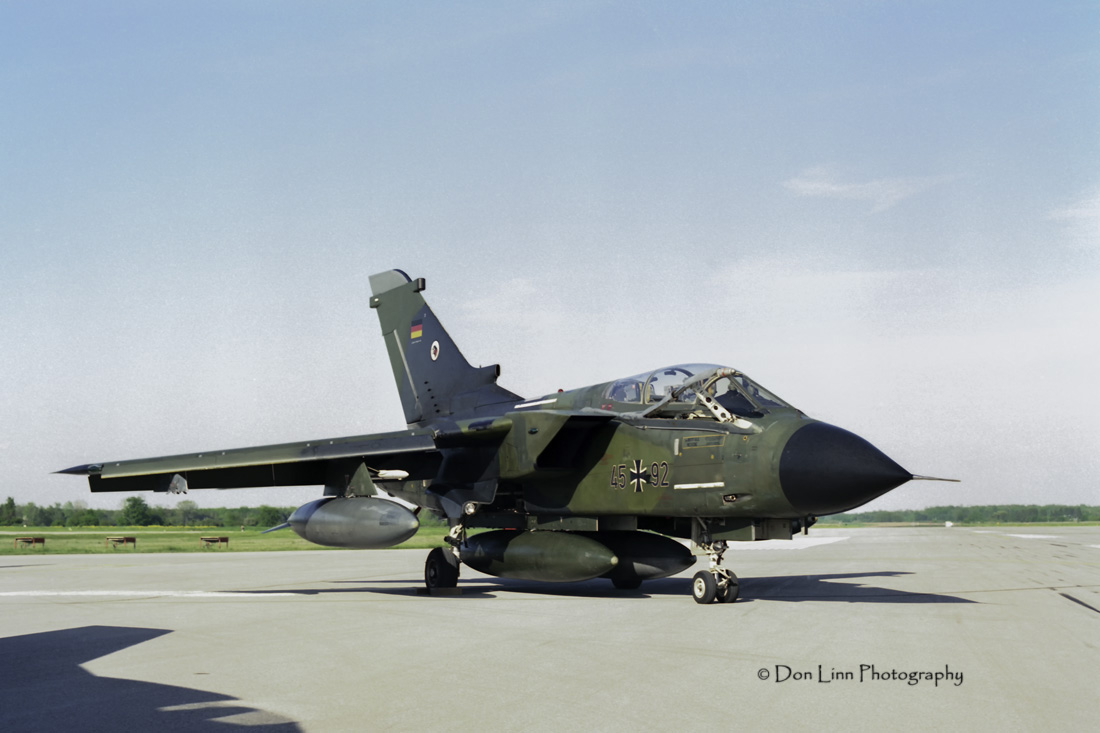
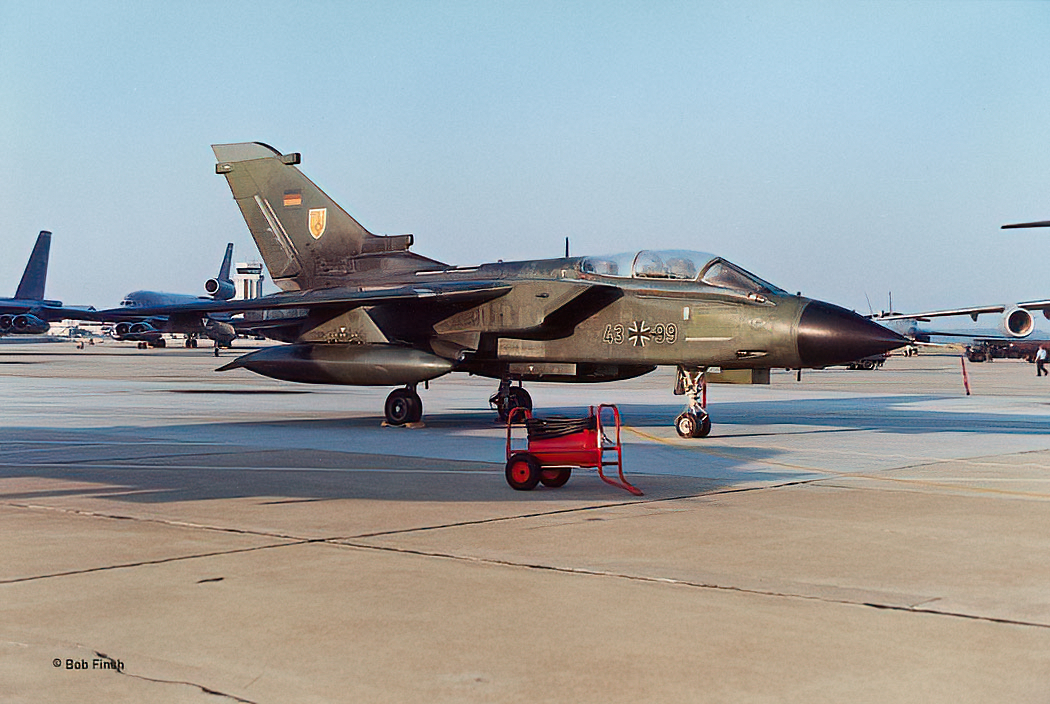
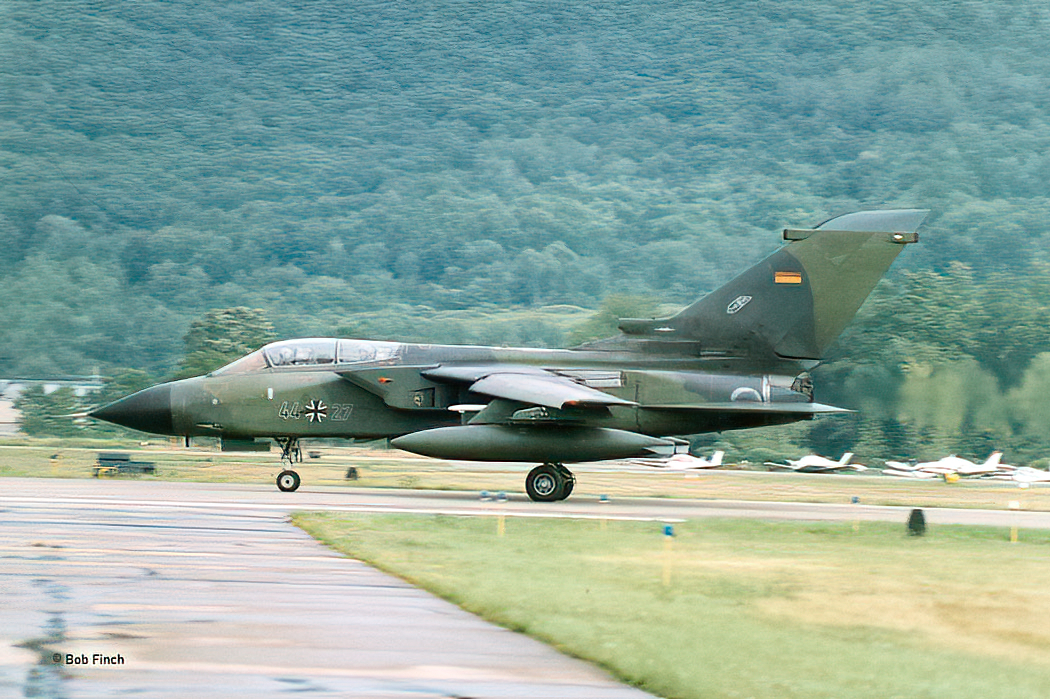
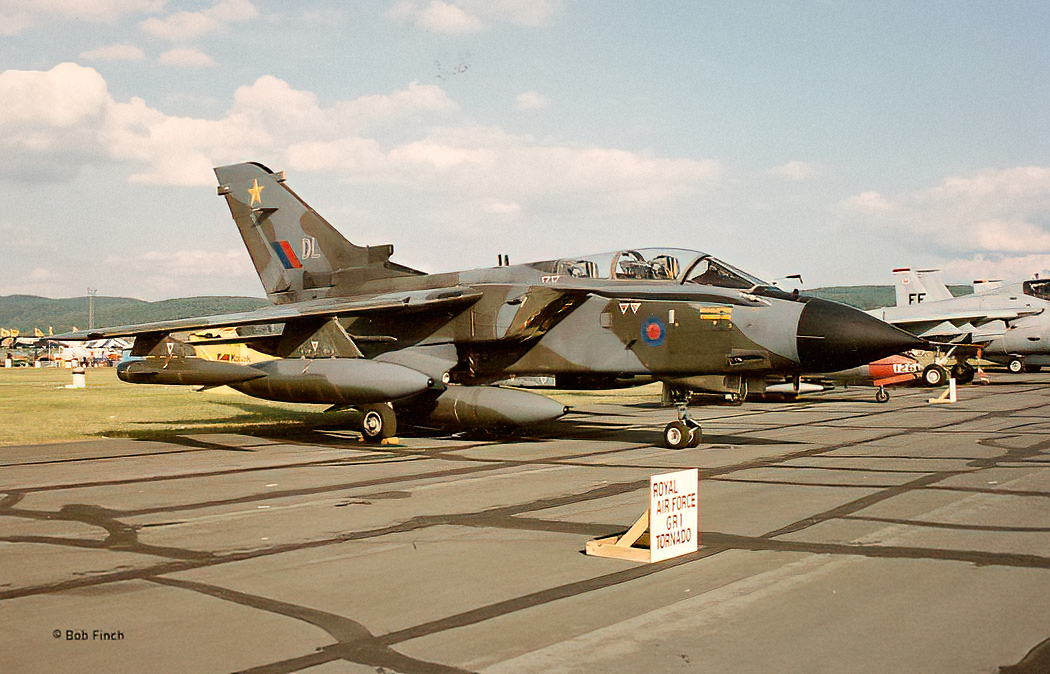
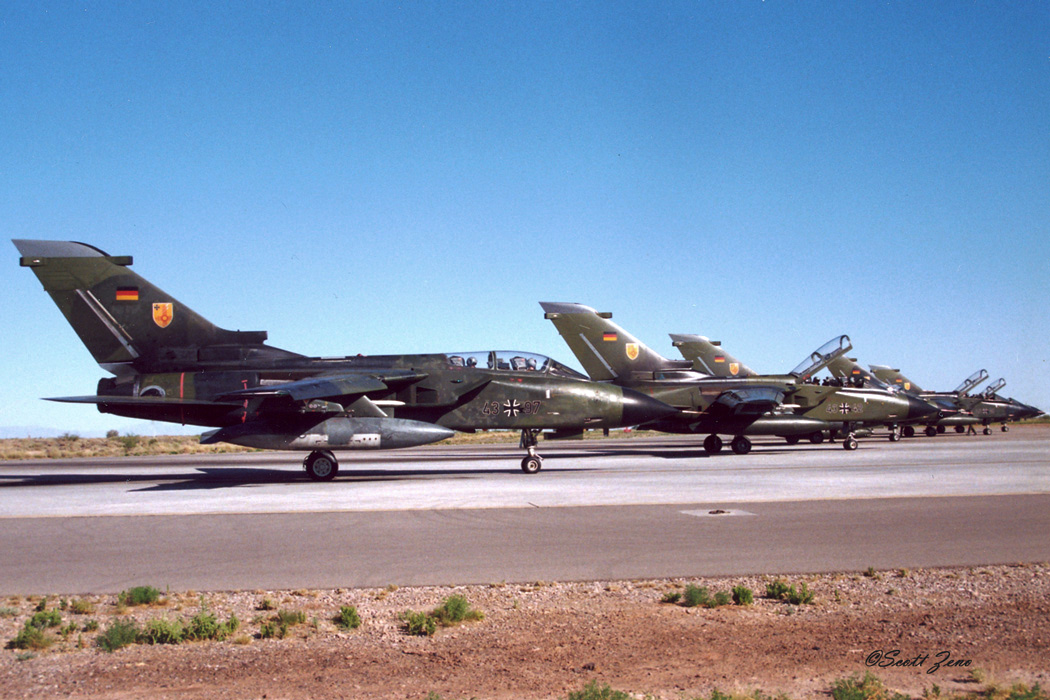
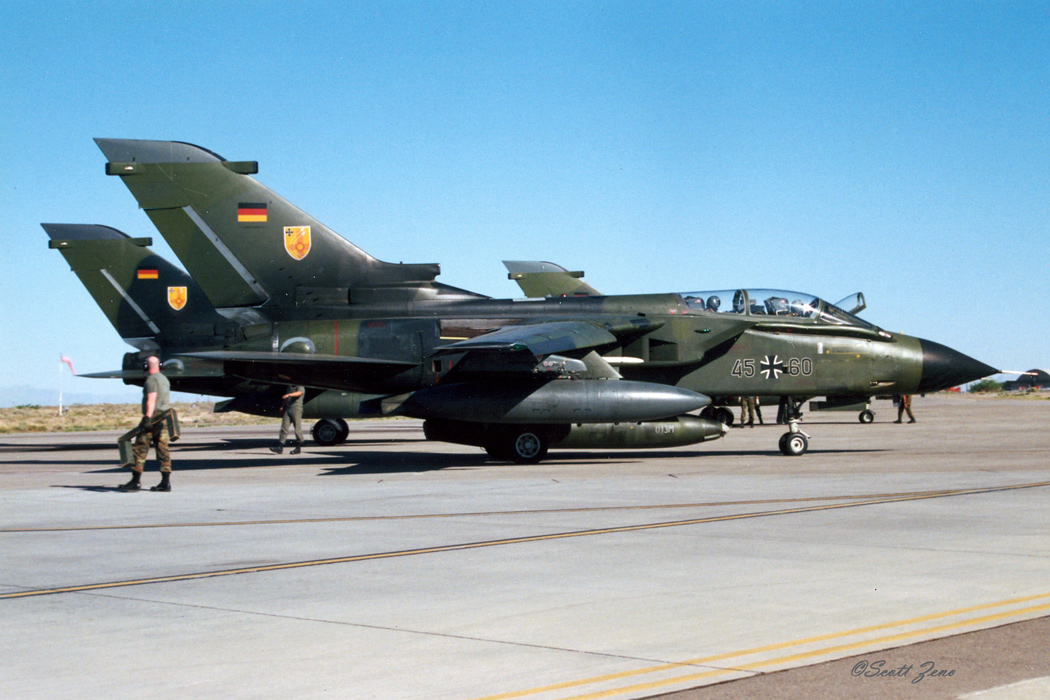
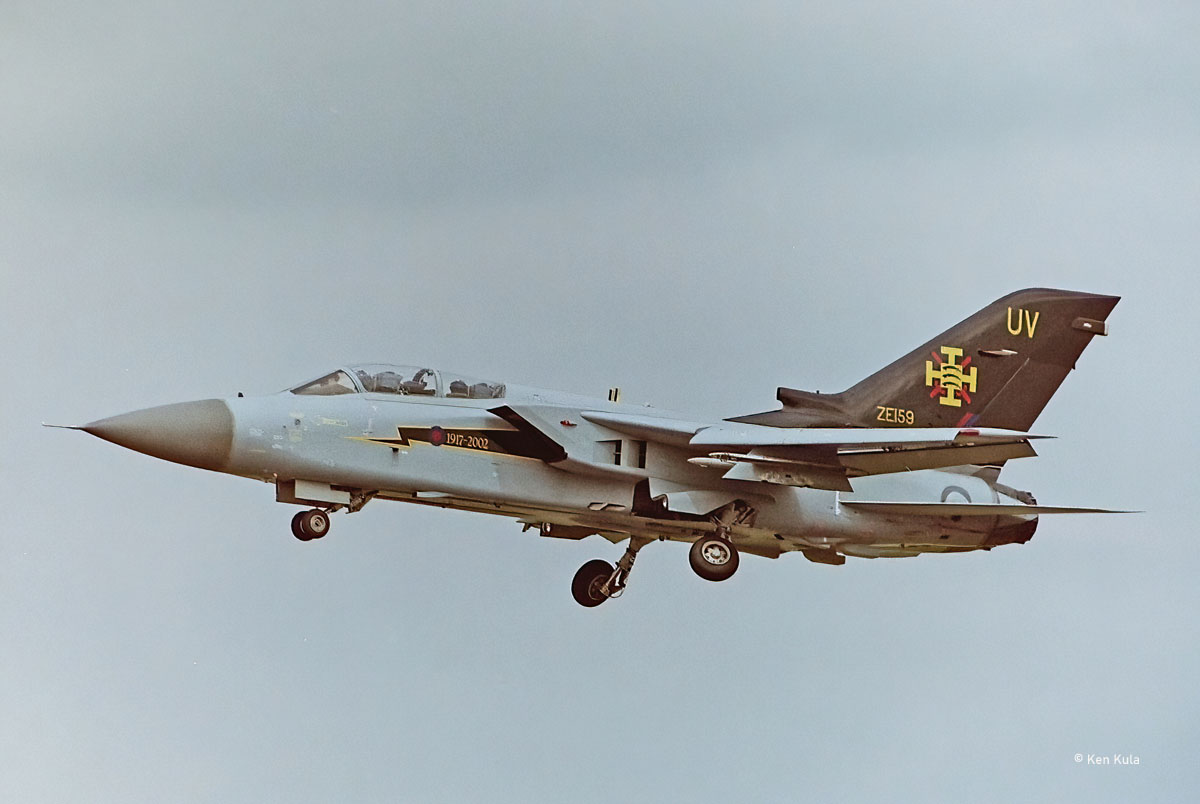
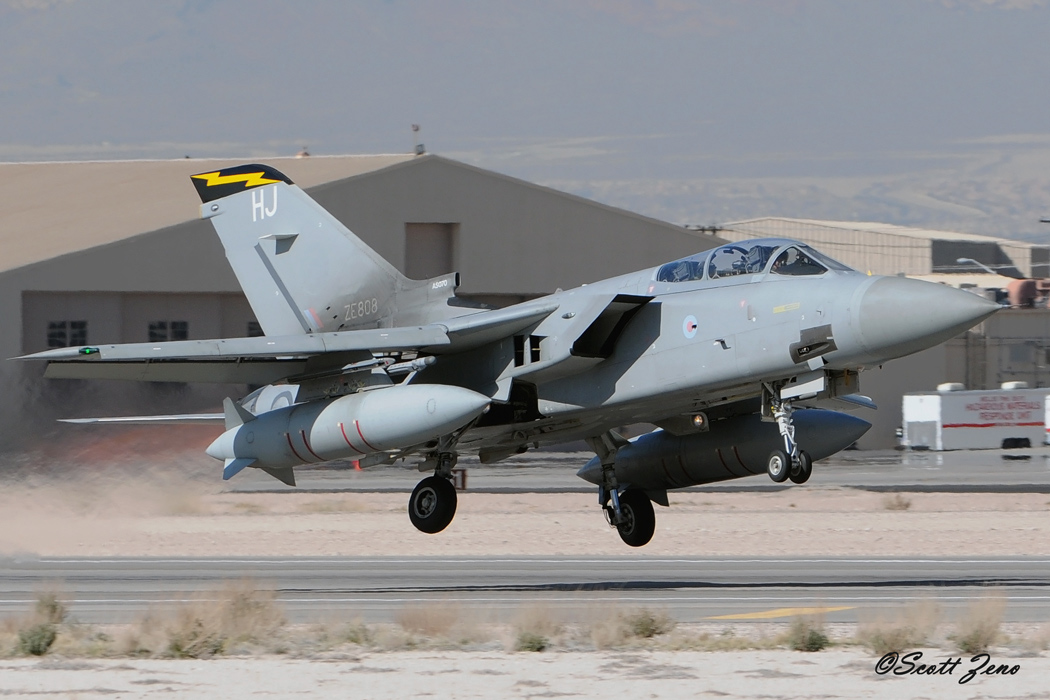
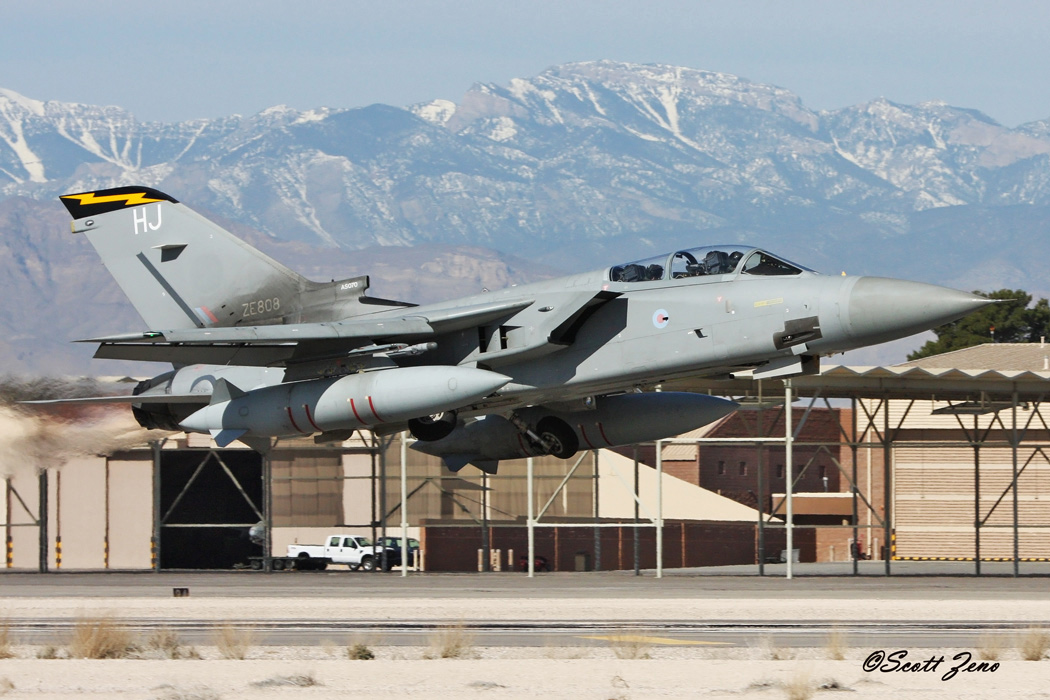
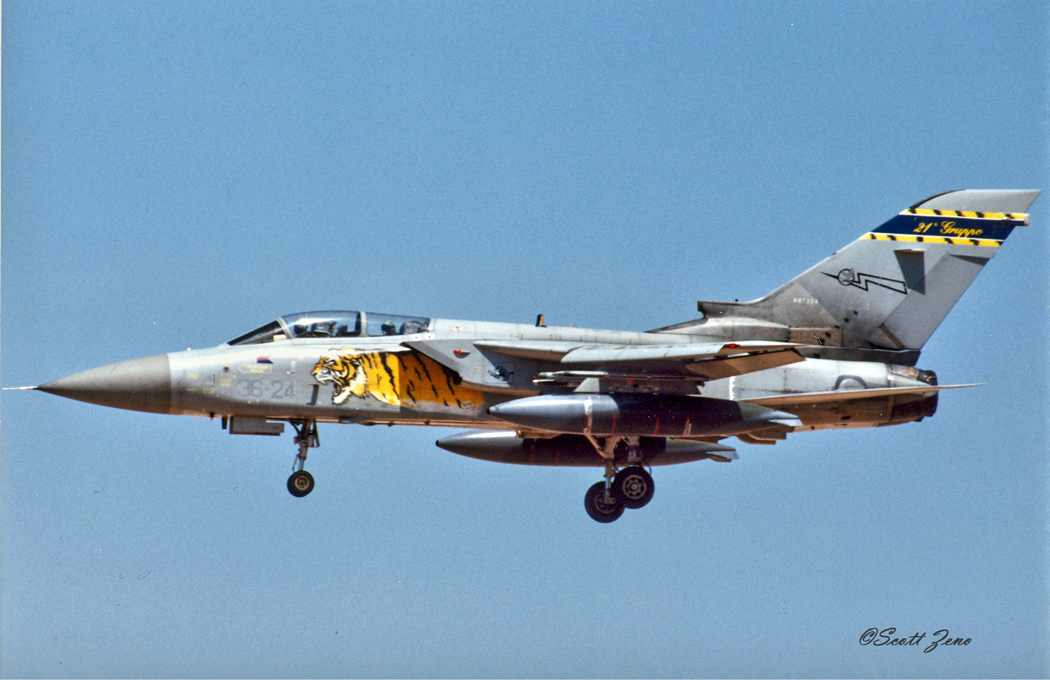
The Tornado IDS (Interdictor/Strike) is/was operated by Great Britain, Italy, the German Air Force and Navy, and the only non-consortium customer for the Tornado, Saudi Arabia. A total of 745 IDS airframes were built; the Royal Air Force made distinctions to their original and upgraded aircraft as the GR1 and GR4. Sub-variants of each included specialized airframes to conduct anti-shipping, reconnaissance, and strike. The Italian Air Force called their Tornado IDS versions the A-200A.
Tornado IDS, etc. photos:














German Air Force Tornado ECR carrying HARM missiles
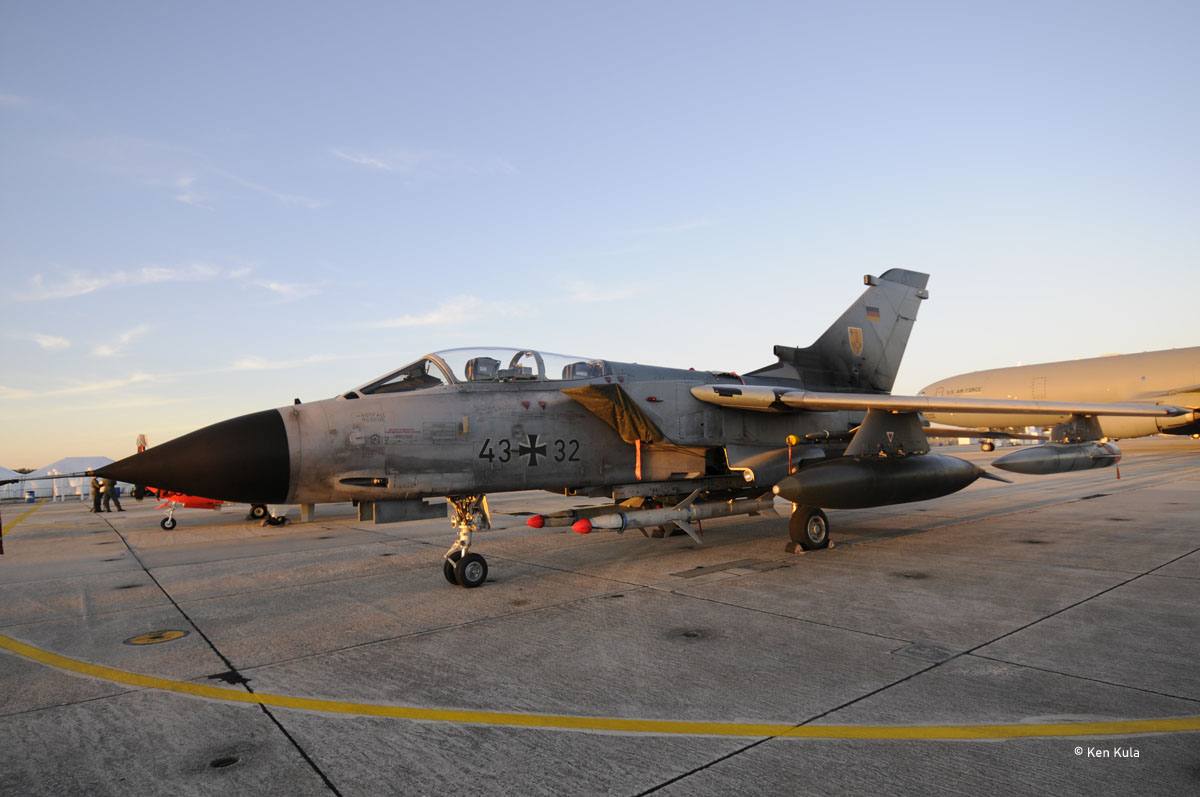
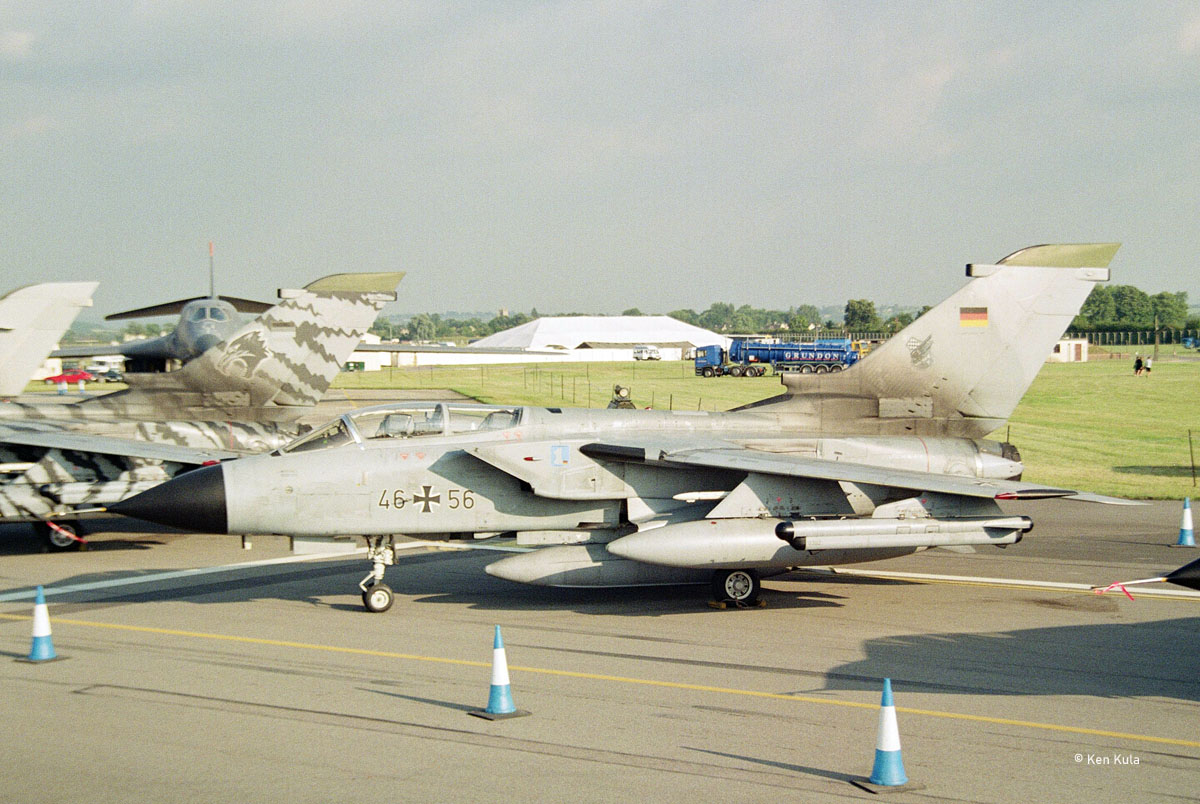
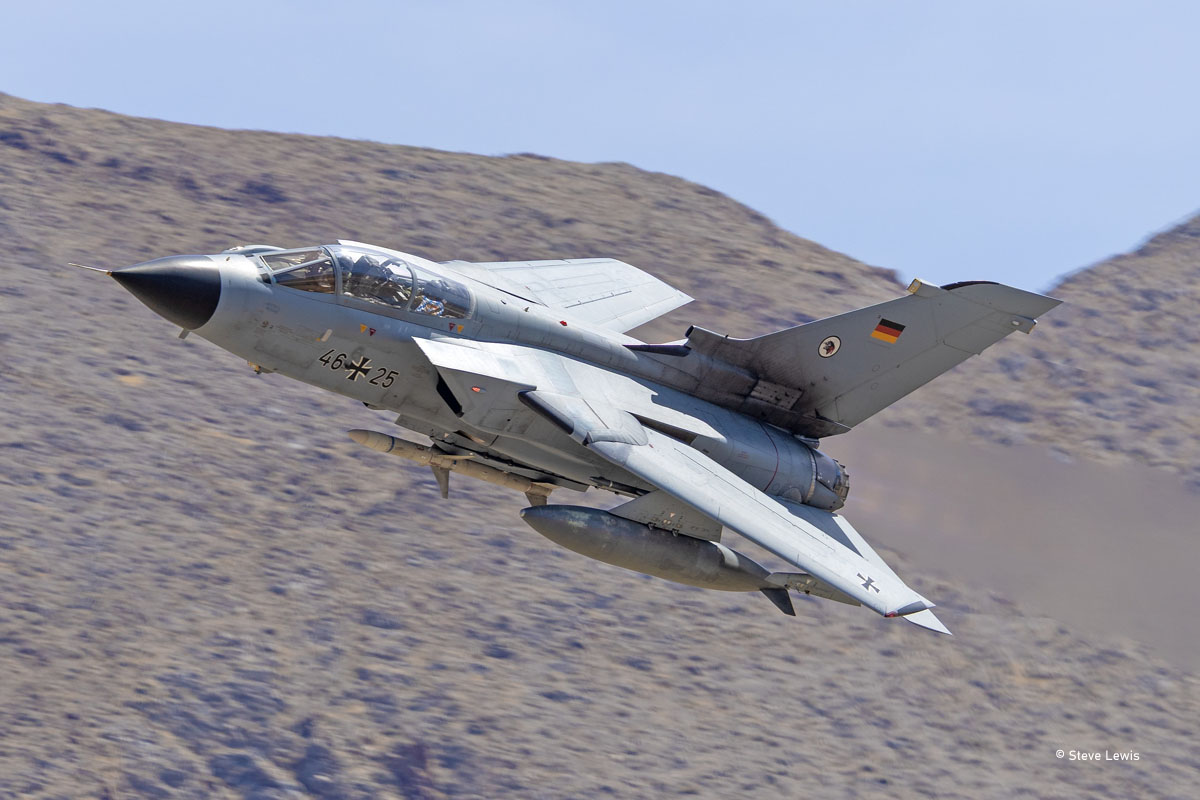
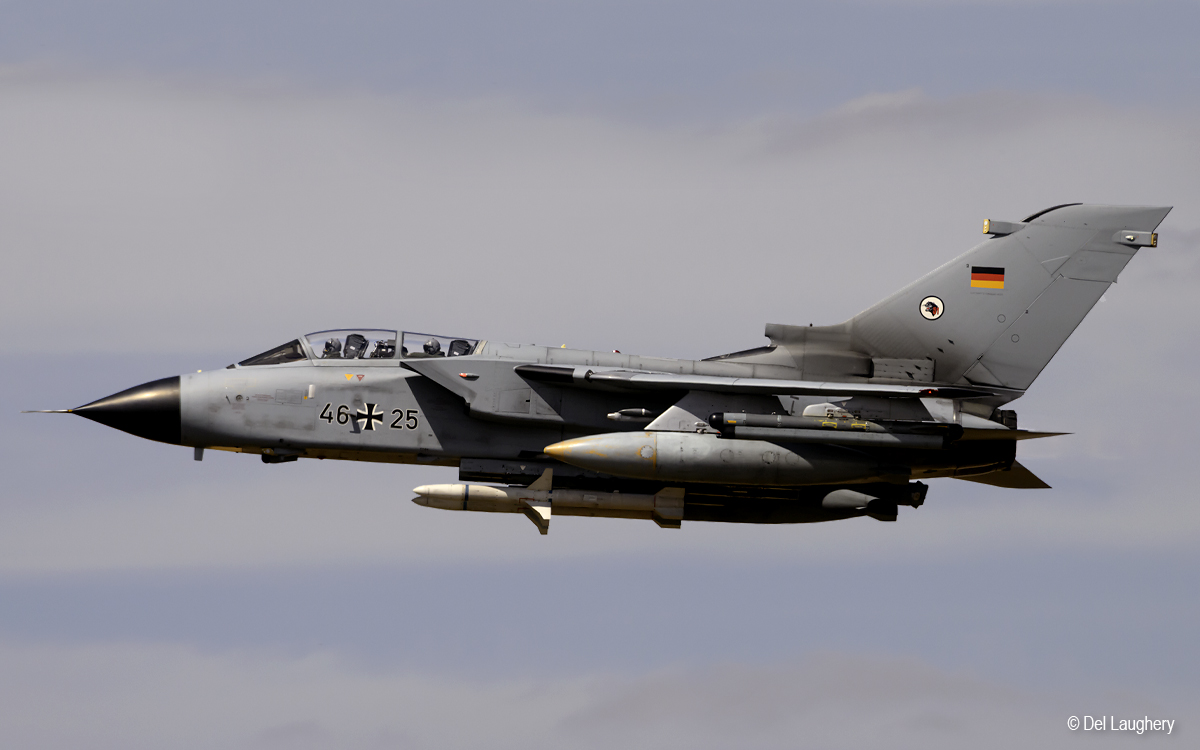
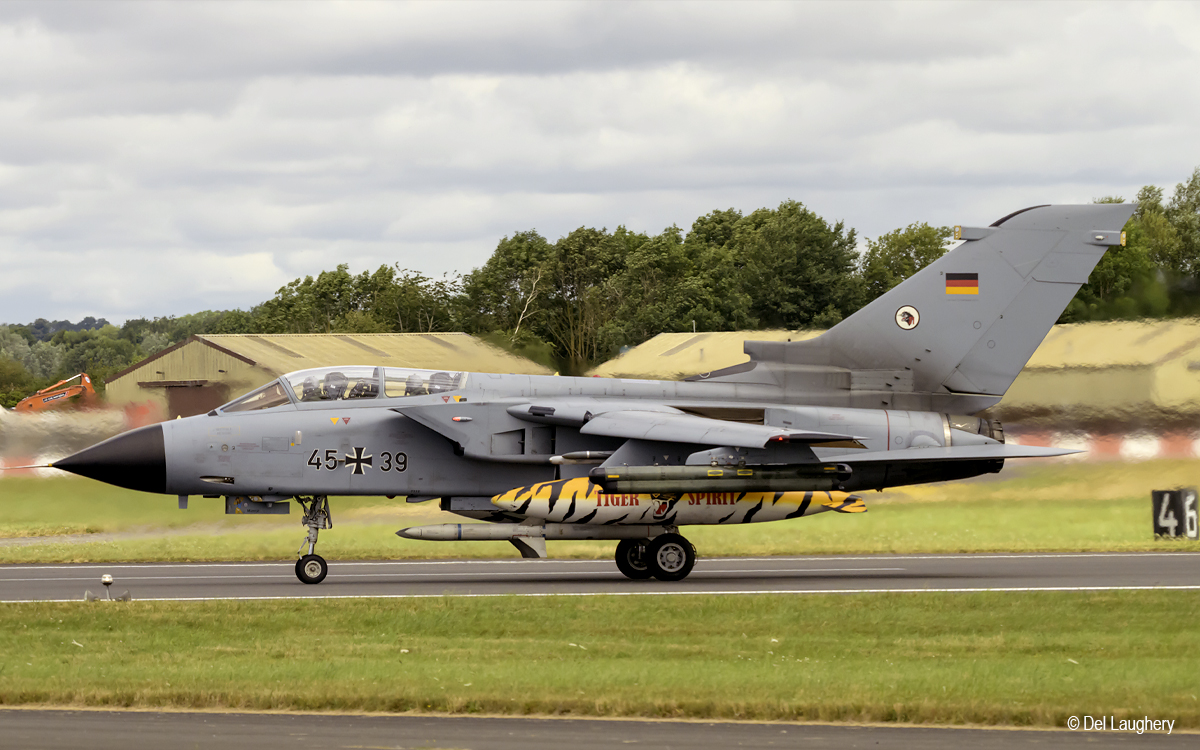
The Tornado ECR (Electronic Combat/Reconnaissance) version was produced for the German Air Force and Italy. The ECR version specialized in the SEAD (Suppression of Enemy Air Defenses). The total of 51 airframes were produced, with their main weapon system being the AGM-88 HARM anti-radiation missile. Italy denoted their ECR version as the EA-200 Tornado.
Tornado ECR, etc. photos:





Royal Air Force Tornado F3
An enlarged version of the basic Tornado was known as the Tornado ADV (Air Defense Variant). Between the Royal Air Force, the Royal Saudi Air Force, and the Italian Air Force, 194 ADV airframes were produced and operated. The ADV variant (known as the RAF’s Tornado F3 and the RSAF’s TornadoF2 and F3 versions) was not designed as a dog-fighter, but rather as a long-range bomber interceptor.
Tornado ADV, etc. photos:







German Navy Tornado IDS pre-2005
Retirements: The final Tornado airframe was built in 1998. Retirements of the type commenced shortly after the new Millenium, as the original Tornado design was approaching 30 years of age. The Italian Air Force operated Tornado ADVs leased from the U. K. between 1995 and 2004. The German Navy divested itself of Tornados in 2005, and while some airframes went to their Air Force, the others were retired. Saudi Arabia retired their Tornado ADVs in 2006. The U. K’s Royal Air Force retired their F3 Tornados in 2011, and the Tornado IDS (GR4/GR4A) jets were all retired by the end of 2019.

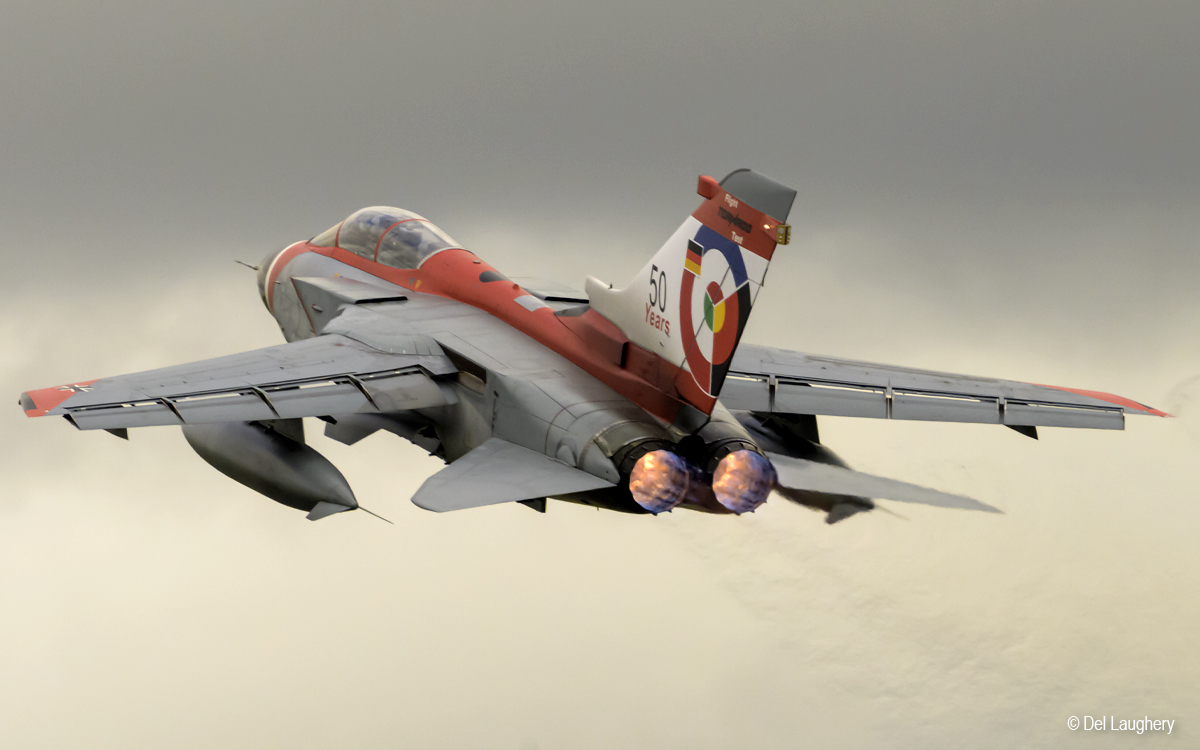
German Air Force Tornado IDS in 50th Anniversary colors
In 2025, the world-wide Tornado fleet is much smaller in number than that it was at the turn of this century, but when equipped with newer precision guided munitions, it is still relevant in many ways in today’s armed conflicts. The first prototypes flew 51 years ago, in 1974… over half a century ago. Both Italy and Germany have added special markings on two of their jets to commemorate the half century of service of the Tornado.

German Air Force Tornado air crew in New Mexico, a detachment of German IDS training aircraft was stationed in Holloman AFB for many years.


