The Convairliner
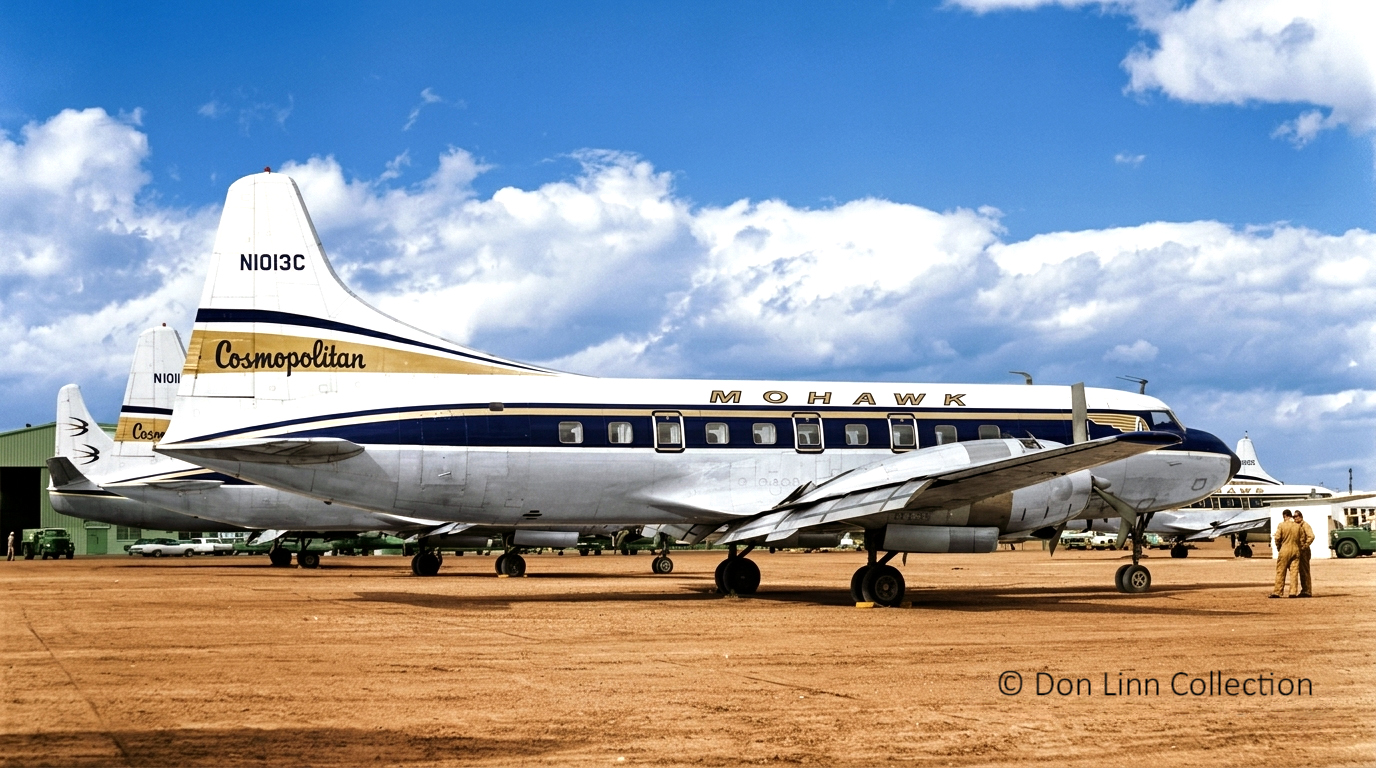
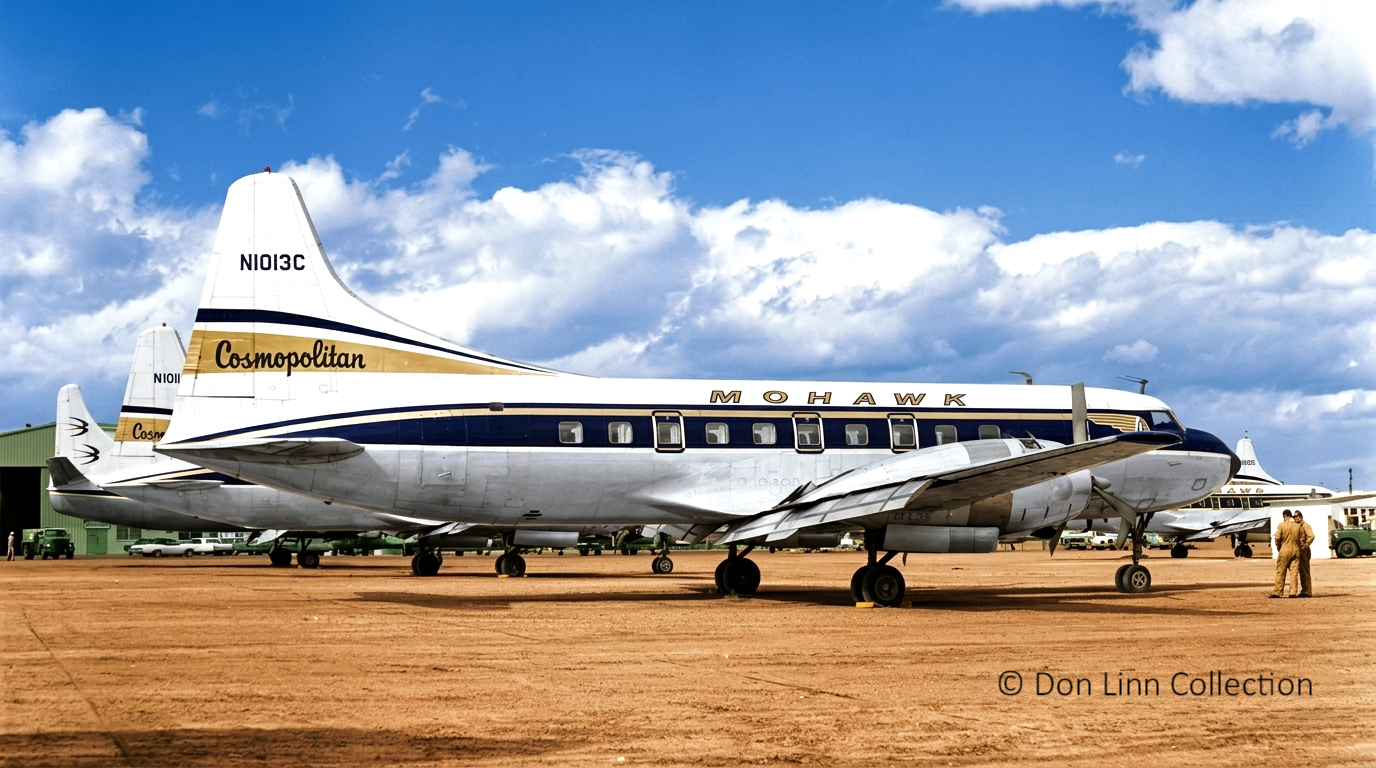
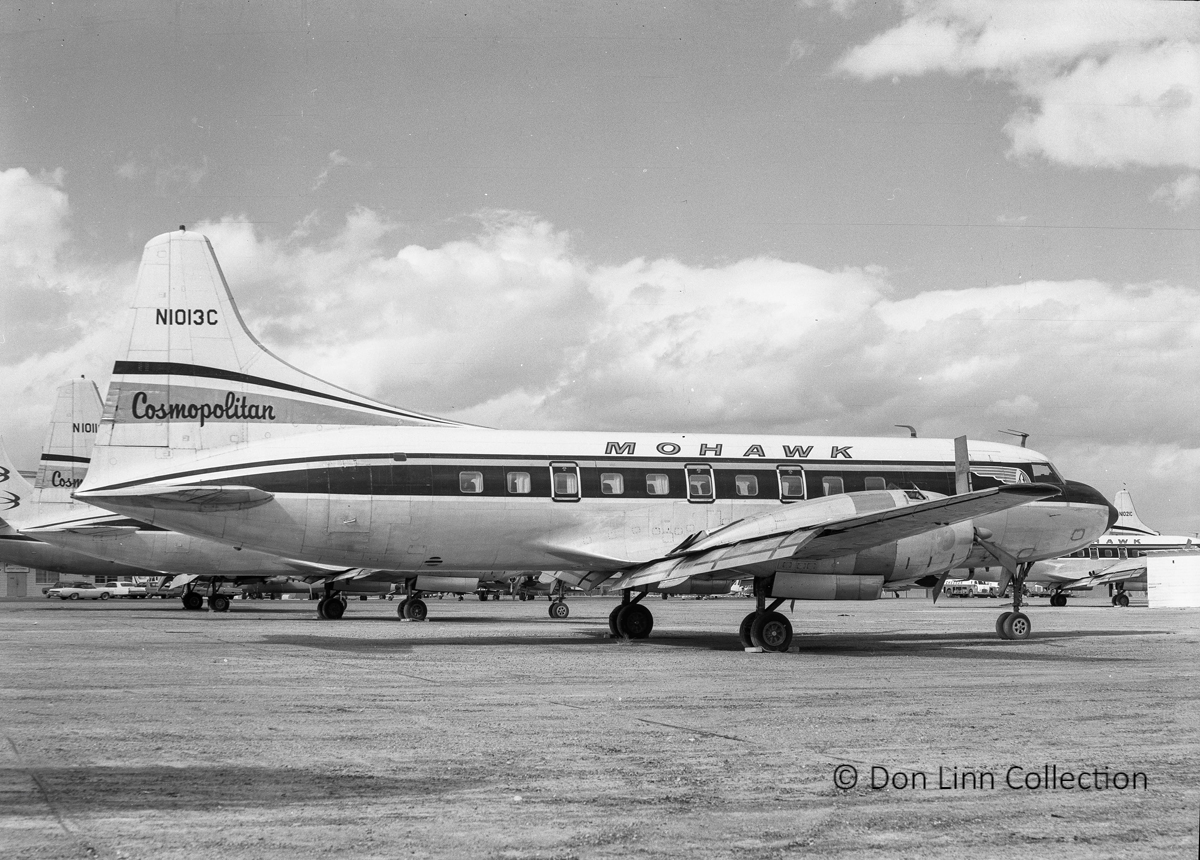
Mohawk Convair 240 at Las Vegas McCarran Airport, March 13, 1968
Story and Photos by Don Linn
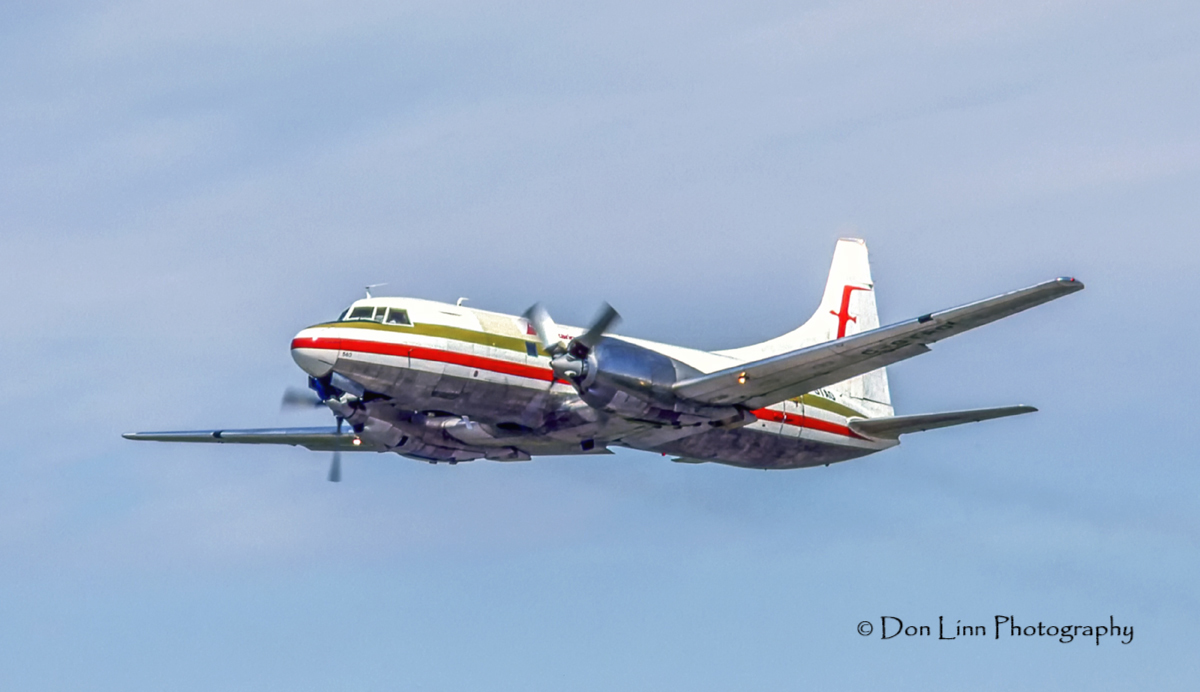
What many would say is a last-minute reprieve, as of this writing at least, the last Convairliner, a stretched CV-5800, C-GKFS, with KF Cargo, based at Kelowna, British Columbia, Canada, was scheduled to retire on May 1, 2026, sadly ending Convair’s long 75 years of active service in its many variations. KF Cargo, a Purolater courier in Canada, had scheduled to retire their last Convair to be replaced by ATR 72-500F freighters. However, plane spotter reports from @YKaspotter on June 13, report “two of the three ATR’s have been experiencing mechanical issues over the past few weeks, and the Convair 5800 remains in service to this day and will likely remain in service for another month.” A short-lived reprieve. Still, it’s a testament to the rugged and dependable Convair’s ability to soldier on over a remarkable seven decades.
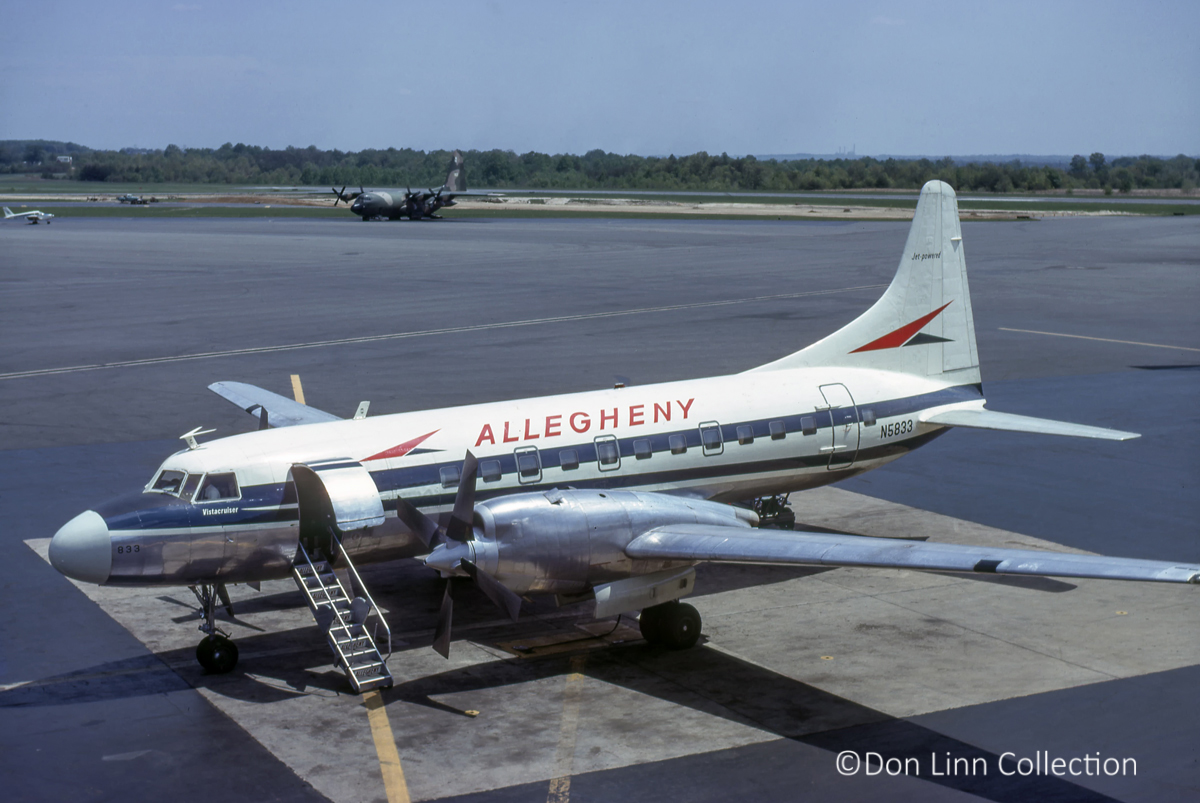
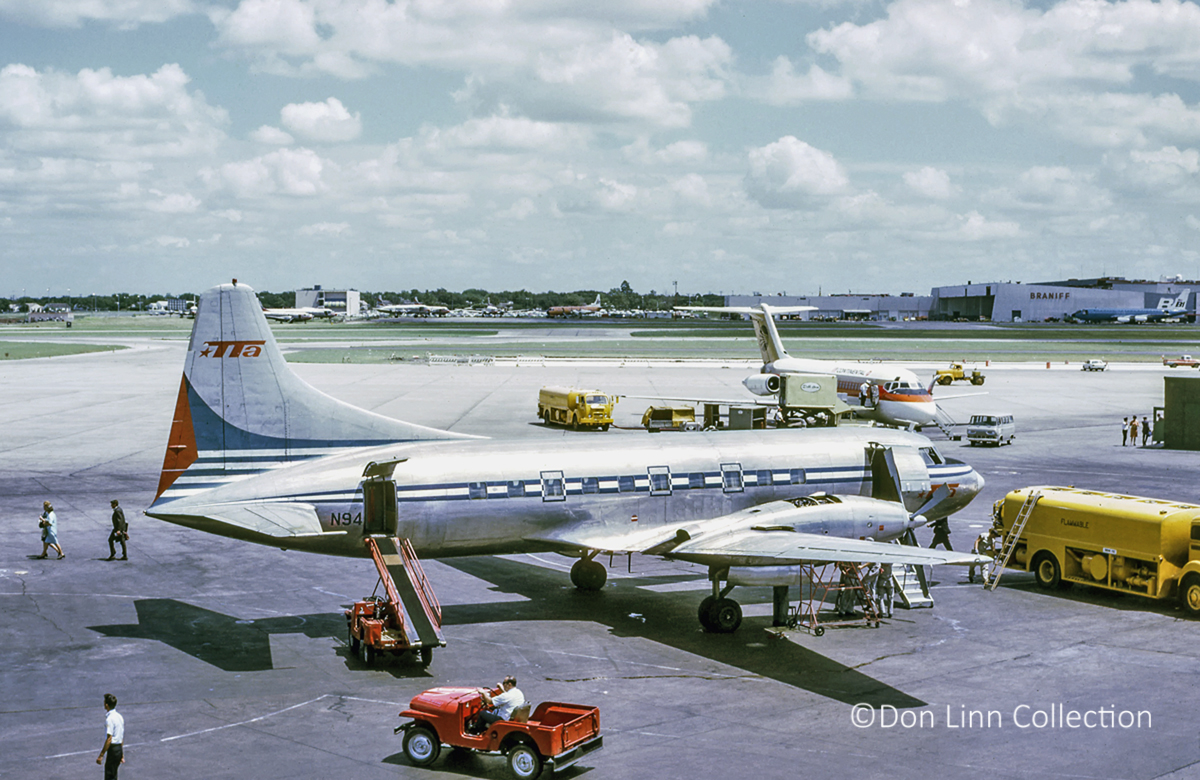
Allegheny CV-580, N5833
The total number of Convairs still in active service is dwindling each year with only a handful of worldwide operators remaining. These are cargo/freight carriers, and there are a small number of fire tankers operated by the Government of Saskatchewan with three CV-580s, but these too are scheduled to be replaced with Bombardier’s (formerly De Havilland Canada) Dash 8-400s this year. I remember when Allegheny Airlines (now American Airlines) retired their CV-580 fleet, known as the Vistacruiser, in the late1970s. My friend Larry Potoski, an Allegheny gate agent during that time, was passing out stickers that read “Save The Convairs” when Allegheny announced their retirement after a brief 13 years in service. His was a well-meaning but fruitless attempt to postpone the inevitable. The airline was building an all-jet fleet, the prop driven Convair was not a fit in the new corporate identity.
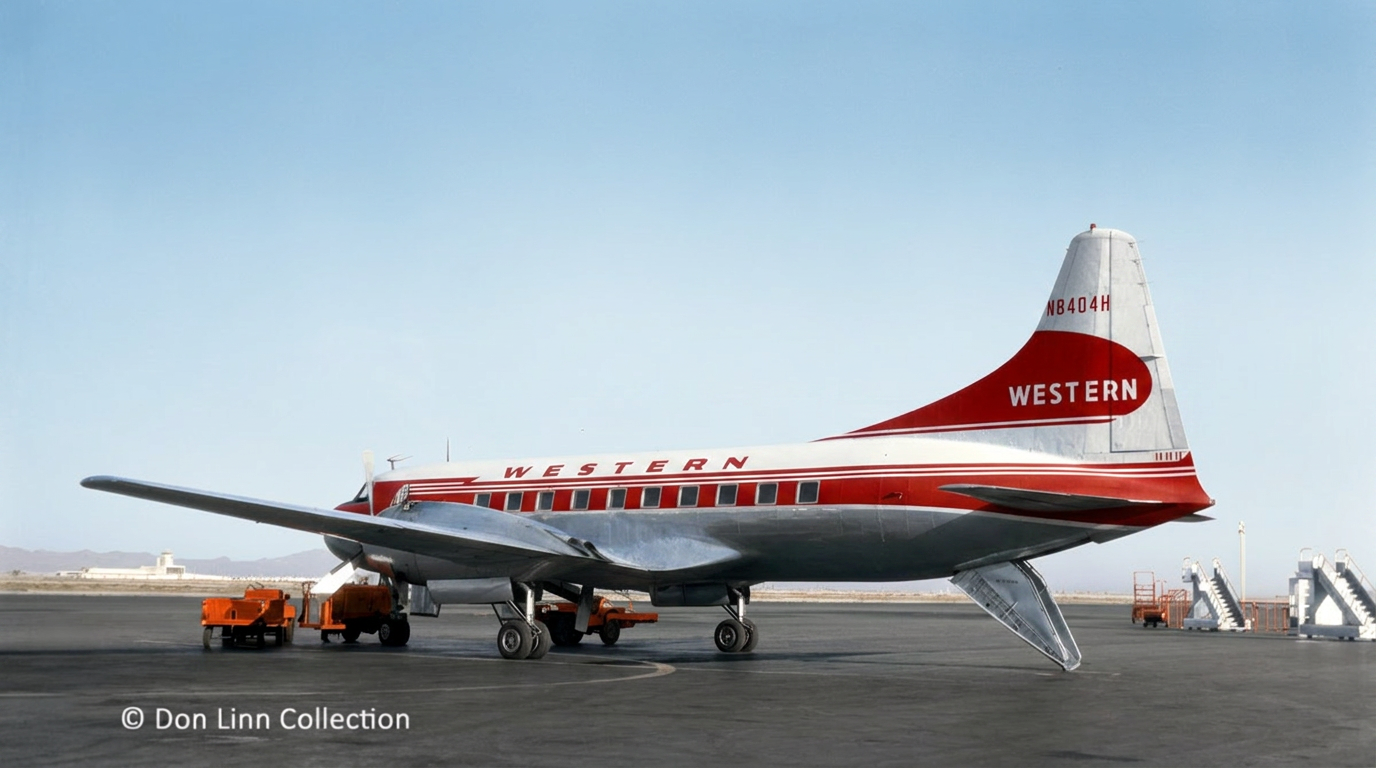
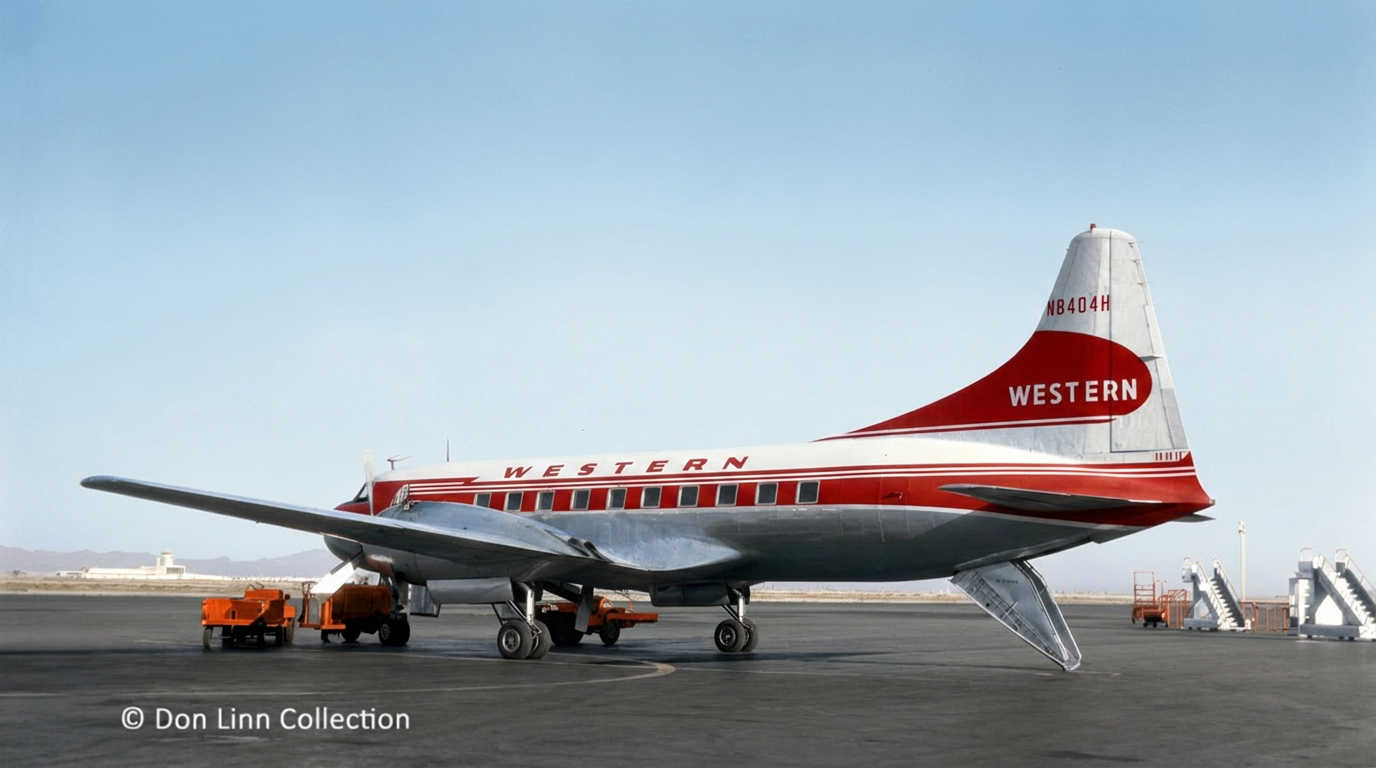
Western CV-240 N8404H
The Golden Age of Commercial Aviation
The 1950s was the beginning of America’s Golden Age of commercial aviation and coincided with the economic boom that followed the end of World War 2. The immediate post-World War 2 period allowed America’s airlines to acquire surplus military aircraft through the War Assets Administration, C-47s and C-54s for example, which were then converted to passenger configuration to meet the new increased demand in post war air travel. Both of those wartime veterans successfully met the initial requirements for the growing commercial aviation market. But the demand for new modern aircraft offering increased speed, comfort and safety required American Airlines, for example, to look for replacements for their aging fleet.
As early as 1945 American Airlines realized the need for new passenger aircraft offering improved passenger comfort and greater seating capacity to replace their DC-3/C-47 fleet for mid-range regional air travel. American was the launch customer of the highly successful Douglas DC-3 taking delivery of the first twenty-one seat passenger aircraft on August 8, 1936. American would also be the launch customer for Convair’s Convairliner fifteen years later.
Up to the closing days of World War 2, the American aircraft industry was consumed with building fighters, bombers and patrol aircraft for the war effort, but realized the need to transition to commercial aircraft when the fighting was over. Convair (the merger of Consolidate Aircraft and Vultee Aircraft) was the builder of the B-24 Liberator heavy bomber and the PBY Catalina patrol aircraft, made the successful transition to commercial aircraft when it responded to American Airlines request for a new regional airliner to meet the post war economic boom.
Based on their established 1945 requirements for a new passenger aircraft for regional service, to replace their aging fleet of DC-3/C-47s, American Airlines sought a new aircraft design featuring a twin engined pressurized aircraft with improved cabin comfort for forty passengers, nearly double the seating capacity of the DC-3. The competition for the new aircraft design to meet America Airlines design requirements was three key wartime aircraft builders: Convair, Douglas and Martin Aircraft. Douglas offered their DC-6, Martin its 4-0-4 Martinliner and Convair’s new CV-240 Convairliner.
Convair’s was the successful design selected by American Airlines who then collaborated closely with American’s design team to produce the Convairliner CV-240, making its first flight on March 16, 1947. The first production CV-240 was delivered to American Airlines nearly a year later on February 29, 1948. It was the first pressurized, twin-engine airliner, allowing American to provide faster, more comfortable short-haul flights. Convairliners in its many variations, both commercial and military would remain in production from 1947 to 1954, with more than 1,000 aircraft produced.
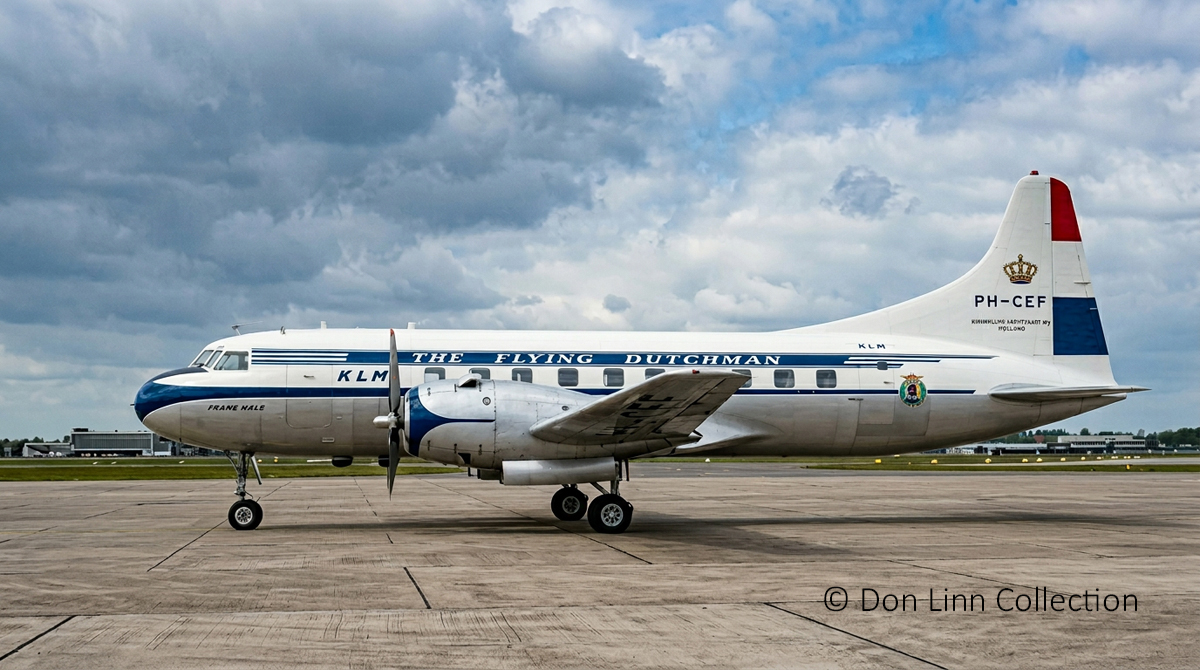
KLM CV-240, PH-CEF “Frans Halls” on nose, famous Dutch painter. Location unknown, May 1954. Photographer unknown .
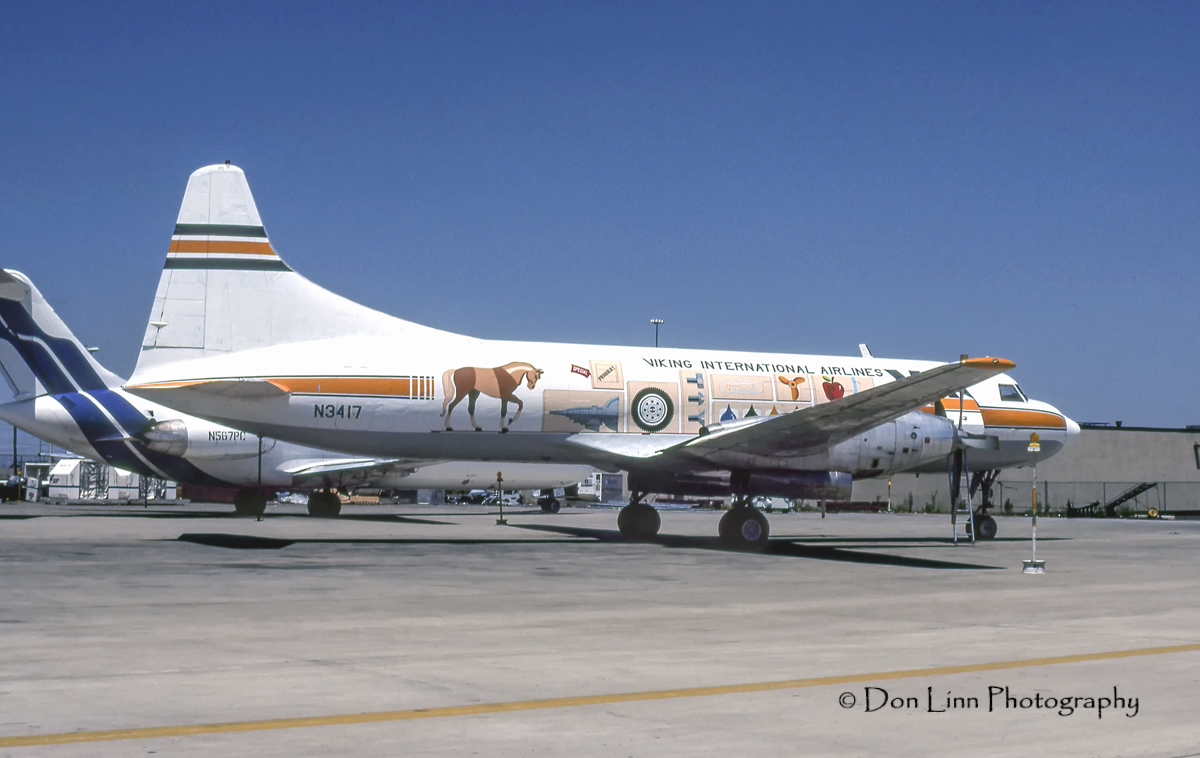
The success of the Convairliner is witnessed in the nearly 30 major airlines and flag carriers who operated the Convair globally for half of the 20th century and into the 21st century. Eventually the Convairs would evolve into five major types, the piston-engined CV-240, -340, 440 and the turboprop CV-580, plus the stretched CV-5800.
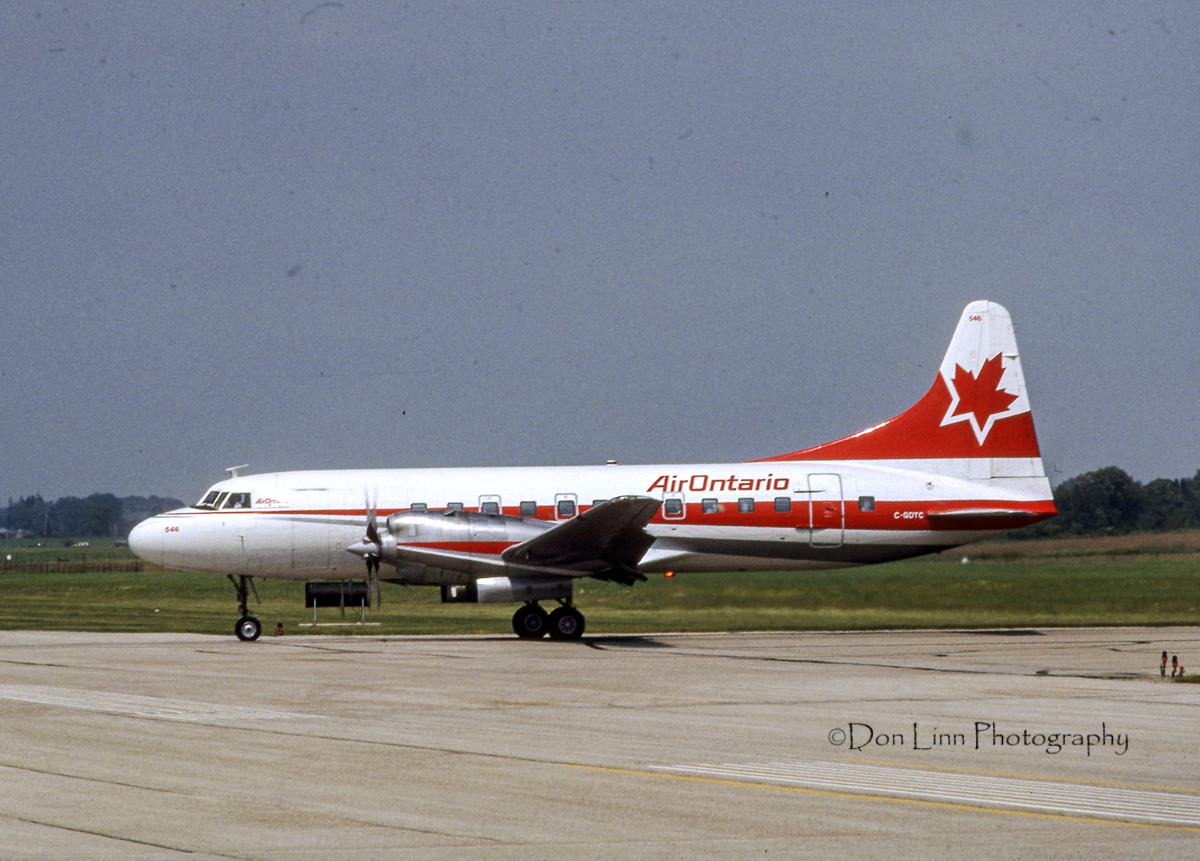
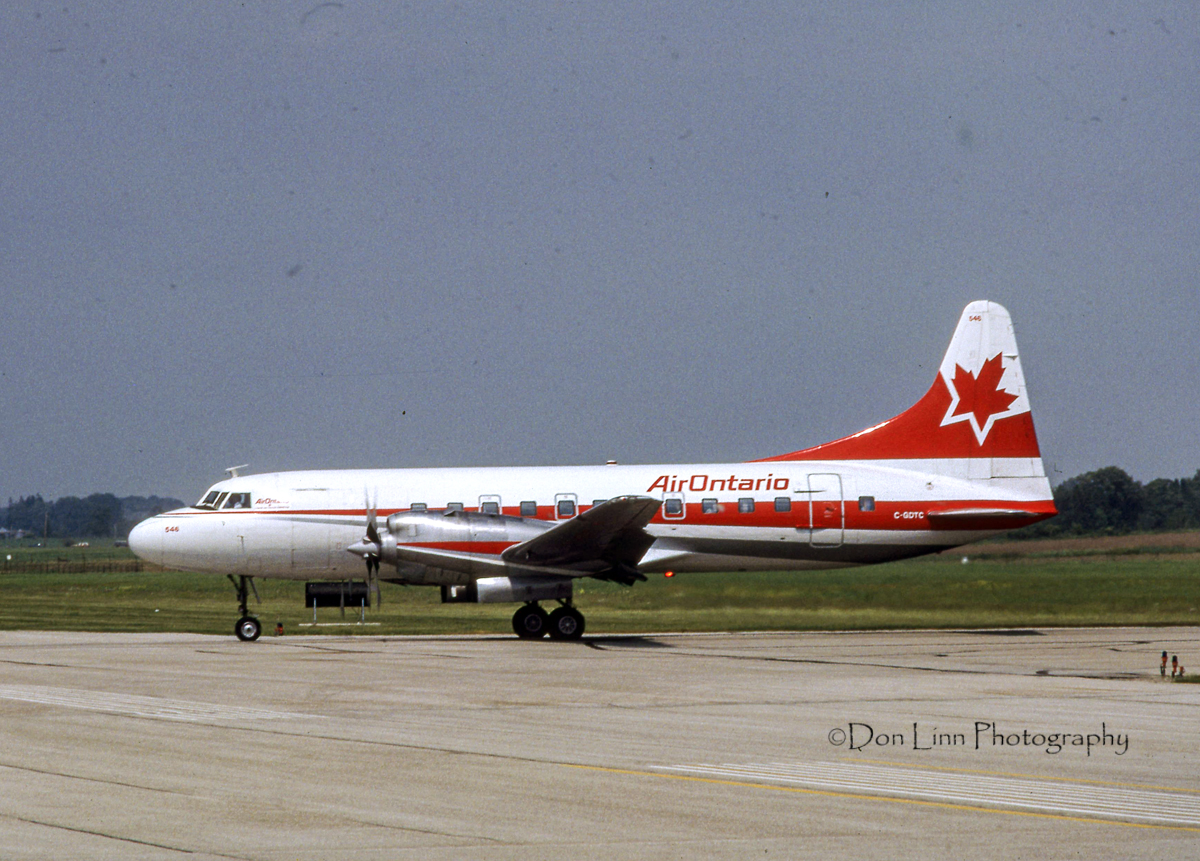
Air Ontario CV-580, C-GOTC, departing Lobndon (YXU).
The Convair story is one of success, and longevity with 70 years of continued operations in a variety of roles from passenger to freight, and in its closing years firefighting. Perhaps by the end of this year the remaining small number of Convairs will be retired. If so, they will have earned a proud place in aviation history.
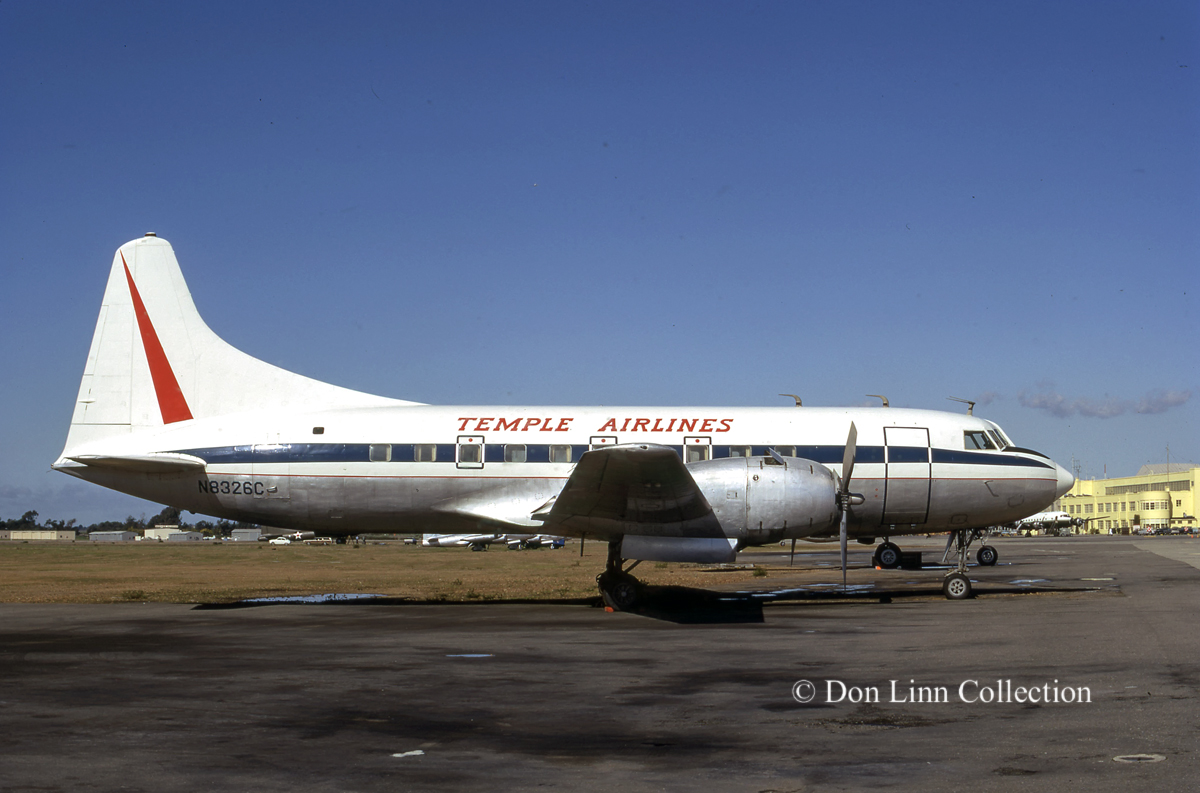
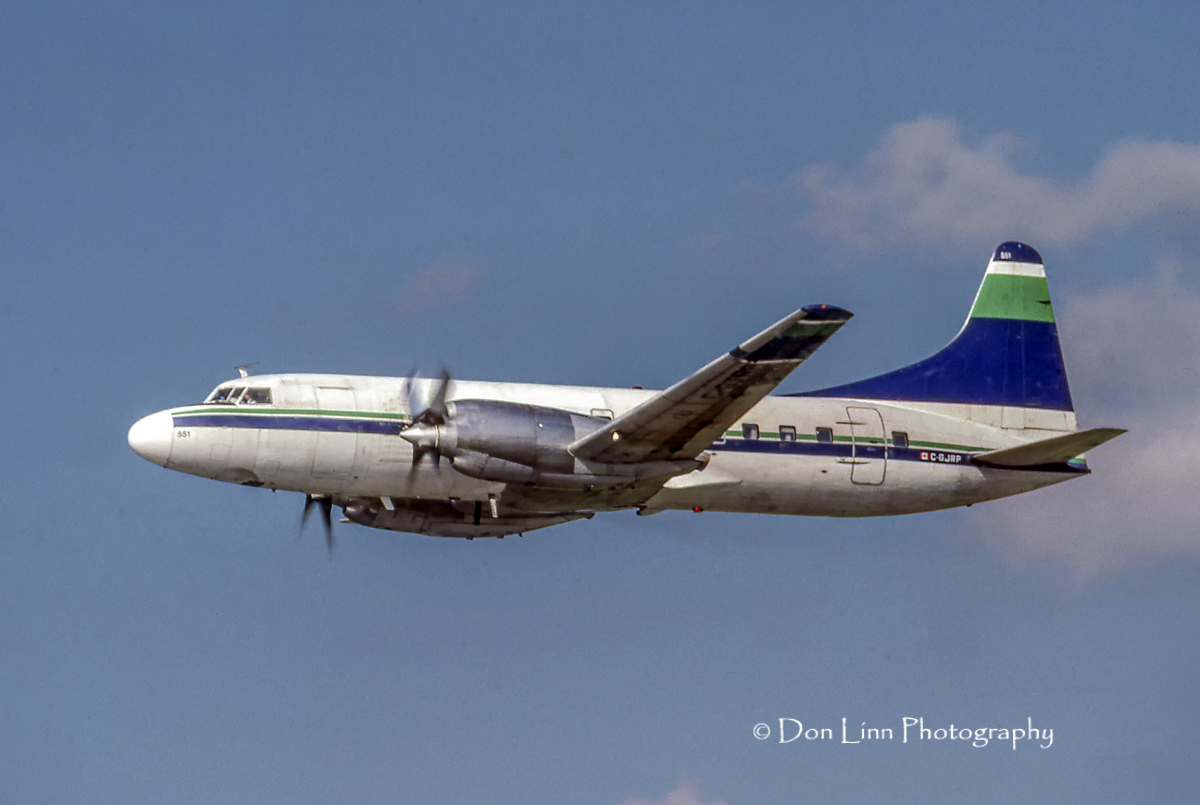
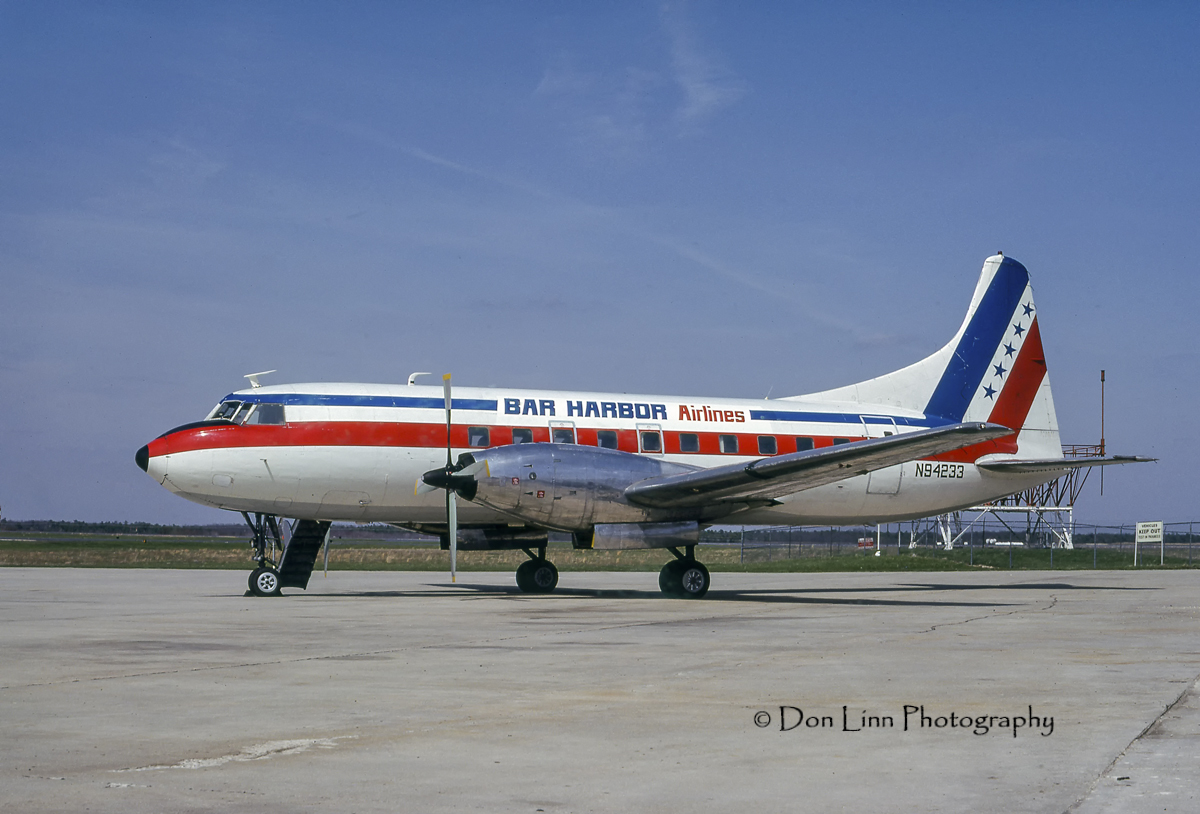
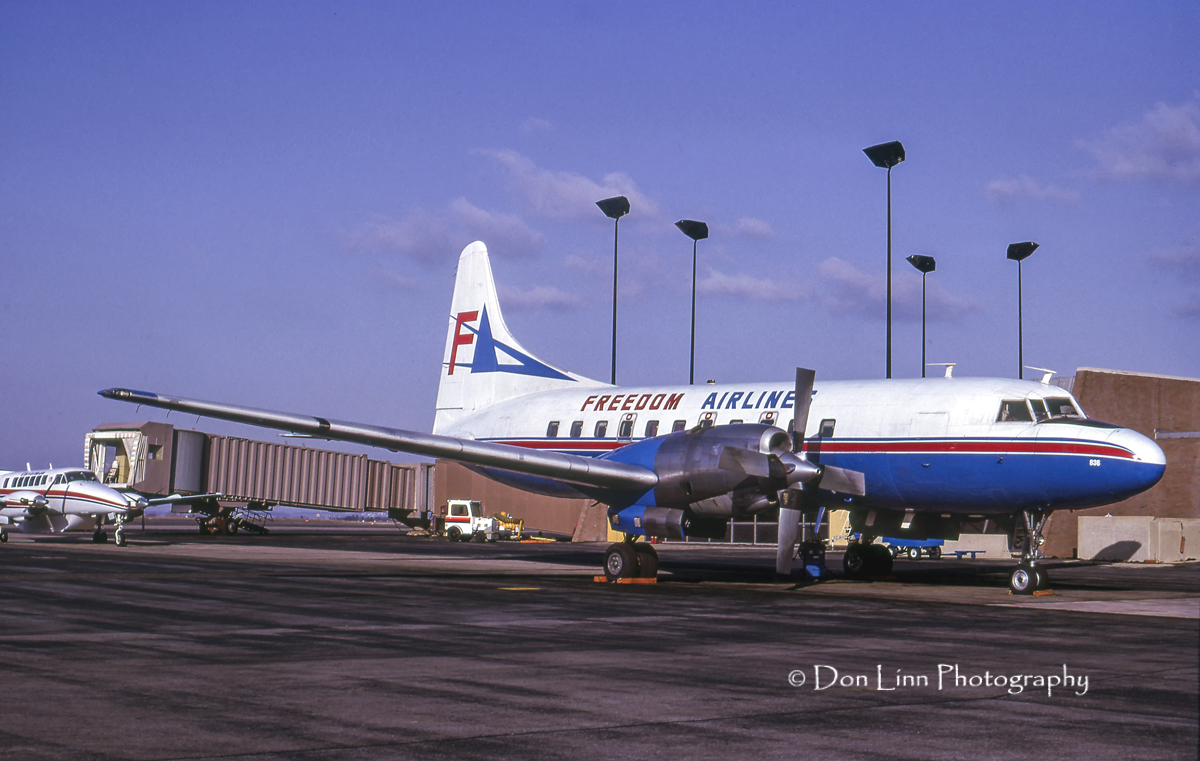
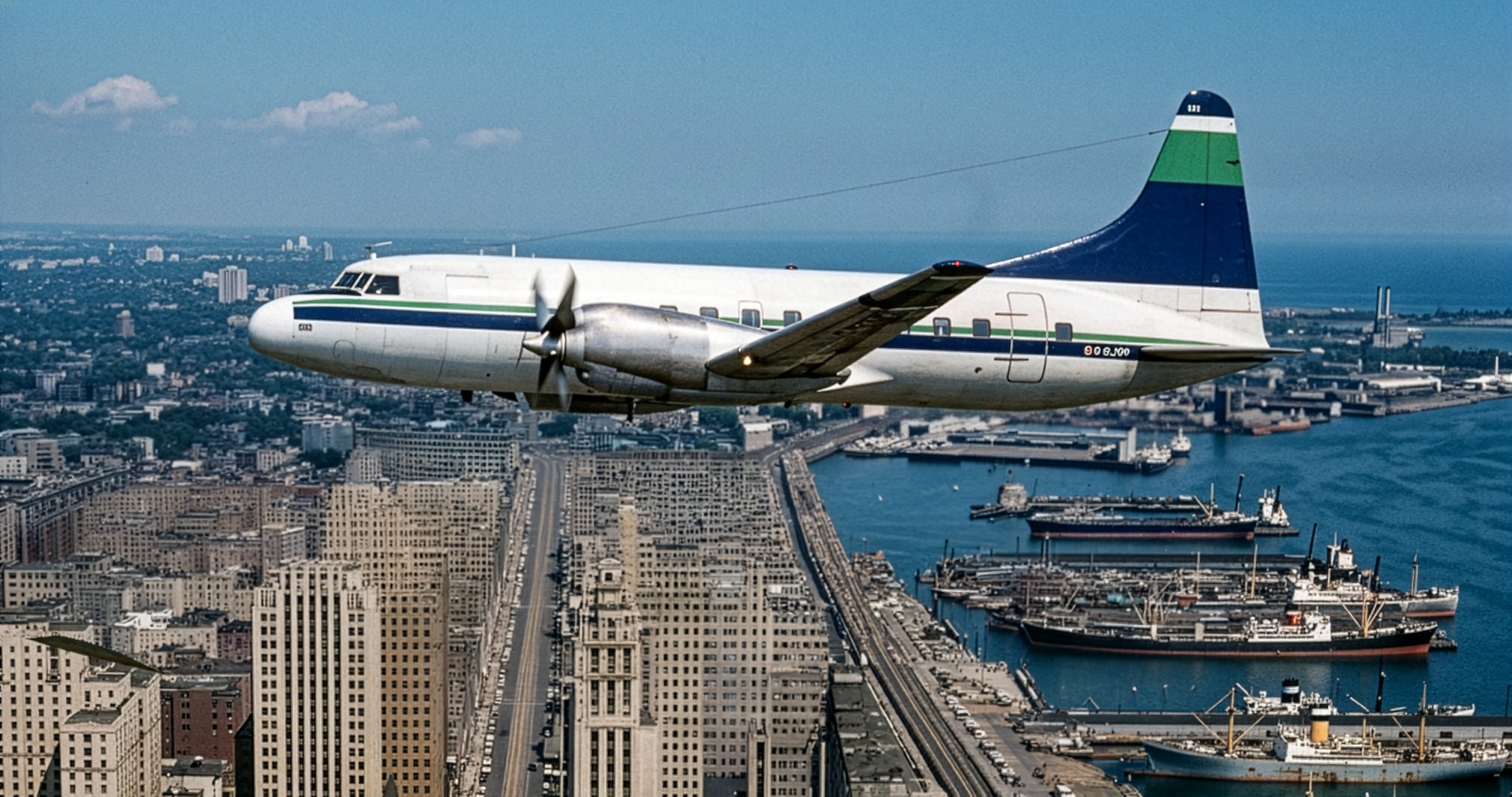
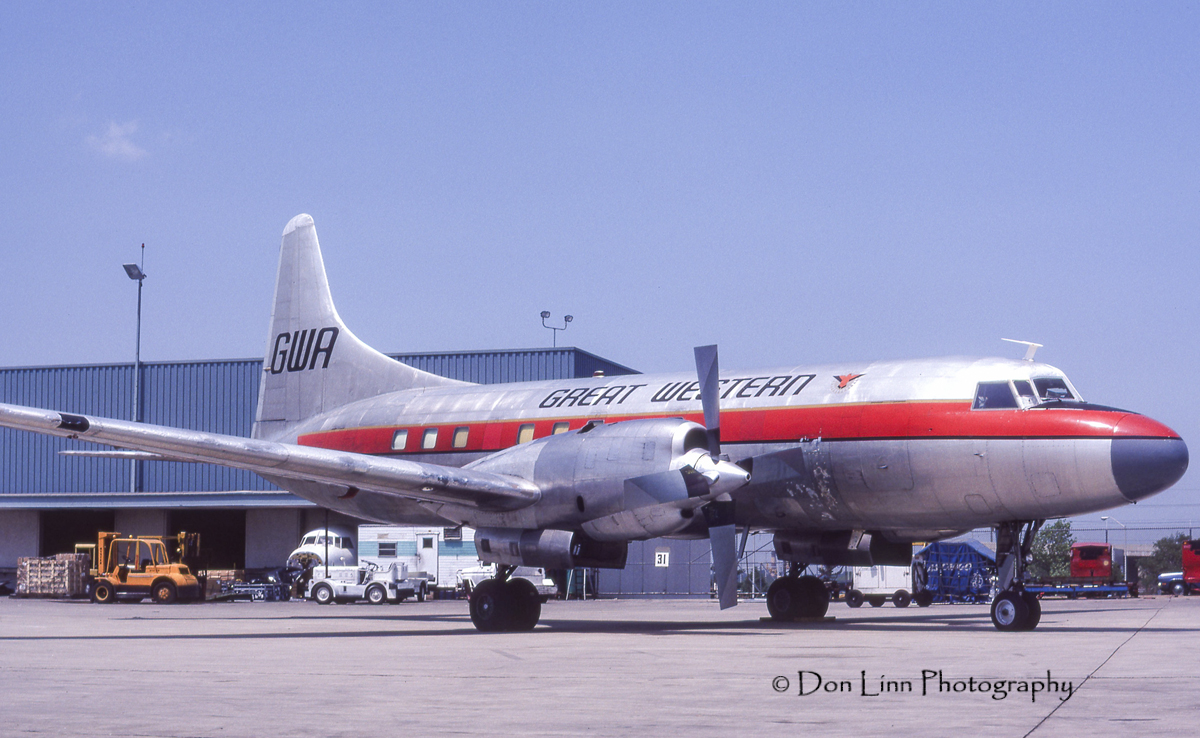
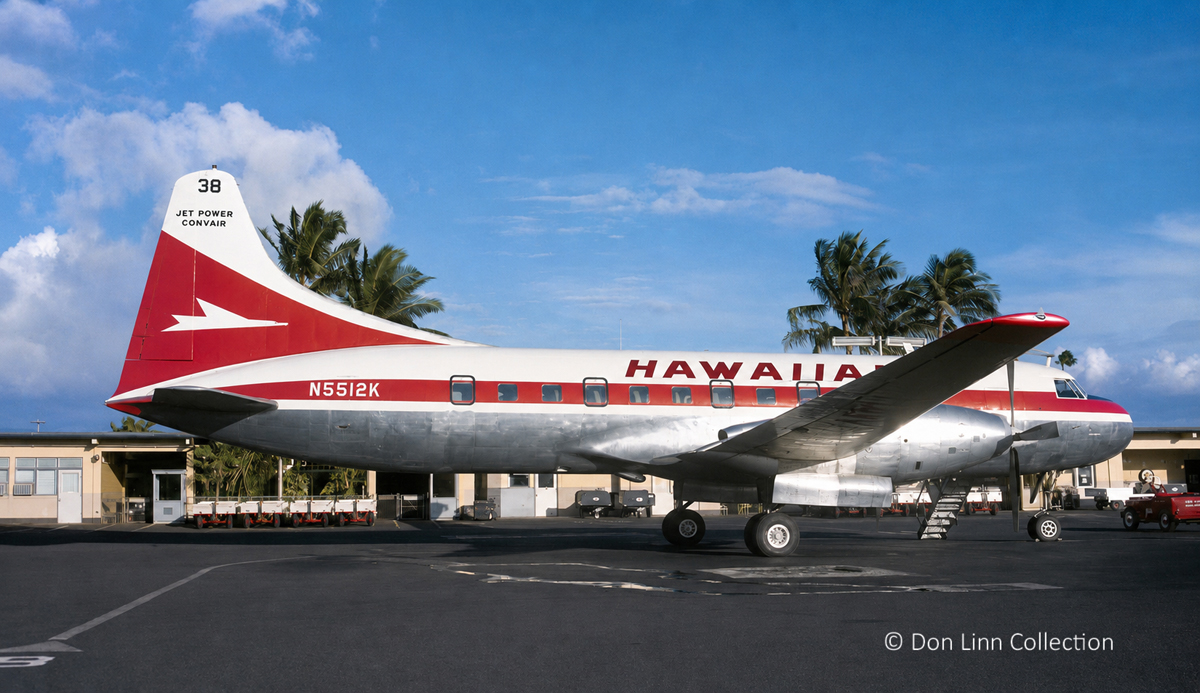
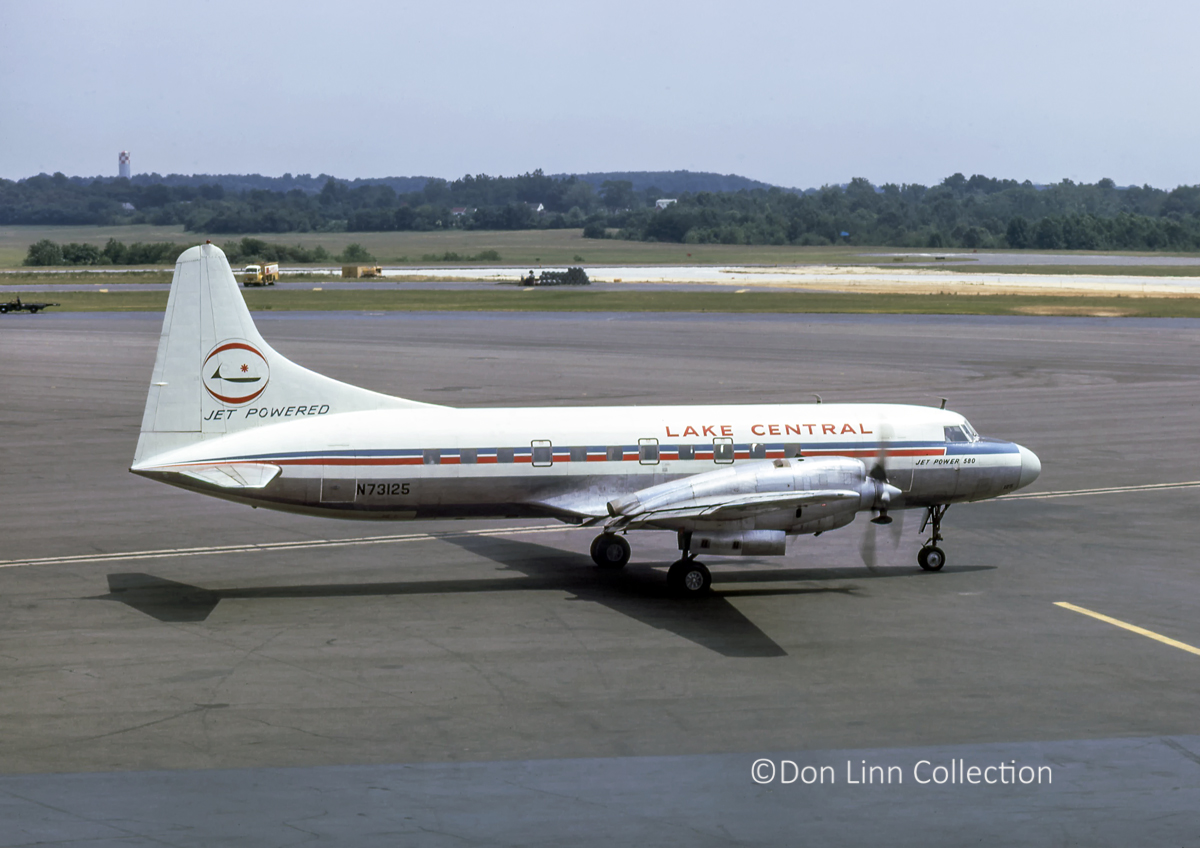
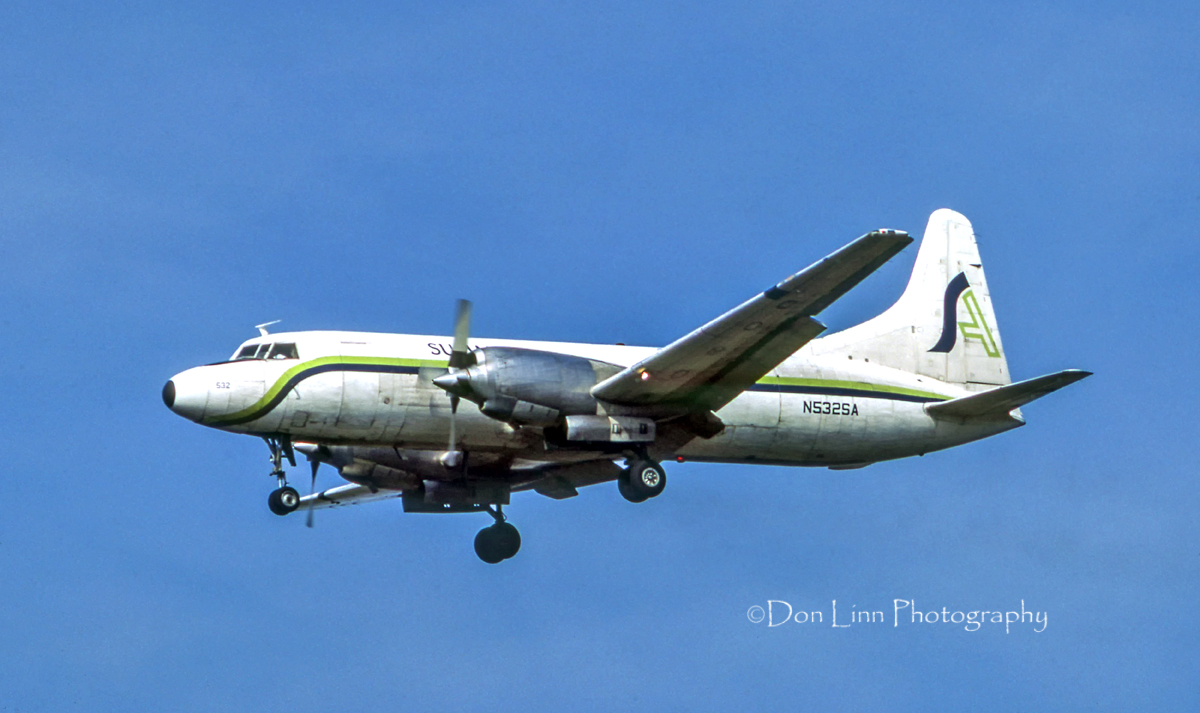
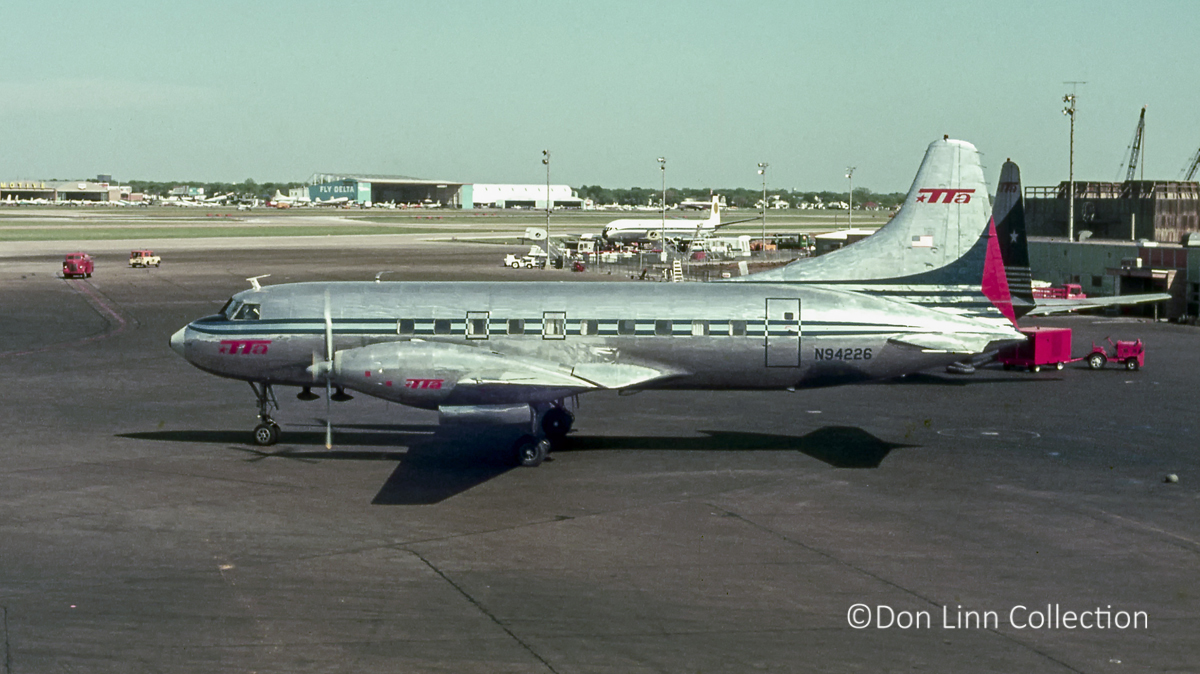
Below is a gallery of several Convairliners… hover over the thumbnail for information on the airplane, click on the thumbnail for a larger photo.