U. S. Navy and Marine Corps Aerial Tankers Scrapbook

Story by Ken Kula. Photos by Don Linn, Del Laughery, Ken Middleton, Scott Zeno, Mike Colaner, Ken Kula and US Navy photographers.
After the end of World War II, the United States military arms went in different directions as far as aerial refueling options. While the U.S. Air Force went for strategic capabilities for their global reach missions, the U.S. Navy and Marine Corps began utilizing tankers to extend the range of their first jet-powered bombers. Aircraft carrier-based aircraft didn’t have the range that larger land-based bombers had, and weren’t able to carry such a large payload, which included nuclear bombs. Aircraft carriers had limited space and their planning required smaller aircraft in the tanking mode. Marine Corps aircraft had a relative shorter range, and a mission to support the Marines on the ground, so their refueling needs were more similar to the Navy’s than the Air Force’s. Additionally, Marine and Navy aircraft were fitted with the hose and reel refueling probe equipment, and not the flying boom receptacles.
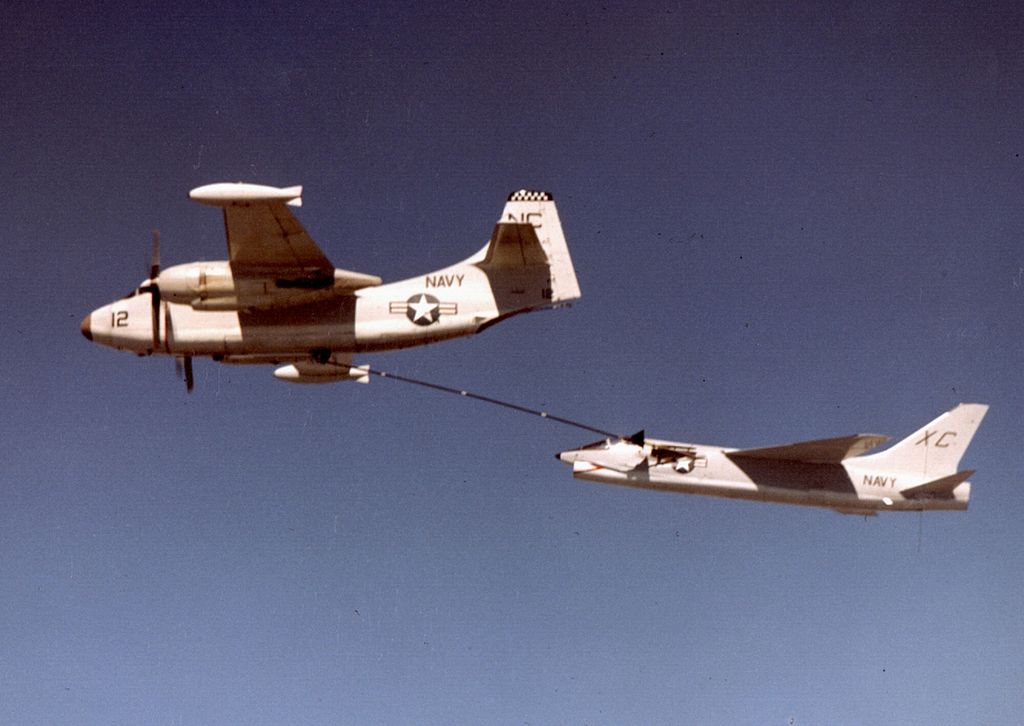
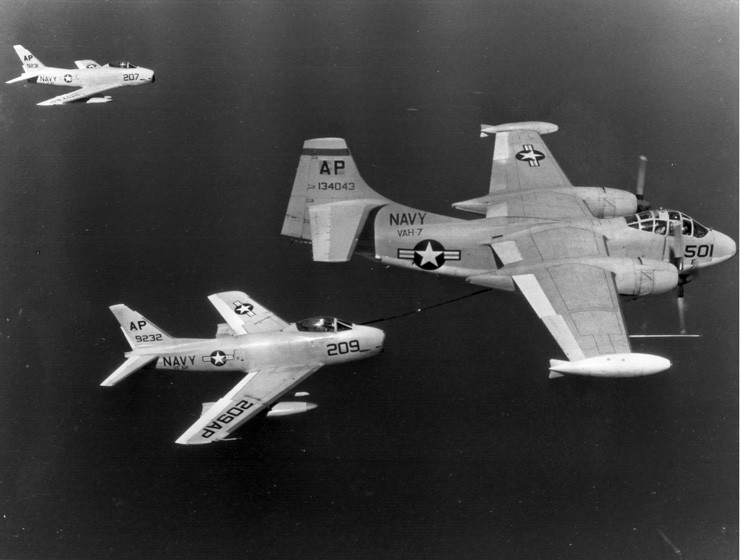
AJ Savage tankers during the late 1950s. US Navy photos by unknown photographers.
The U.S. Navy adapted a twin-prop bomber (with a jet engine in the tail) as their first tanker – the North American AJ Savage. For the tanker version, the jet engine was removed and refueling gear installed in the tail. These early refuellers were used during the late 1950s. The AJ Savage was replaced by the Douglas A-3 Skywarrior in the nuclear attack role, and the AJ Savage tankers were only used for a few years.
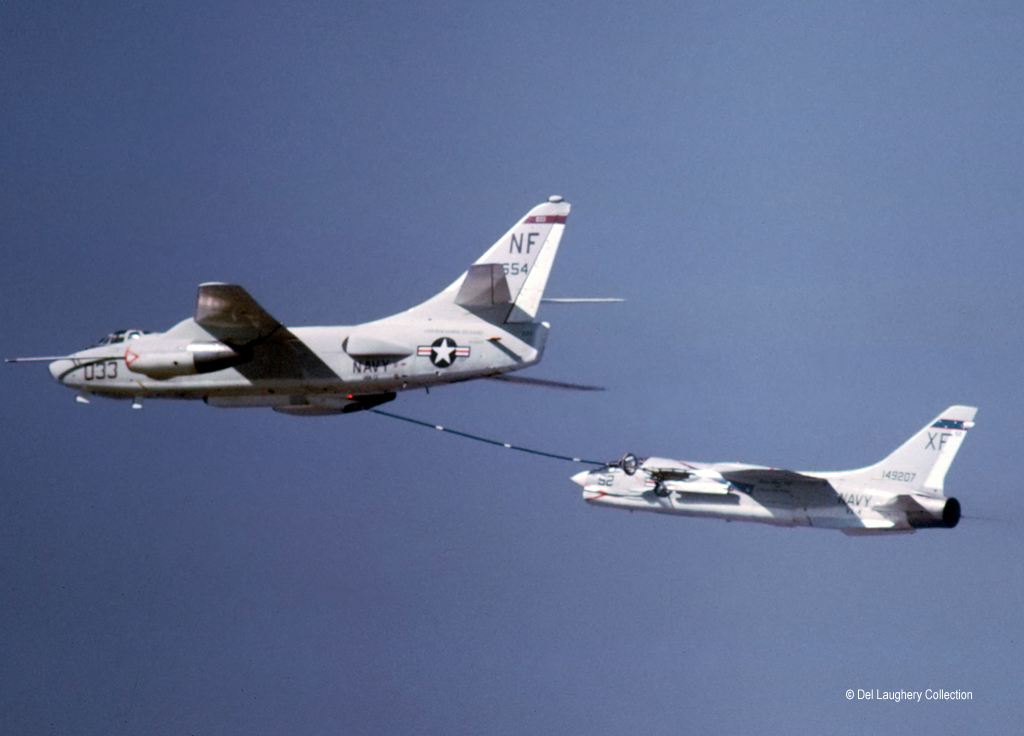
Nov 1968. EKA-3B, BuNo 142654, refuels F-8E, BuNo 149207, from VX-4 (Air Test and Evaluation Squadron Four, (AIRTEVRON FOUR)).
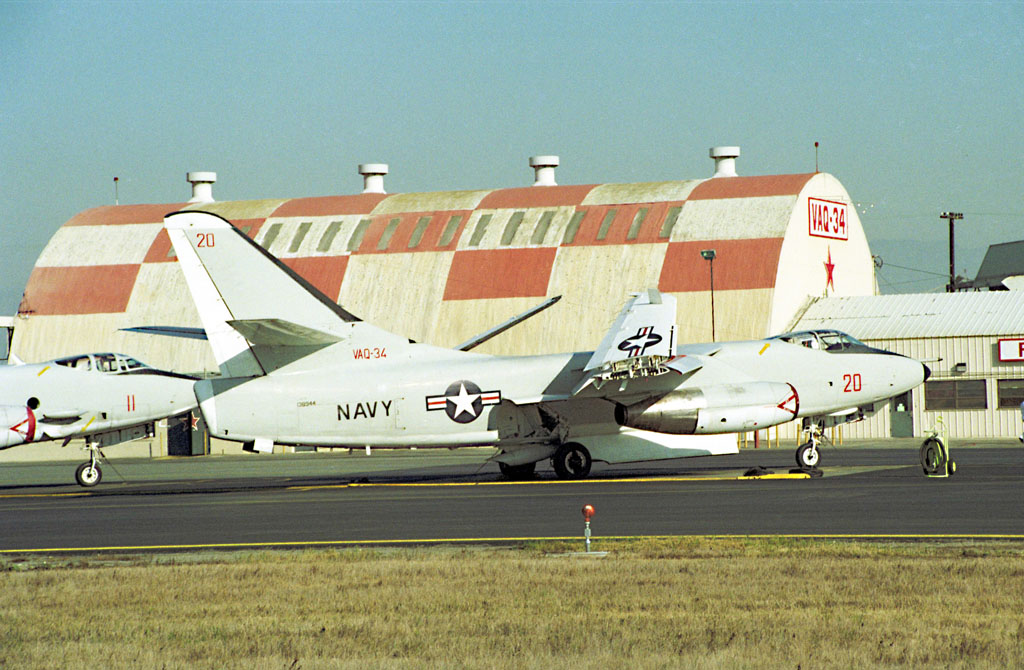
The Douglas A-3 Skywarrior was the next dedicated Navy nuclear bomber, but these fell out of favor when the supersonic North American A-5 Vigilante was adopted as the next nuclear-capable bomber. A-3s were modified as tankers in two versions, the straight KA-3B tanker and the EKA-3B combined tanker and ECM platform. The tanker KA-3s played an important role during the Viet Nam War, as they were carrier-based and stayed close to the naval aircraft near the carriers and mainly off the shore of Viet Nam.

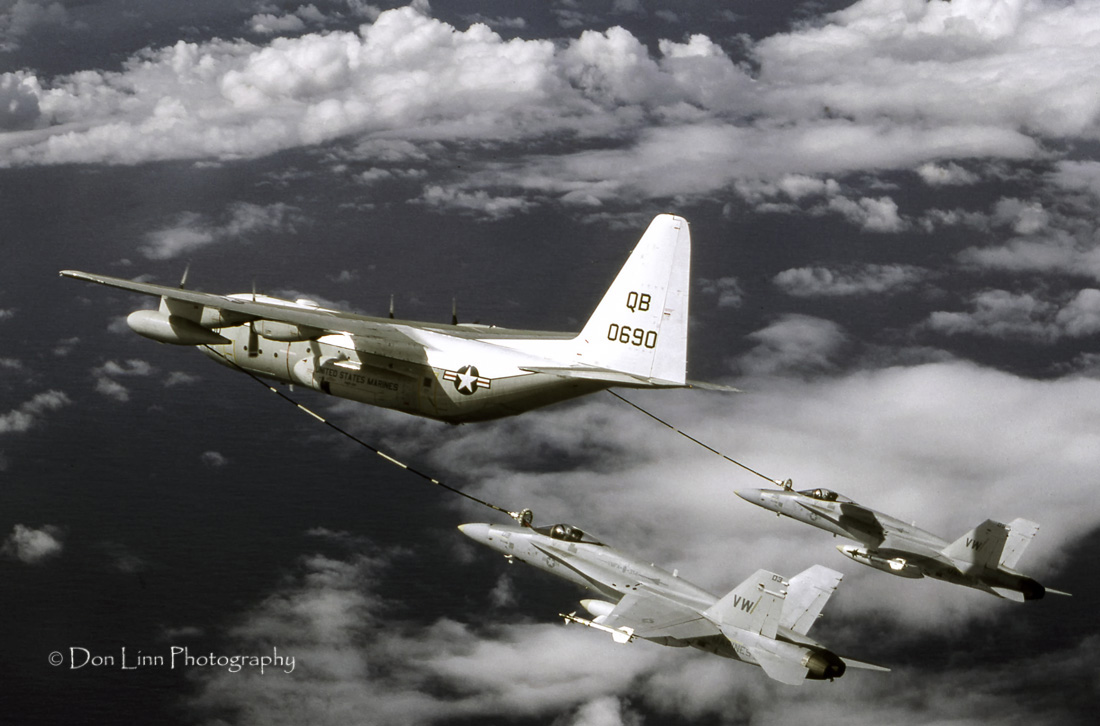
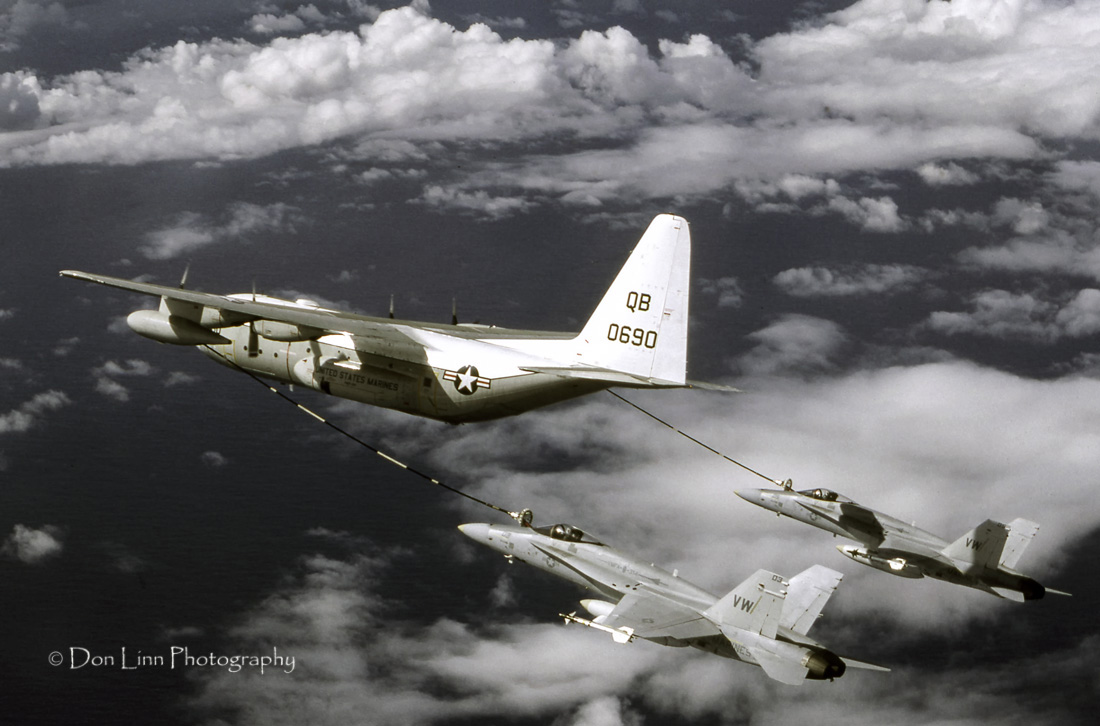
F-18A, VMFA-314, KC-130F, 148893, VMGR-314, near Pt. Magu, March 1986
At the same time as these Skywarriors were serving Navy Jets, the Marine Corps modified their early Lockheed C-130 transports with hose and drogue refueling units for use with Marine and Navy jets. Early KC-130F aircraft were not an exact match for the speedier and heavier F-4 Phantom, F-8 Crusader and A-4 Skyhawk fighter-bombers, but they served their receivers well.

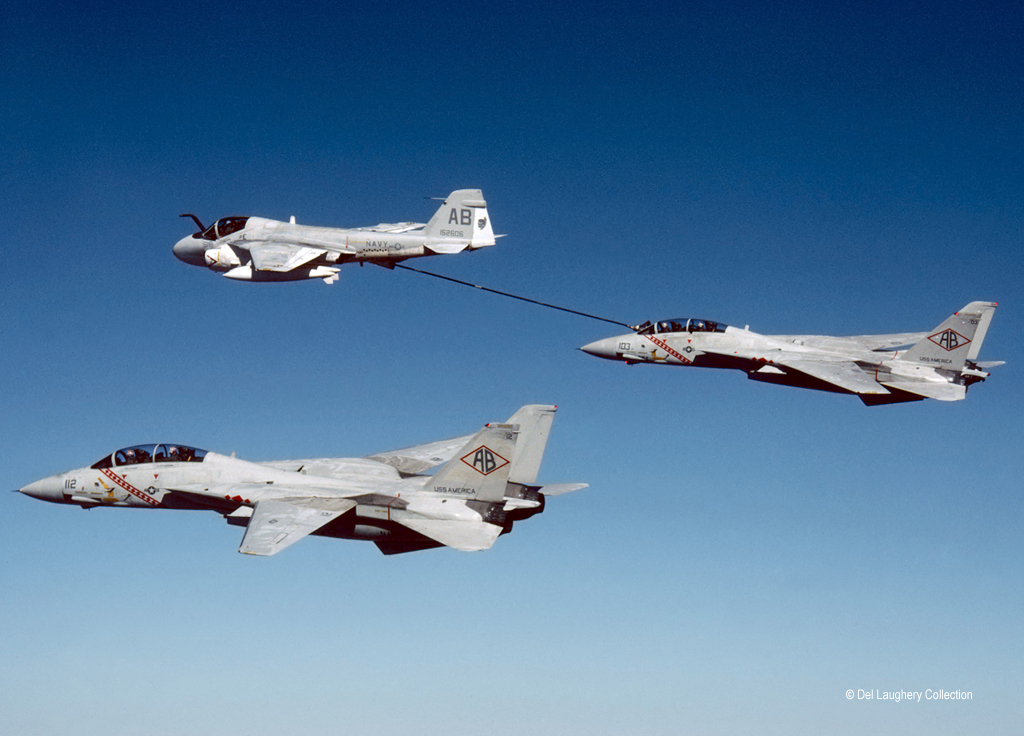
Nov 1968. EKA-3B, BuNo 142654, refuels F-8E, BuNo 149207, from VX-4 (Air Test and Evaluation Squadron Four, (AIRTEVRON FOUR)).
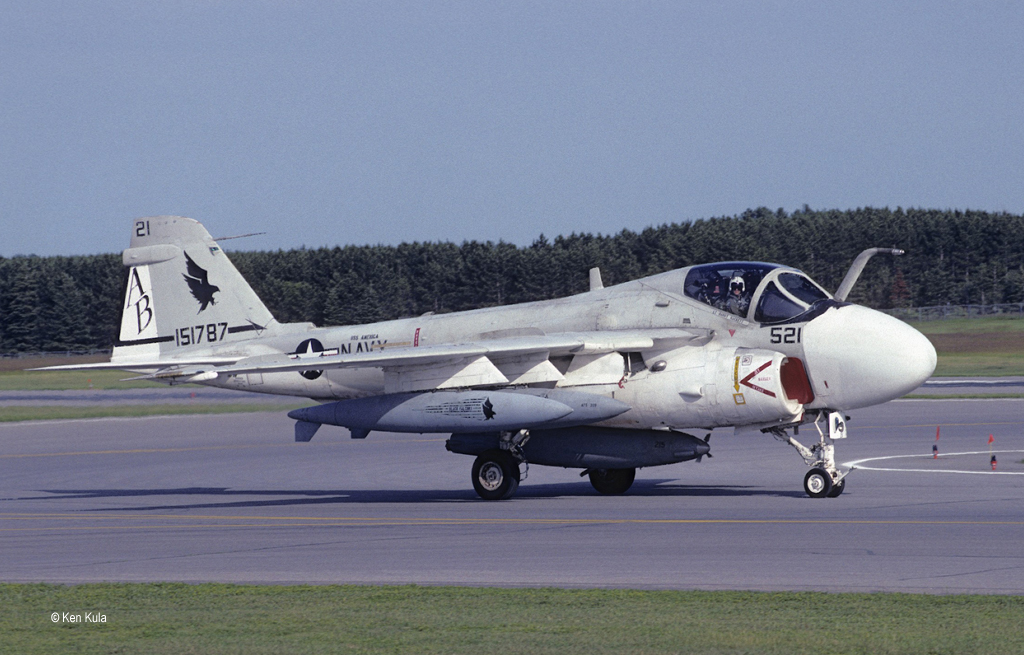
The Navy’s KA-3 Skywarriors (nicknamed the “whale” due to its size) were supplemented and ultimately were replaced by Grumman KA-6D Intruder tankers… modified early model A-6 Intruder bombers. The KA-6D flew similar speeds and extended the range of later A-6s, as well as F-8 Crusaders and Vought A-7 Corsair IIs – bombers all based aboard aircraft carriers. They later served as tankers for F-14 Tomcats too.
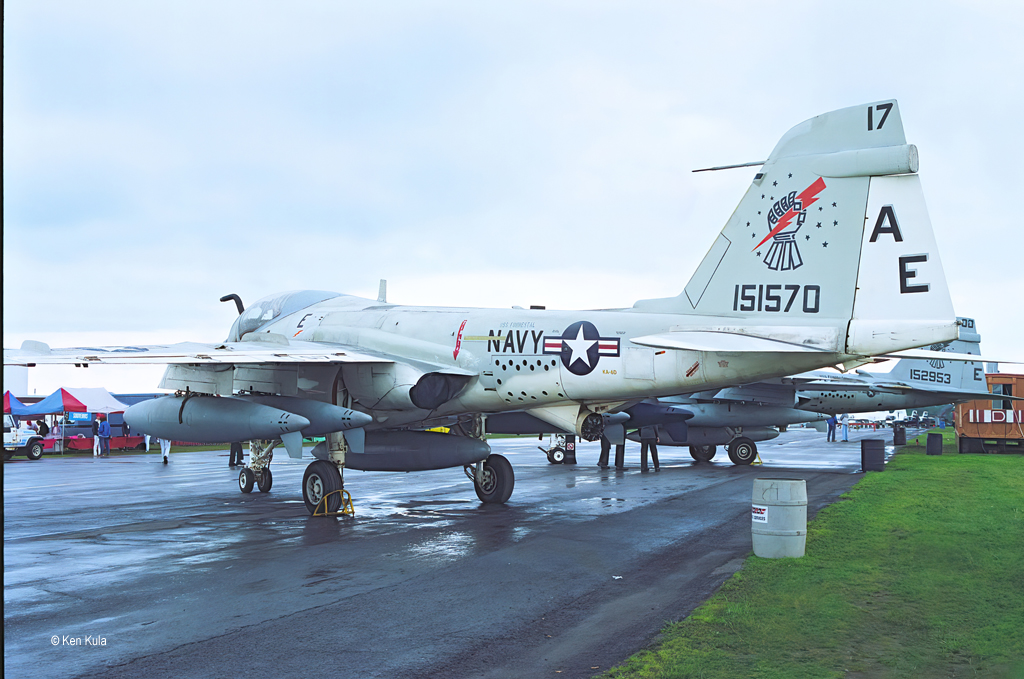
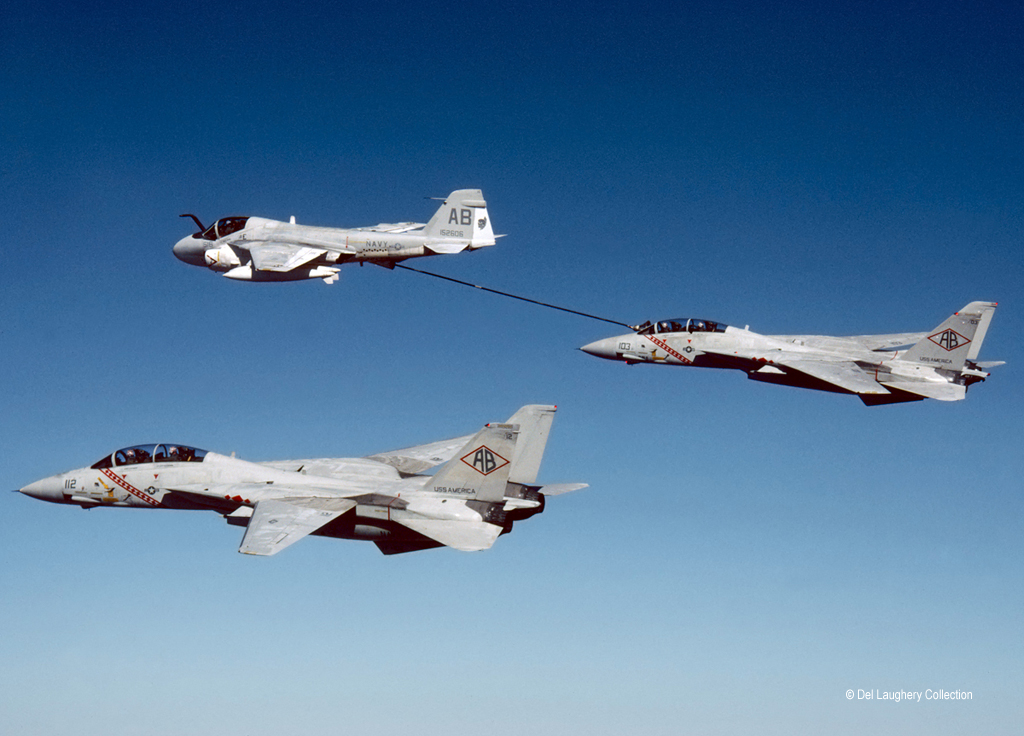
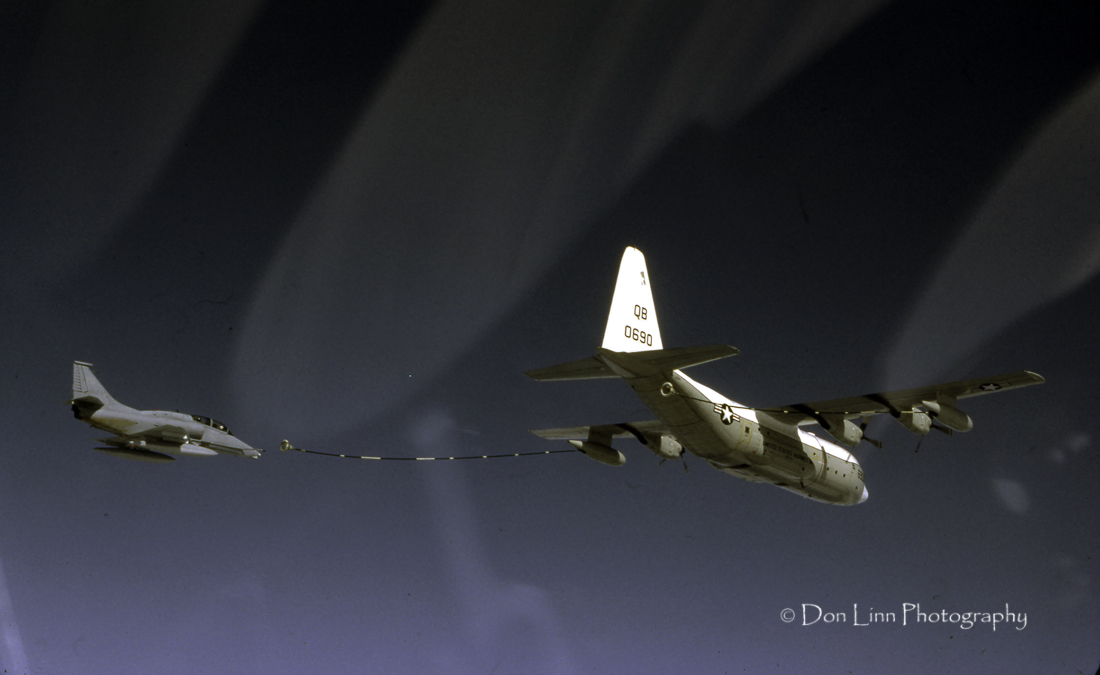
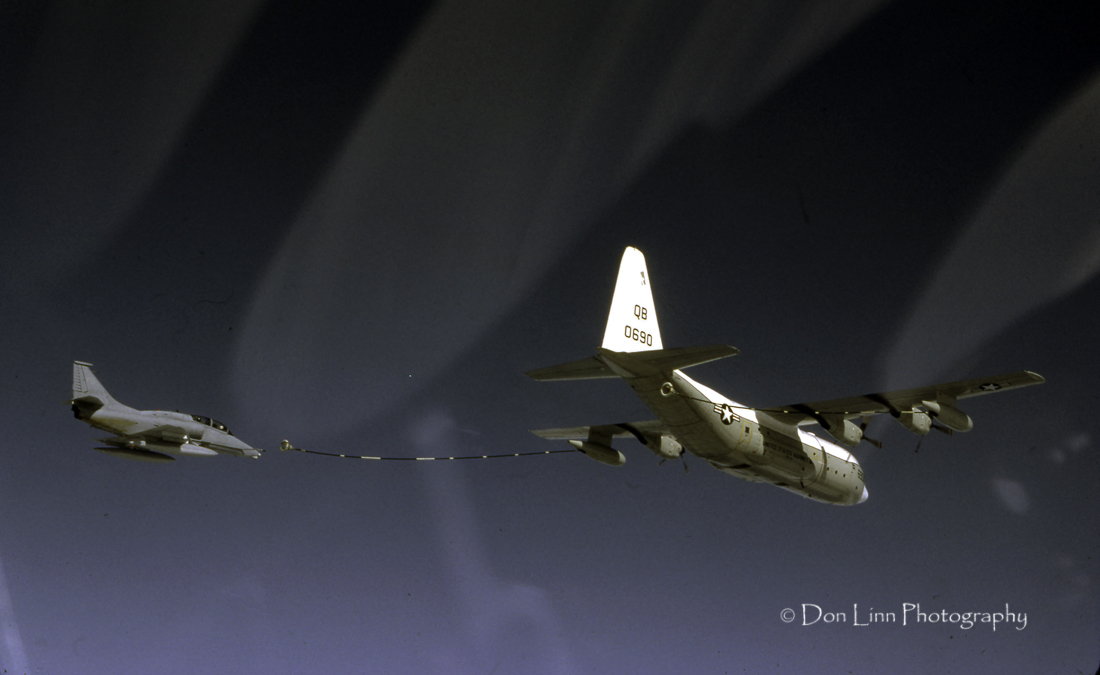
KC-130T, 160690, VMGR-352, OA-4M, H&MS-13 off CA coast
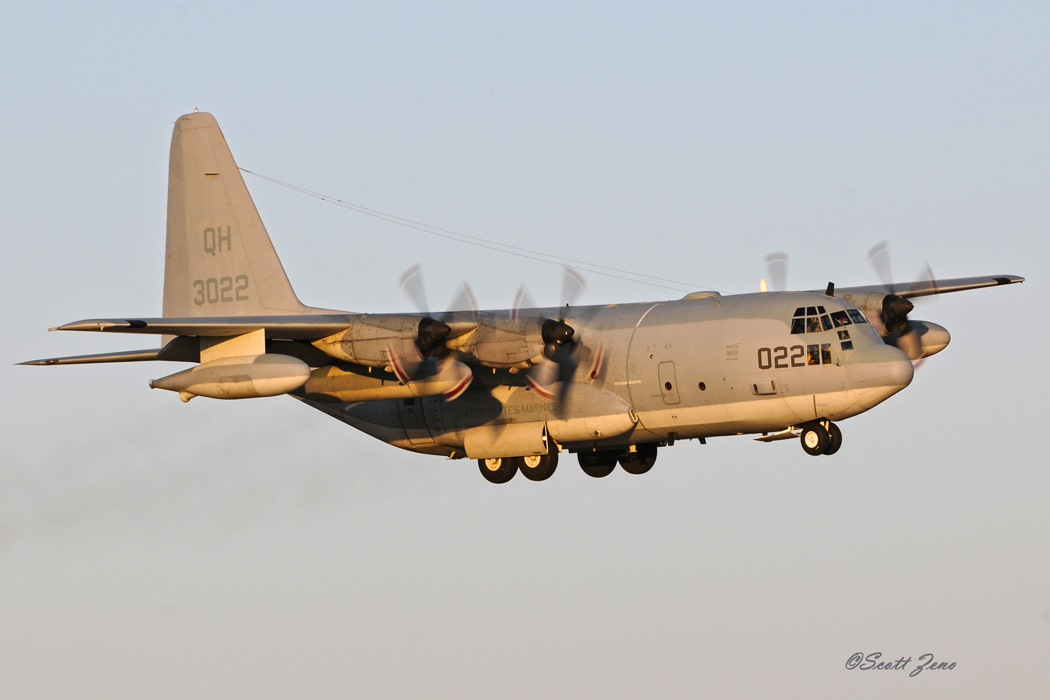
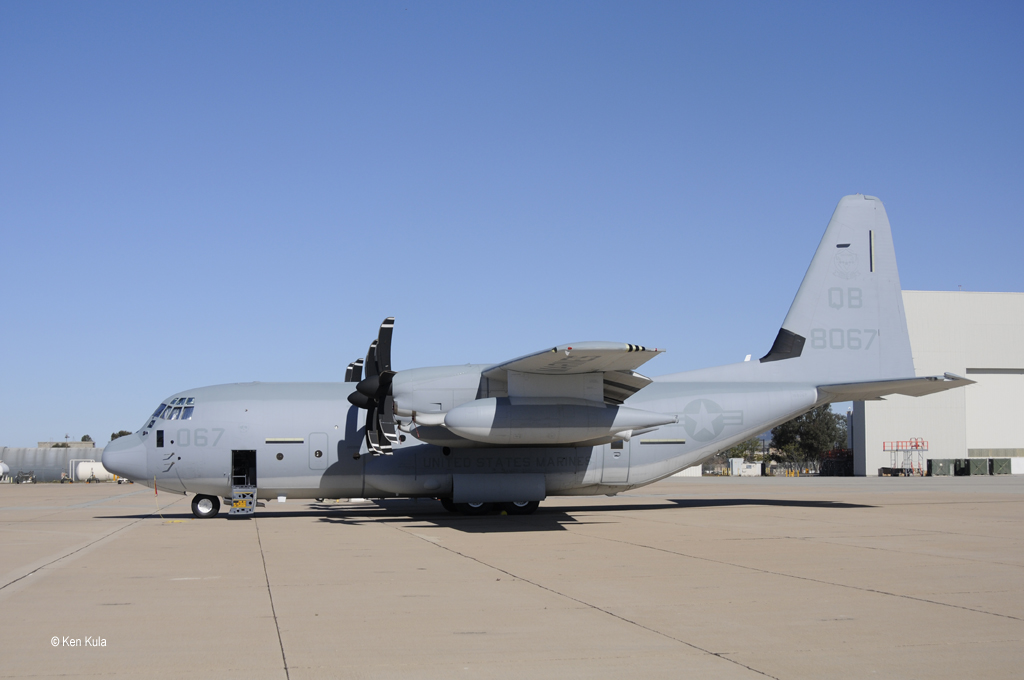
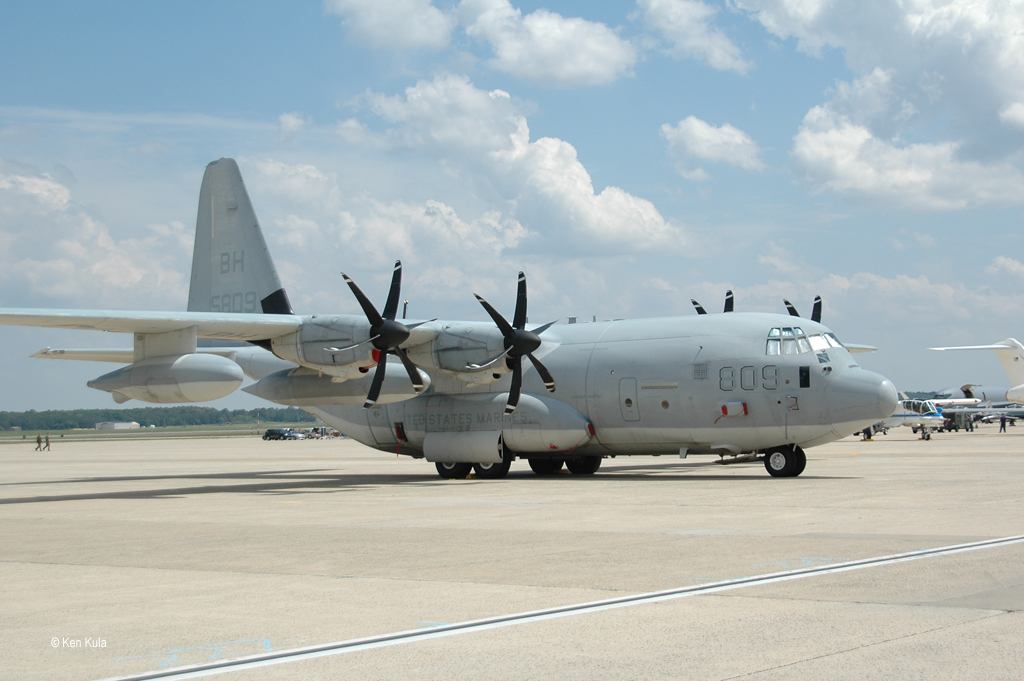
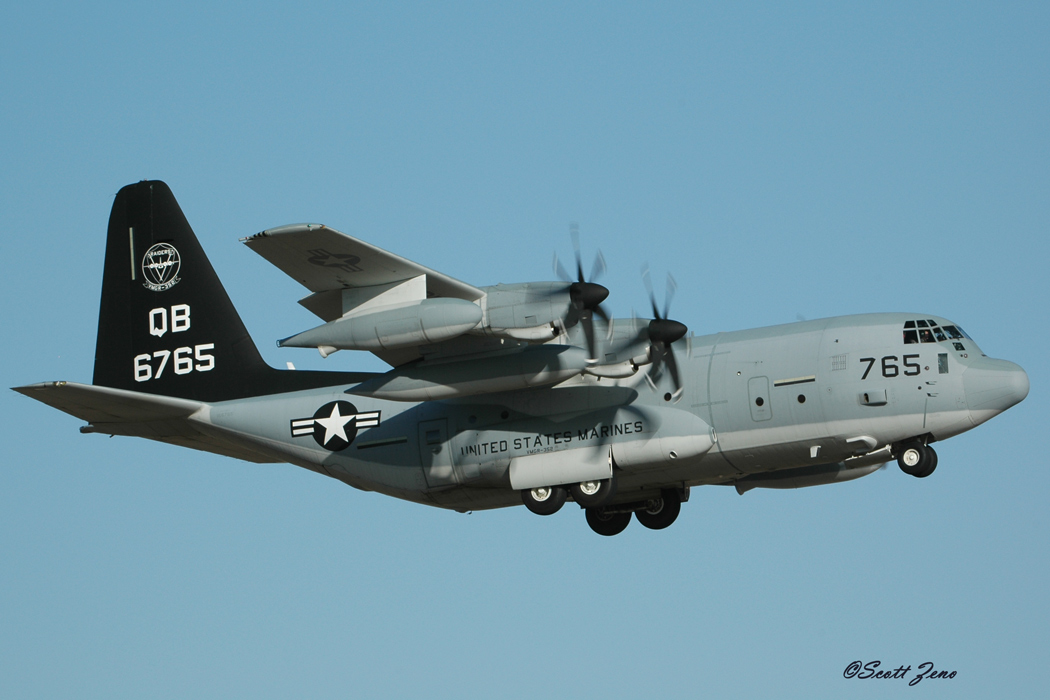
By the end of the Viet Nam War, the Marines had newer KC-130s, known as the KC-130T version. These soldiered on through the Gulf Wars and were finally replaced with new KC-130J Hercules tanker/transports. The -T versions served the Marines’ F/A-18s and AV-8 Harriers, as well as the last A-4 Skyhawk model jets.

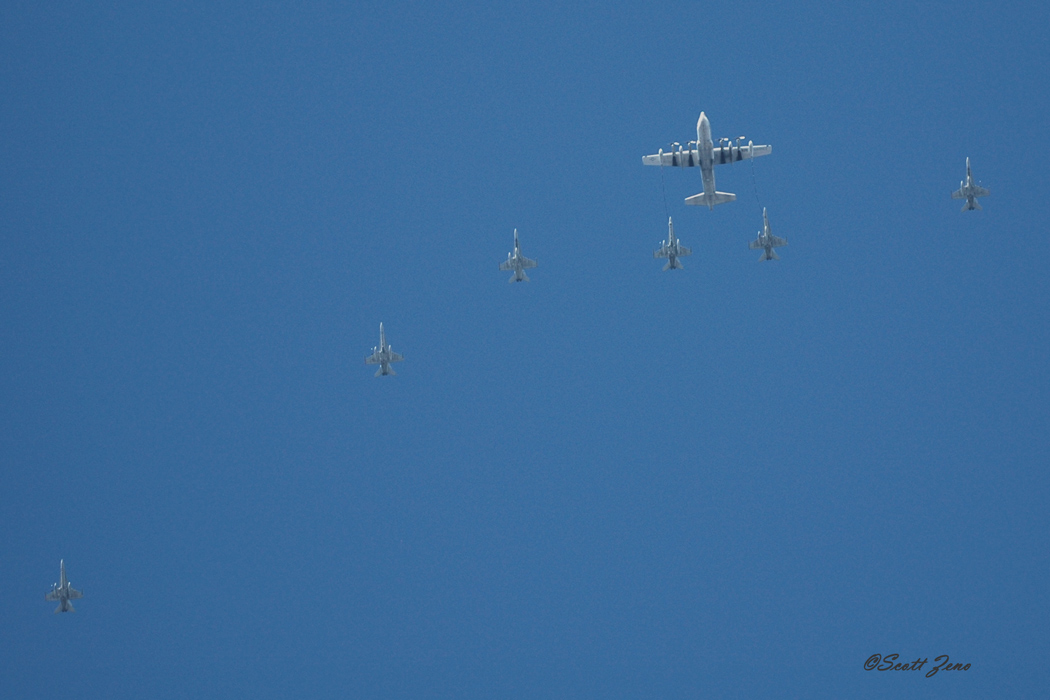

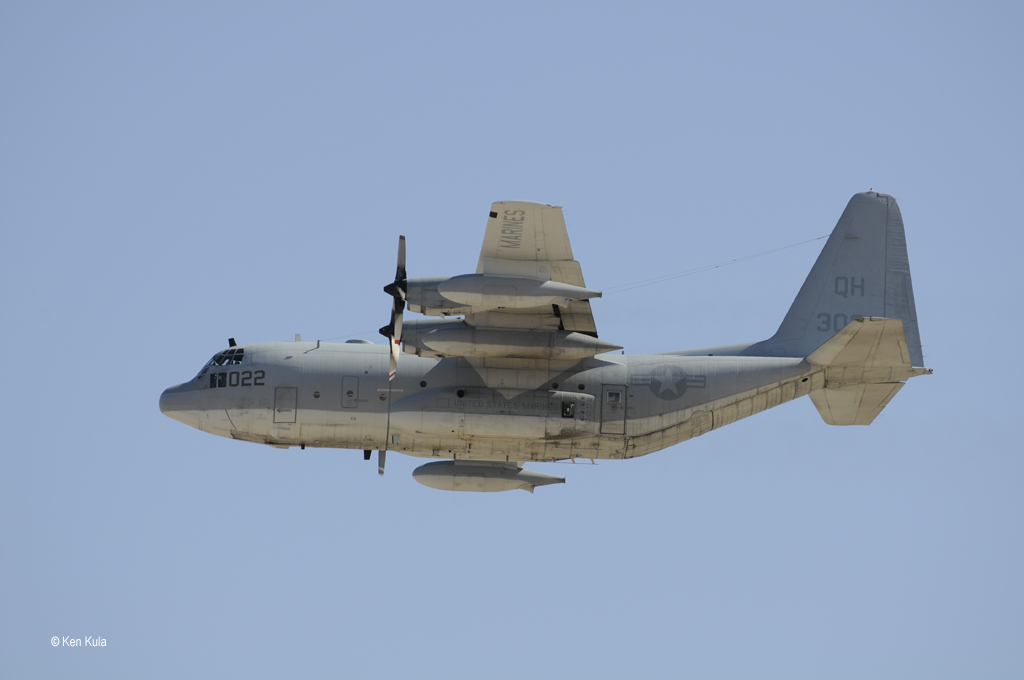
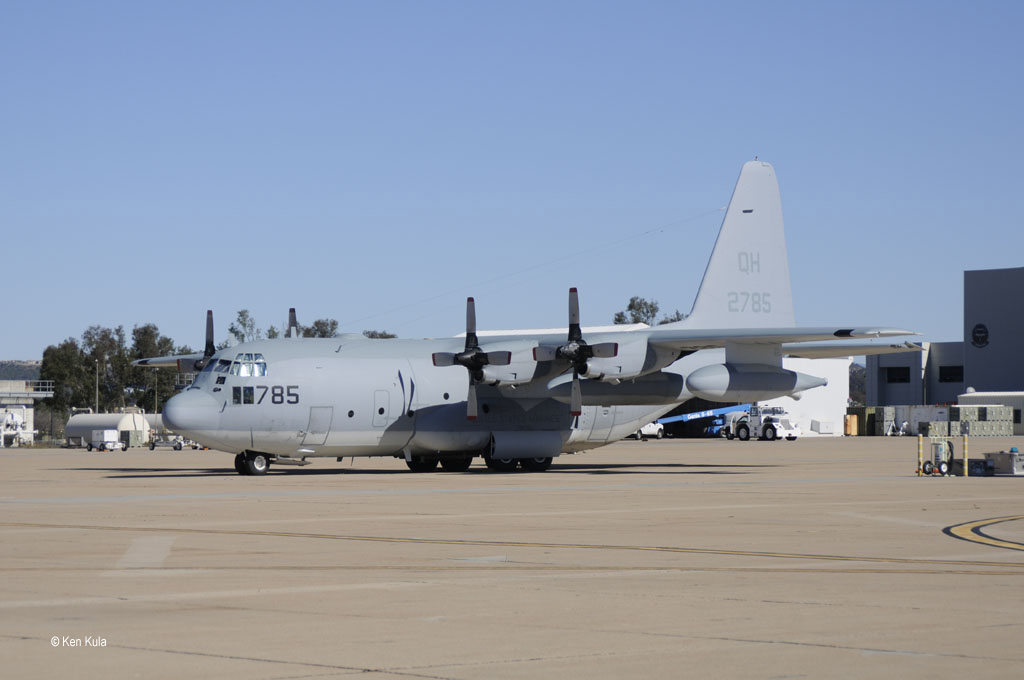

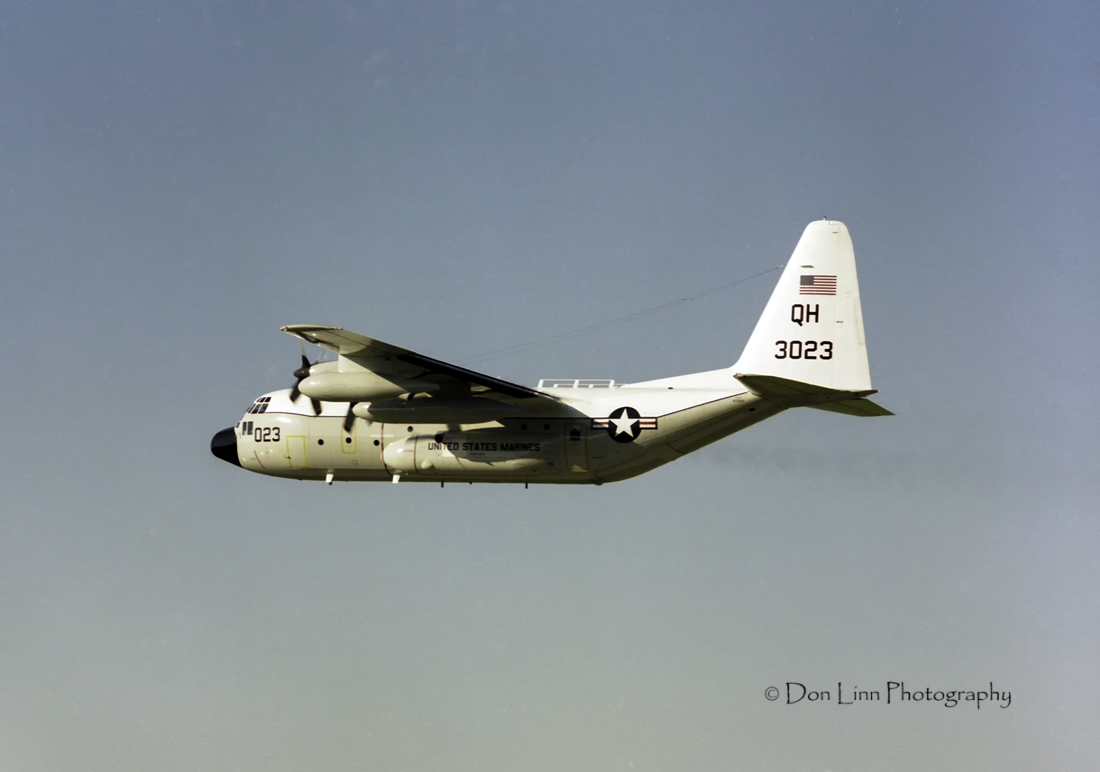

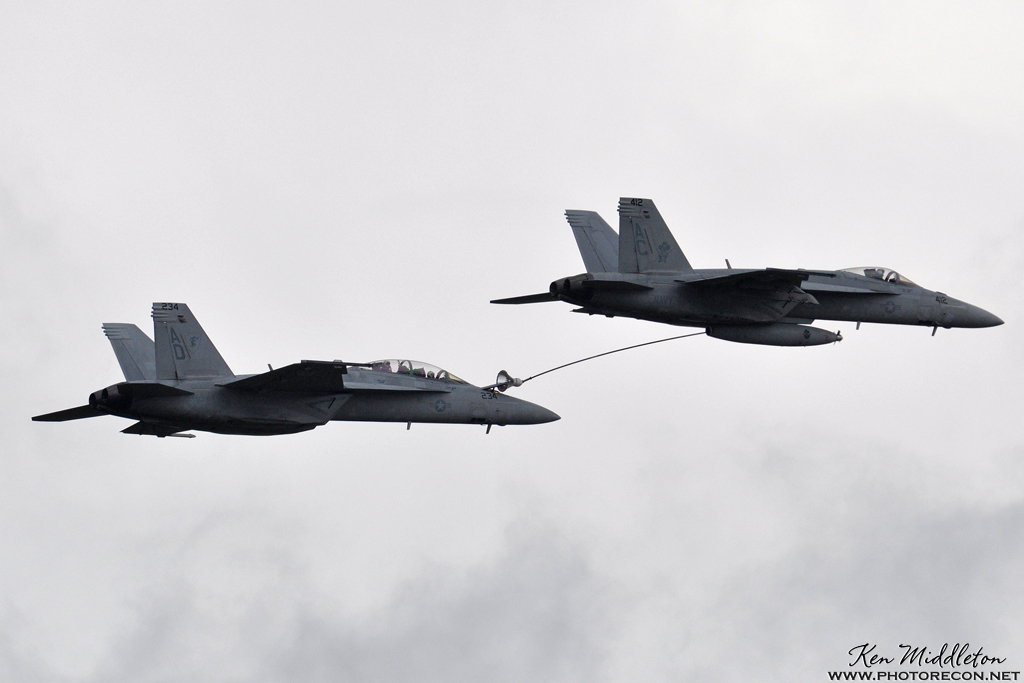
Buddy system tanker F/A-18E Super Hornet refuels an F/A-18F Super Hornet
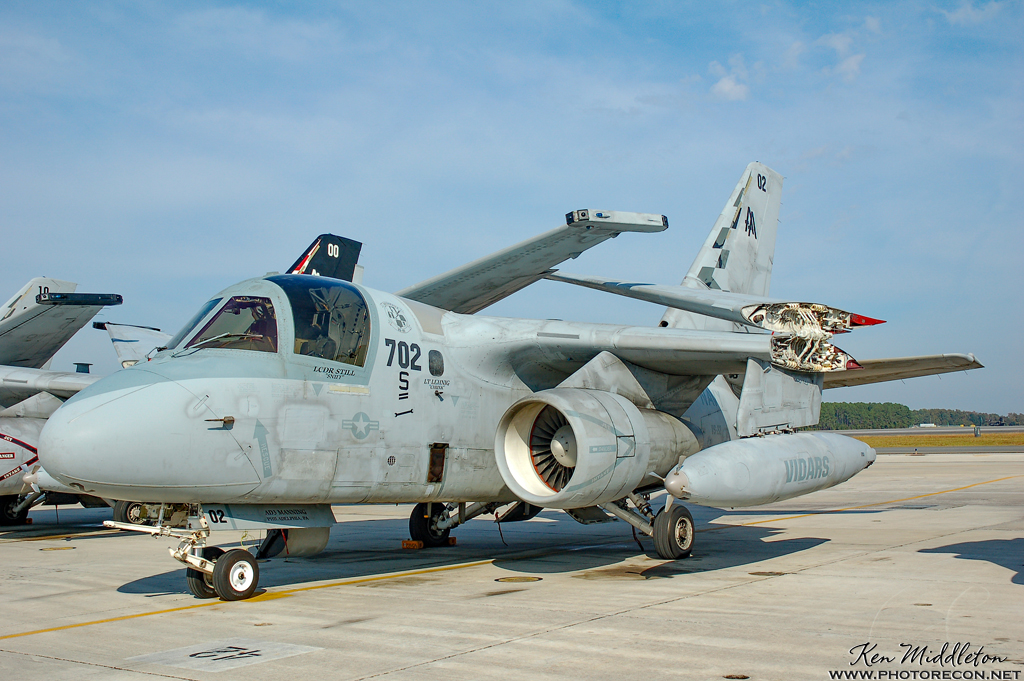
With space aboard an aircraft carrier at a premium, the Navy developed the “Buddy Refueling” system of hose and drogue pods which almost any attack jet could utilize. This did away with dedicated refueling aircraft aboard the carrier, and allowed tanker aircraft to be the same model jet so performance was similar to the fighters and bombers that received fuel. S-3 Vikings (an anti-submarine twin jet) and later A-7 Corsairs were widely used during and after the Gulf Wars as tankers, without any permanent modifications. Today, F/A-18E and -F fighters use “buddy stores” while operating from carriers.




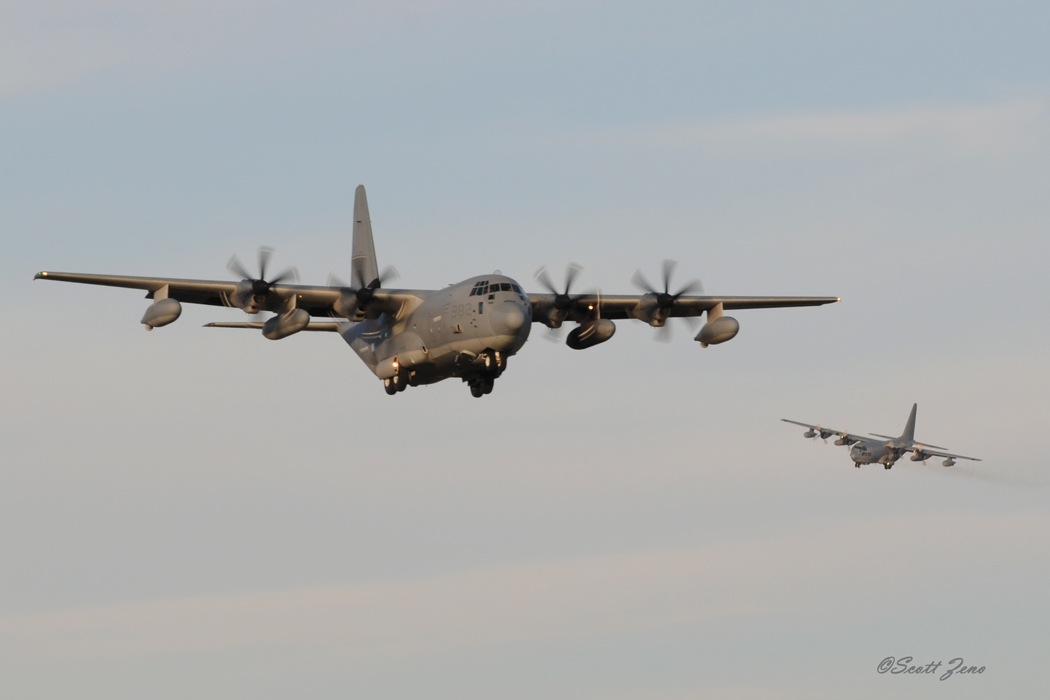
KC-130Js at MCAS Yuma
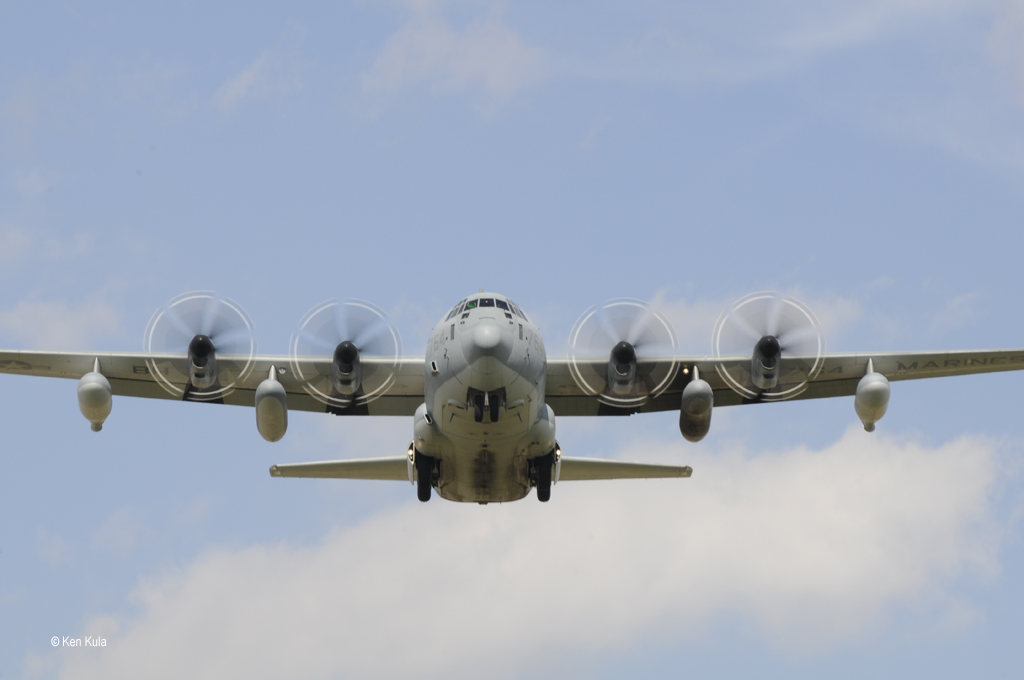
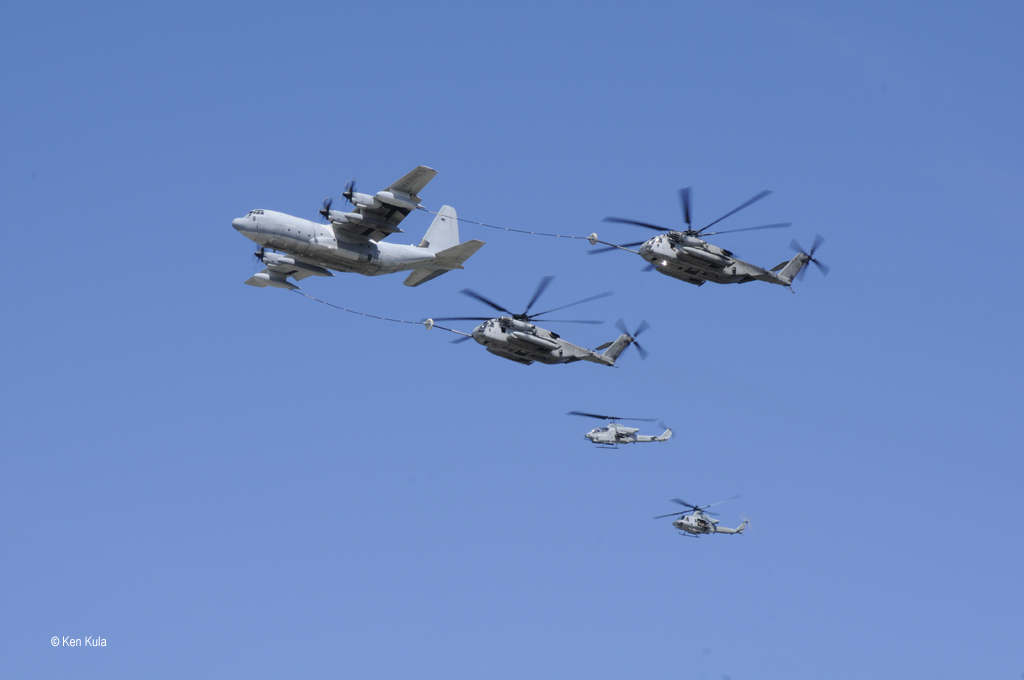
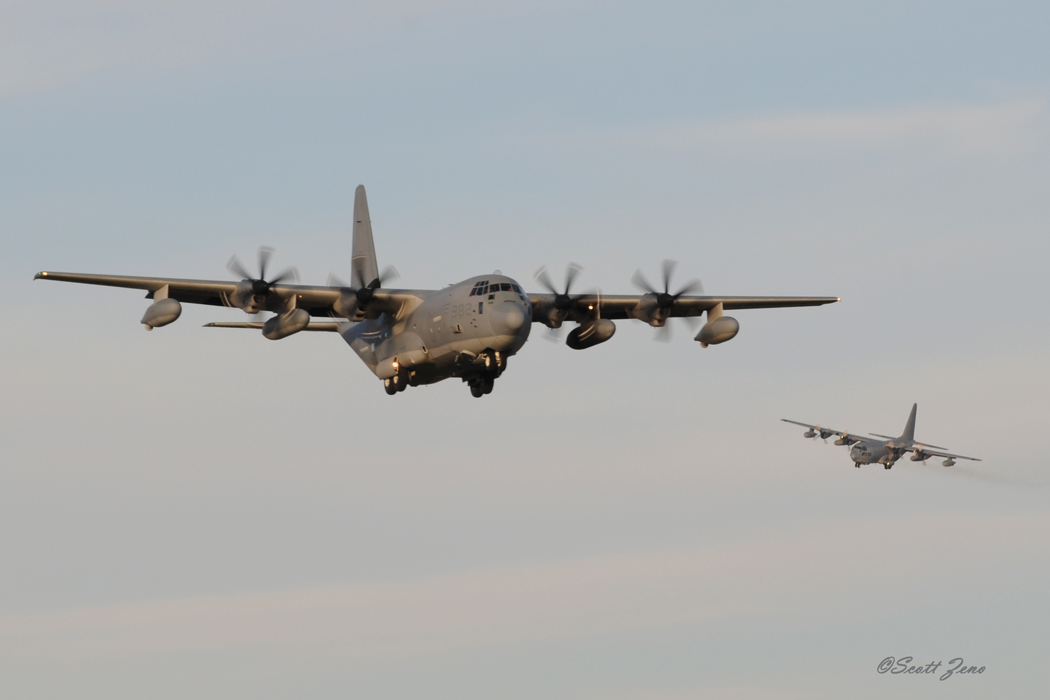
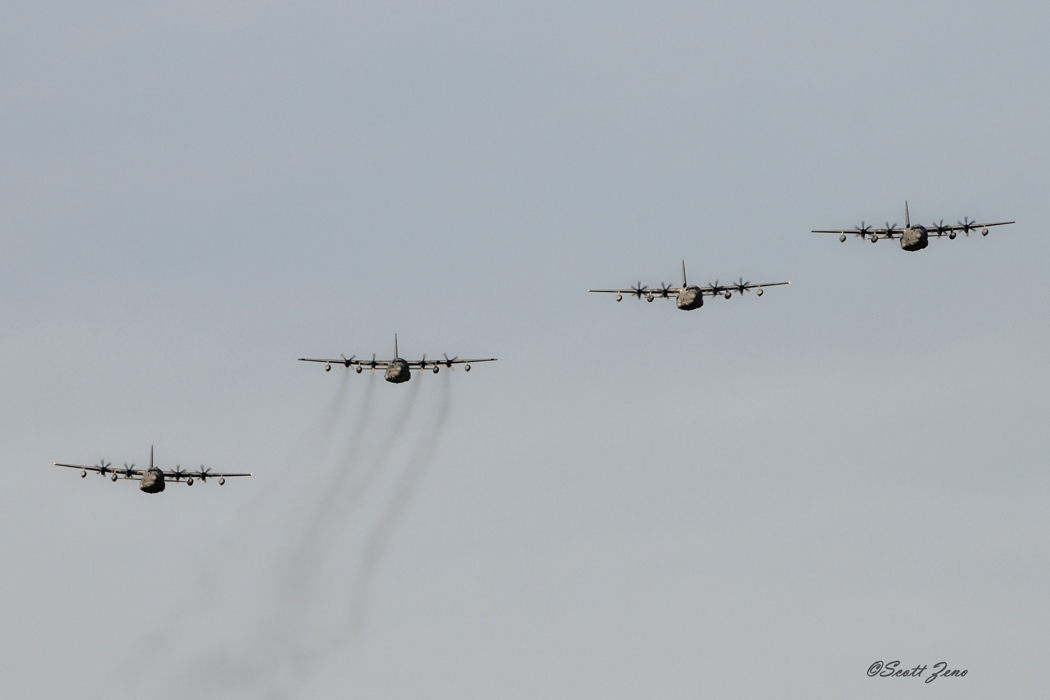
The C-130J model Super Hercules has marginally higher speed than the -F and -T aircraft they replaced. Today, Marine F/A-18 Hornets, AV-8 Harriers, F-35 Lightning IIs, CH-53 Sea Stallions and MV-22 Ospreys all can refuel from Marine KC-130Js. Most of the earlier KC-130Ts were sent to Marine Reserve units, to keep a robust air refueling capability alive.




Convair 880 161572 refueling FSD Hornet #4 over Chesapeake bay, Dec 1981
There have been a few “oddball” tankers in Naval/Marine use too. One was a one-off conversion of a Convair 880 as a tanker for the F/A-18 program. The Convair had a higher speed than a Boeing KC-135 and helped with the certification of the original Hornets. It also served as a Command and Control aircraft during test missions.
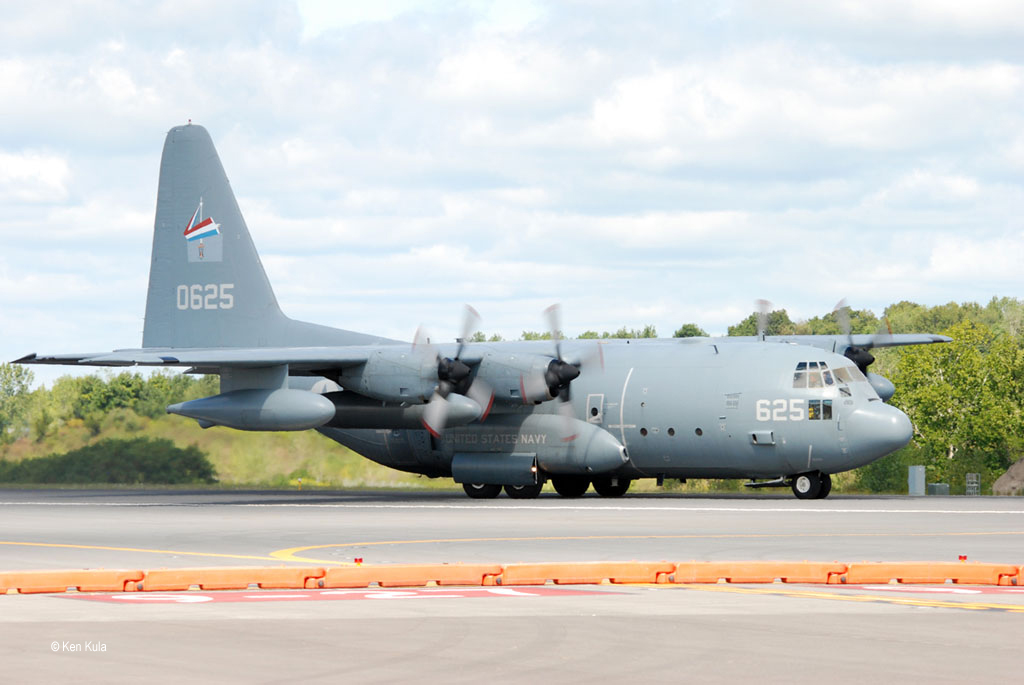
KC-130R based at NAS Patuxent River, and ex-USAF aircraft.
The Marines received slightly more than a dozen KC-130s from the U.S. Air Force and retained eight as KC-130R tankers. The -R versions served as a bridge between the -F and -T tankers. Three KC-130Rs have been based at NAS Patuxent River as assets for testing with VX-20, a test squadron for Marine and Navy aircraft.