Dwindling Numbers: The Fairchild Republic A-10 Thunderbolt II

A-10A, 78-697, 75th FS, 23 FW, London, 3 June 1995
Story by Ken Kula, photos by Don Linn, Bob Finch and Ken Kula
Dwindling Numbers is our series of articles showcasing aircraft types in the U. S. inventory being phased out and/or replaced. More examples will be arriving every few weeks, and we expect to do some non-U. S. aircraft types in the not-too-distant future too.

A close air support aircraft program was announced by the U. S. Air Force in 1967. Six companies entered the resulting competition, with Northrop and Fairchild Republic chosen to build prototypes whose capabilities would be compared – to make the final program award.

The Fairchild Republic A-10 Thunderbolt II made its first flight on May 10, 1972. Two prototype airframes were built to compete against the Northrop A-9. On January 18, 1973, the A-10 was announced as the winner of the competition.

GAU-8 30mm gun system is almost the same size as a Volkswagen Beetle!
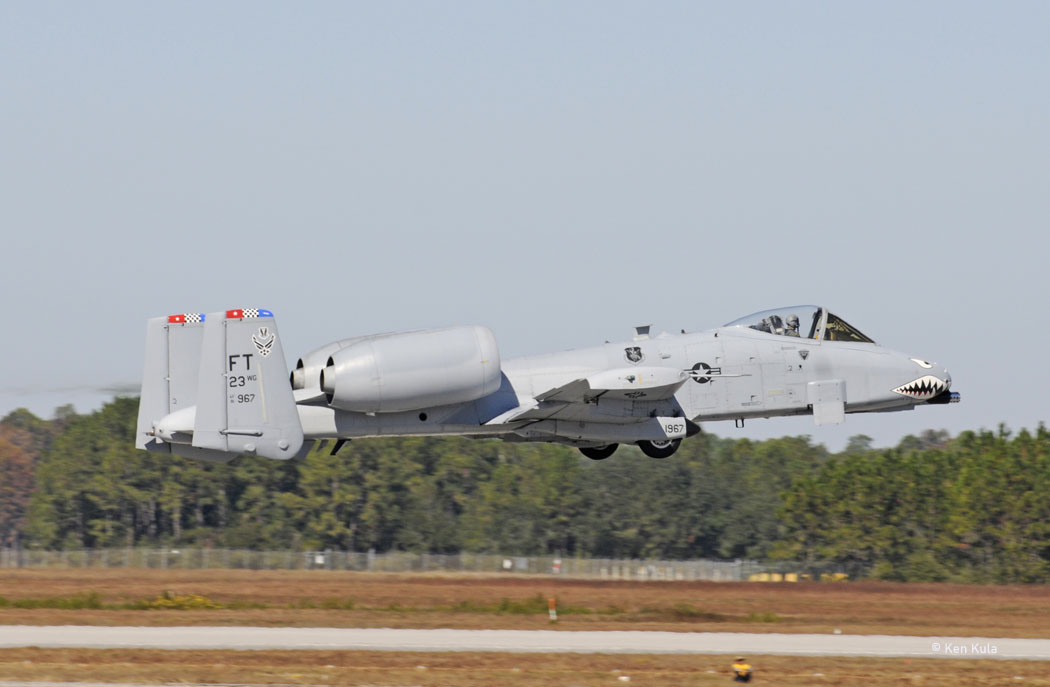
The Thunderbolt II was armed with an internal General Electric GAU-8 30mm cannon, and could carry up to eight tons of external stores under eleven pylons. Weapons would include “smart” and “Dumb” bombs, guided and unguided missiles, or a pair of AIM-9 Sidewinder missiles. Provisions were added for two pylons which could carry large 600 gallon external fuel tanks, and for carriage of an ECM pod too.


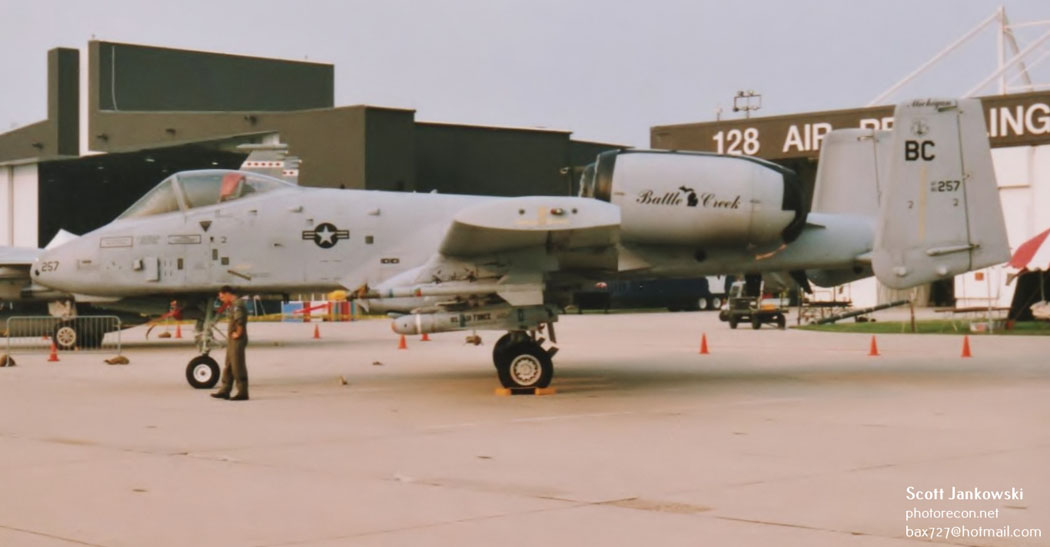
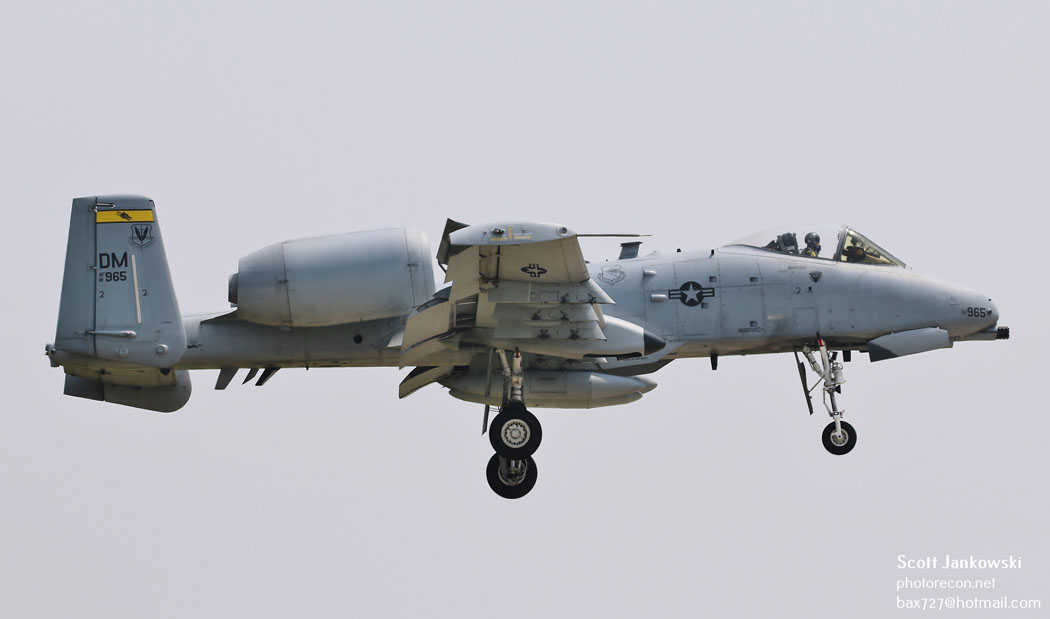
A-10A, 78-0704, 104 FS, 175 WG, MD ANG, 5 June 1999
A pair of General Electric TF-34 turbofans powered the jet; the design offered some fuselage shielding of the engines and exhaust, with the purpose of defeating infrared missiles and tracking. The cockpit was designed with a titanium tub around the pilot for increases survivability in the lower altitudes that the A-10 would fight in.
The U. S. Air Force, Air Force Reserve and Air National Guard would be the only customer for the new A-10A. The 355th Tactical Training Wing at Davis-Monthan Air Force Base received the first production A-10As in March, 1976. Initial Operating Capability of an A-10 combat unit occurred in October, 1977, with the 355th Tactical Fighter Wing at Myrtle Beach Air Force Base. A total of 716 A-10A aircraft were built. It earned the nickname “Warthog” both for its looks and for its toughness.

66th Weapons Squadron A-10C, based at Nellis AFB, 1995
Continuous improvements in weapons systems, avionics and airframe structure were made as the jets matured. In 2005, some airframes were targeted to become A-10C versions, with further avionics and weapons system improvements made to 356 airframes. The A-10C became operational in 2007. Many other aircraft were at their end of the fatigue lifetimes, and parked in the MASDC/AMARC boneyard for parting out.

OA-10A, 80-273, 103rd FS, 111th FW, PA ANG. WG, 12 May 1999
A two seat A-10B was proposed for nighttime and adverse weather attack, but after an aircraft was modified, the program was scrapped. Upwards of 90 Thunderbolt IIs (other sources cite anywhere from 118 to 140 airframes) were designated OA-10As and were identified for Forward Air Control and Search and Rescue duties. Evidently the main difference between the A and OA versions was the inclusion of an additional radio.
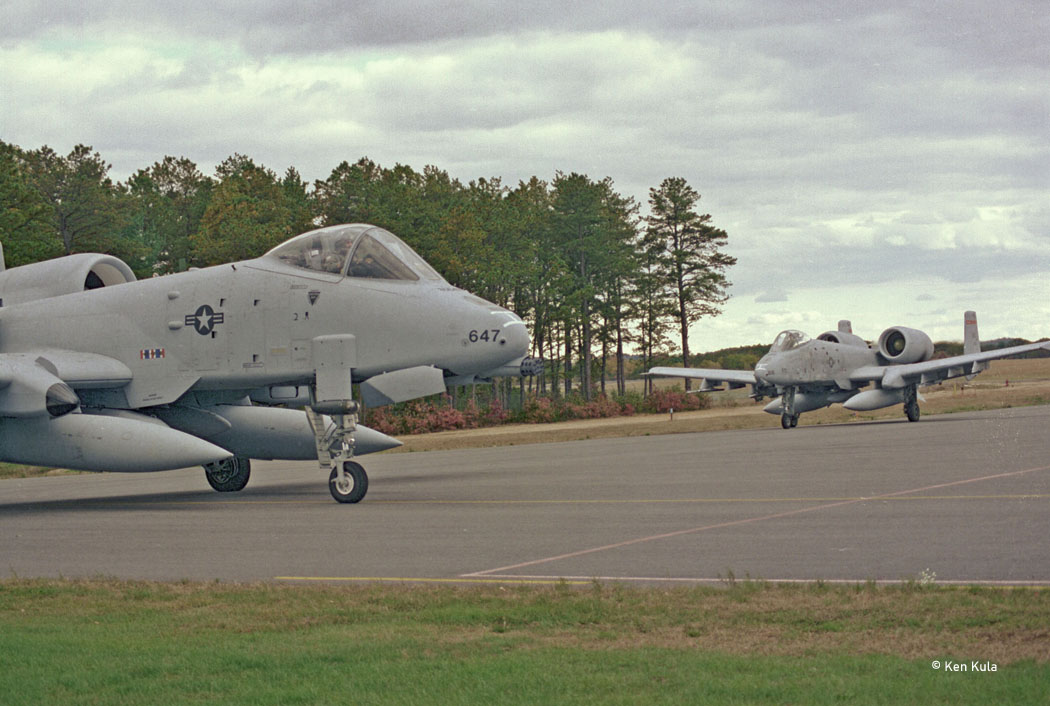
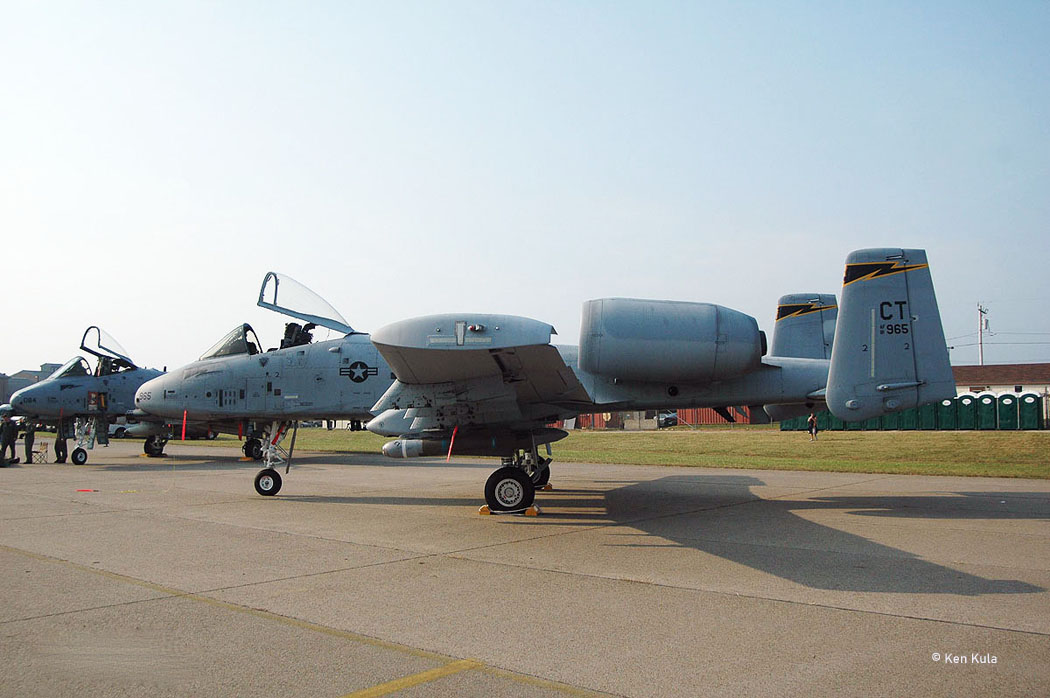
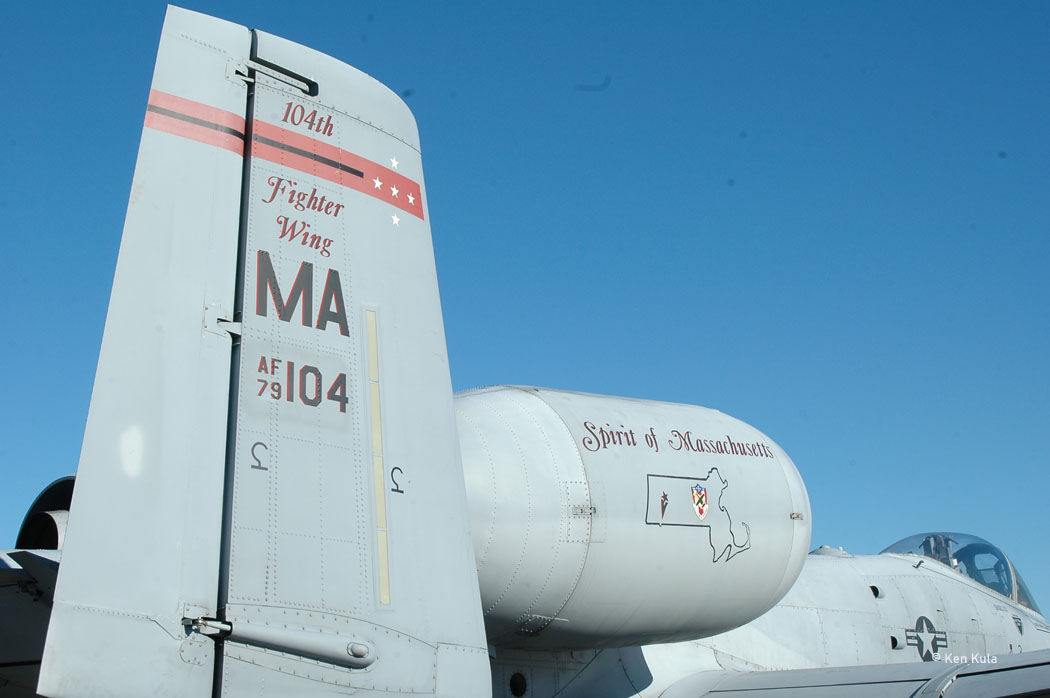
104 FW A-10s returning to Westfield, Massachusetts from a European deployment to Aviano Air Base, Italy in 1996.
Operationally, the Warthog has fought in numerous conflicts. Air Force, Air Force Reserve and Air National Guard pilots have participated in the Gulf War, the Bosnia and Herzegovina battles, and in Afghanistan and Iraq too.

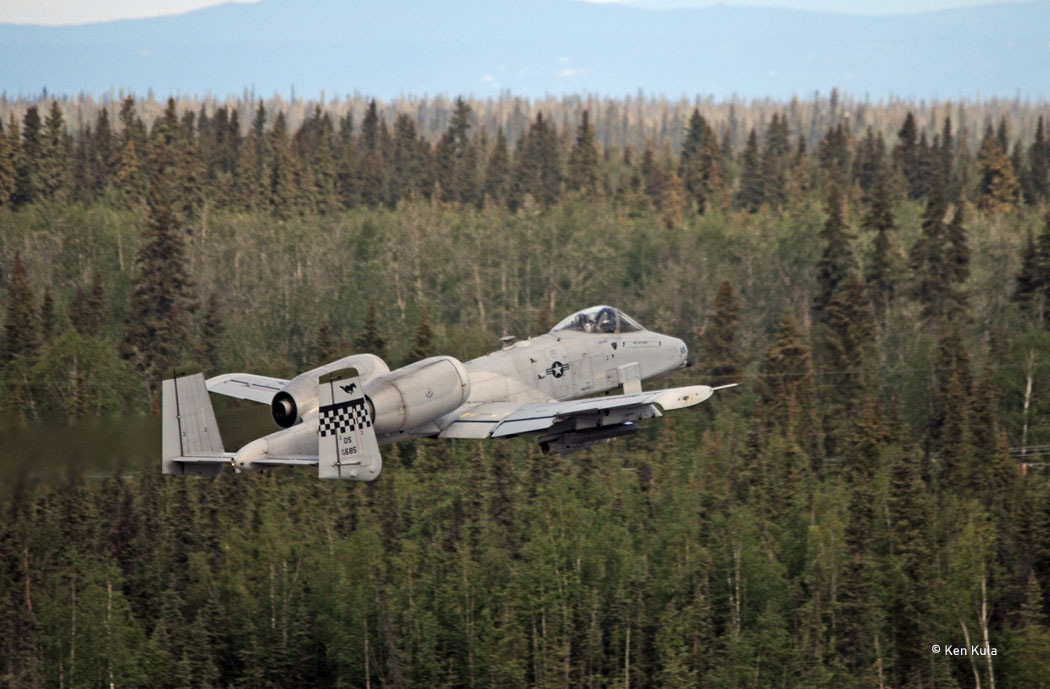
A-10s at Eielson AFB taking part in a Red Flag Alaska exercise. Jets are based at Osan Air Base in South Korea.
When the Lockheed Martin F-35 Lightning II was in its initial trials, it was referred as the replacement of the A-10 in service. Whether that is a truth or not is still to be proven. Feuding between the U. S. Congress and the Air Force for operational funding has occurred for years, but the Cold War – era A-10 is more vulnerable than ever in a modern battlefield.

With Air Force cutbacks and drawdowns, the A-10 community is losing its numbers to F-16 Fighting Falcons and the aforementioned F-35 Lightning IIs, especially in the Air Force Reserve and Air National Guard. The final operational A-10s are slated to be retired during 2029 in Air Force documents.

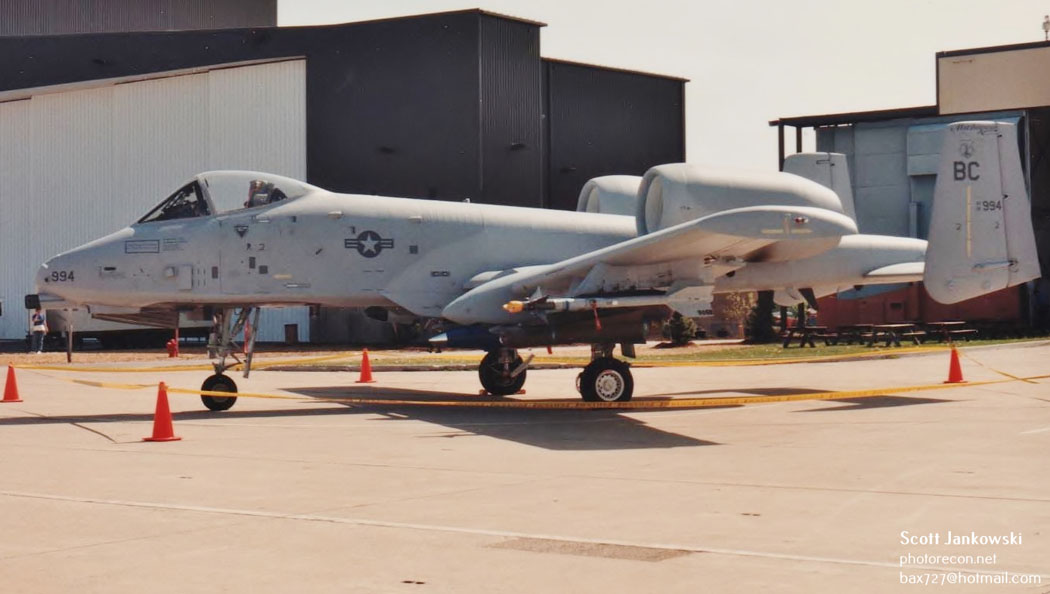
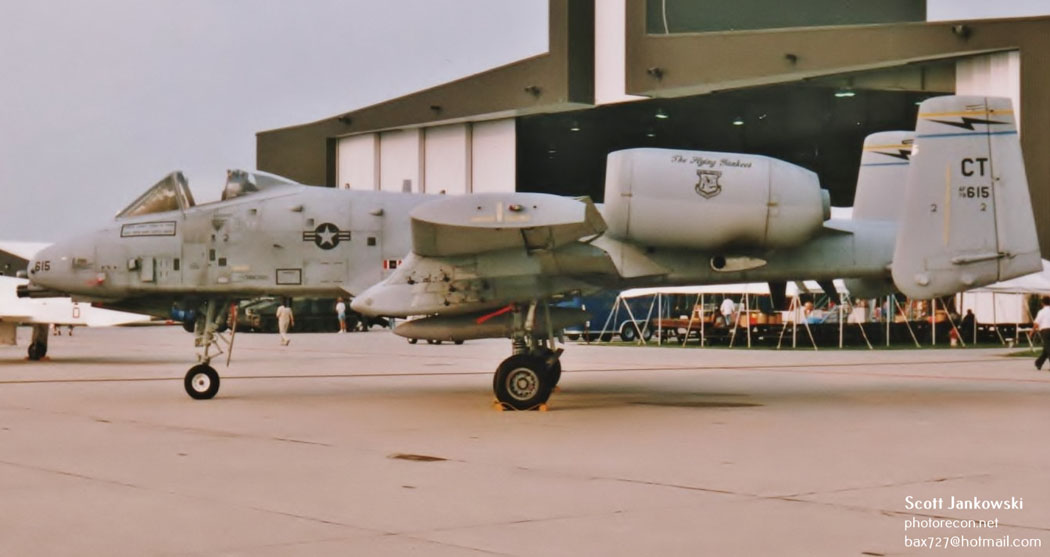
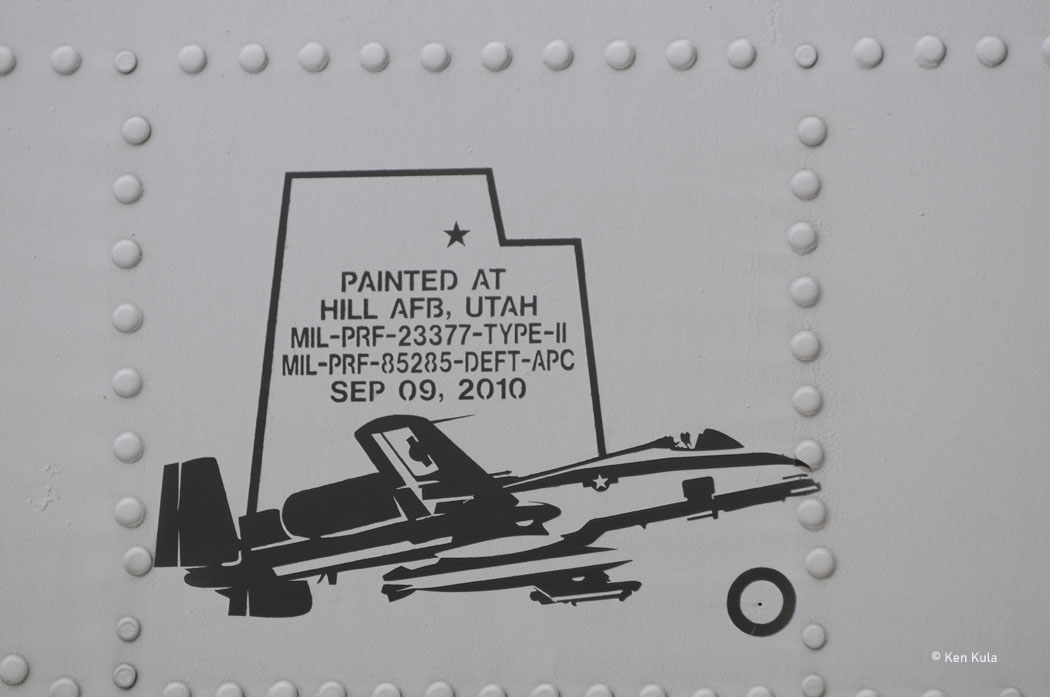
Here’s a gallery of A-10 Warthog aircraft over the past 54 years since the prototype first flew: