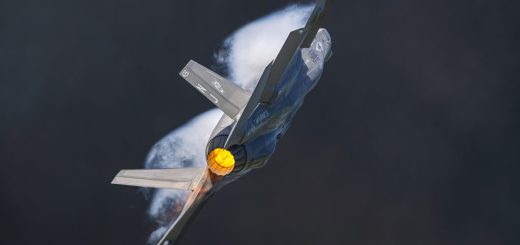
Last Run for the Greyhound

Story and photos by Shawn Byers
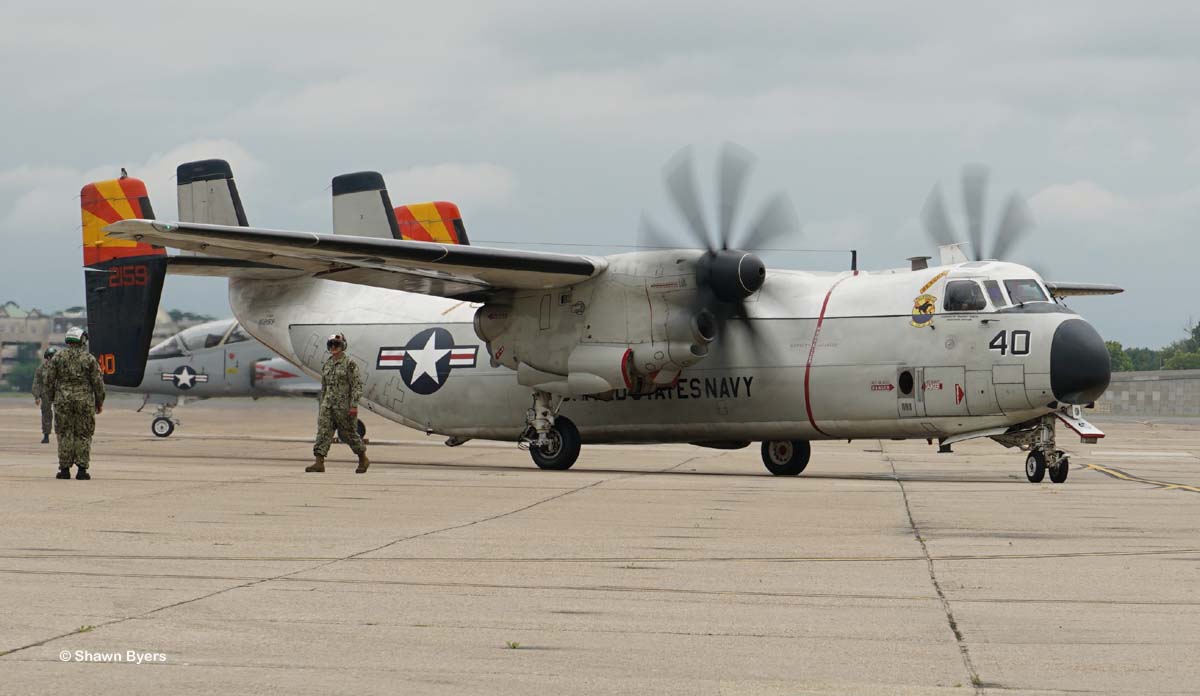
The Grumman C-2A Greyhound, also known as “The COD” for Carrier Onboard Delivery, has retired after more than 60 years in service to the United States Navy.
Naval Air Station Norfolk held a sundown ceremony on July 23rd, 2026 in the hangar of Fleet Logistics Support Squadron (VRC) 40, “Rawhides”. The Rawhides also retired after 66 years of service.
The C-2A was not attached to aircraft carriers but regularly landed on and catapulted off of them. Detachments of the squadron were based at a forward logistics sites in regions such as the Middle East, South America or Mediterranean theatres. From spare jet engines to personnel letters from home, the Greyhound flew it like it was her job…because it was.

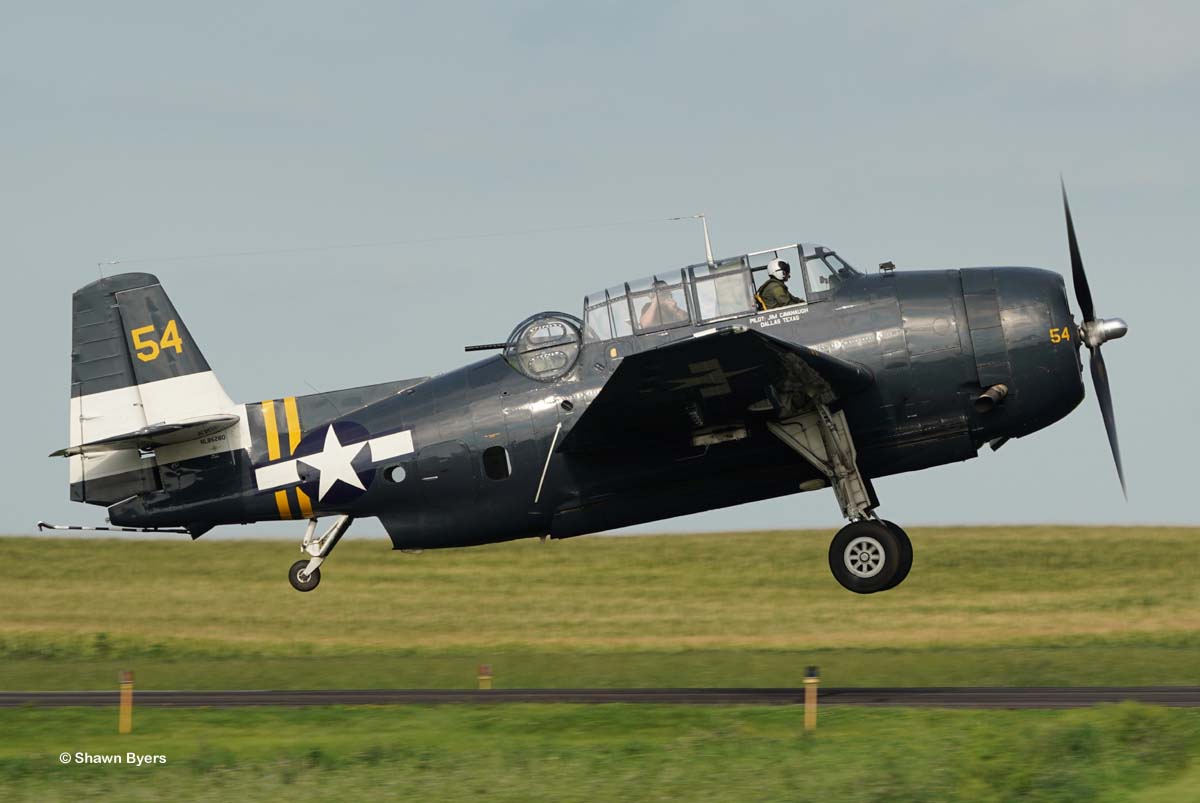
Fleet Logistics has been a need since World War II. The first aircraft utilized for this job was the TBM Avenger, utilizing an empty torpedo bay for cargo and later modified to carry up to seven passengers in the cockpit.
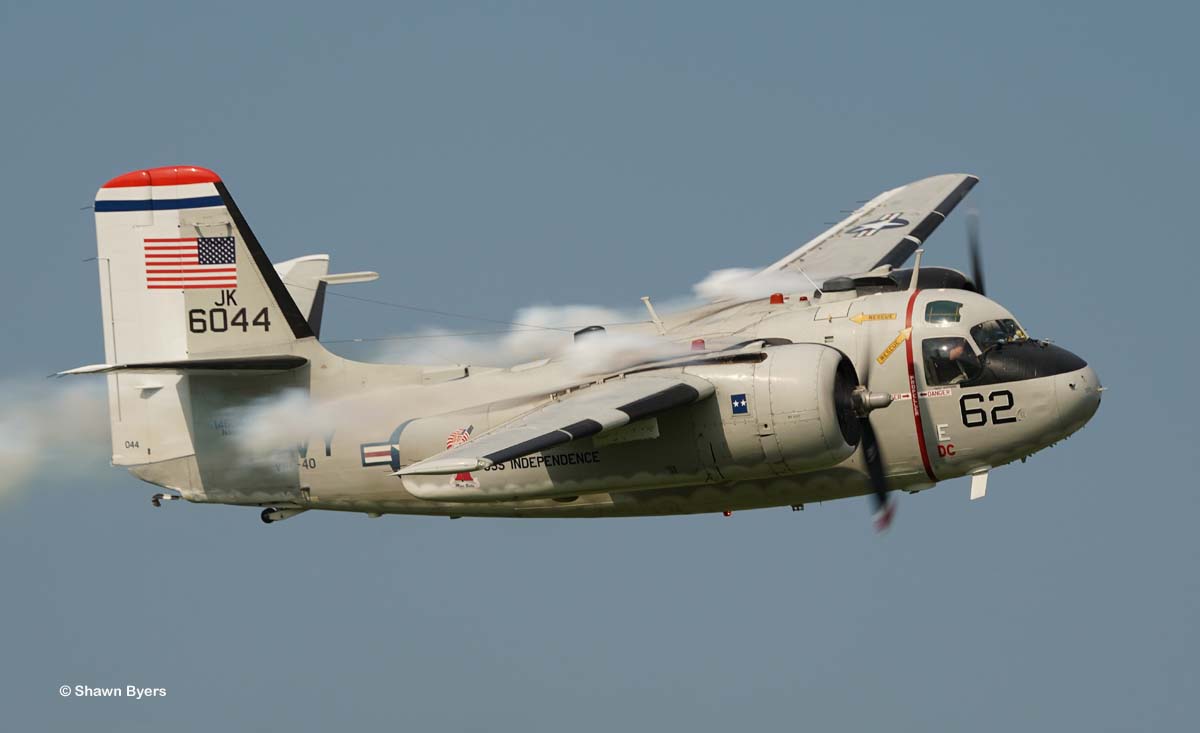
In the late 1950s, Grumman developed a version of their S-2 Tracker anti-submarine aircraft into the C-1 Trader for COD duties. From 1956, 87 TF-1/C-1s were constructed and served until they were retired in 1988.
The C-2 first flew in 1964 and 17 were manufactured. The C-1 and C-2 operated concurrently for many years. The C-1 had piston engines, was smaller, slower and had slightly less range than the C-2. Overhauls of the C-2s occurred in 1973 redesignating them C-2A. Starting in 1985, 39 new-build C-2s rolled off the assembly line as C-2A(R)

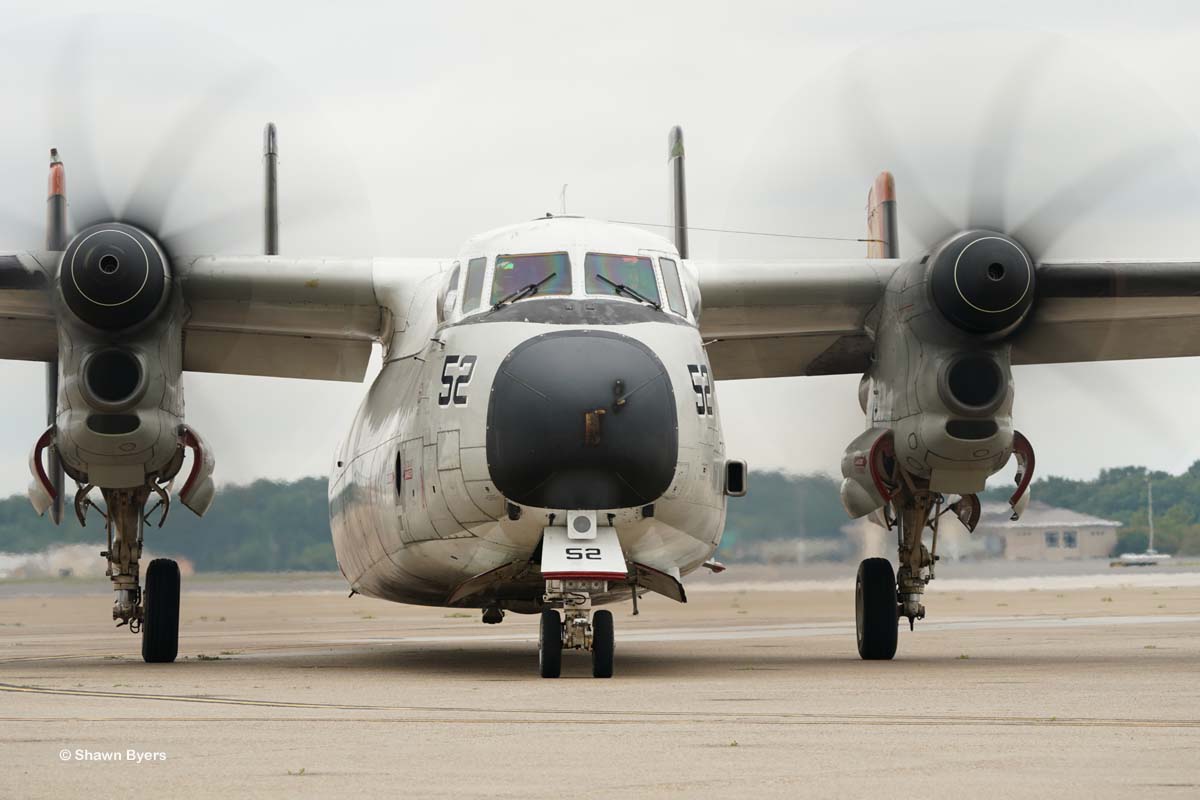
The C-2 was developed from the Grumman E-2 Hawkeye series. These similarities can be seen in the tail section, folding wings and the turboprop engines. Commonality ends there with the widened fuselage, rear loading ramp and a large round nose. She would never be called a beauty queen but goes out as a true legend.


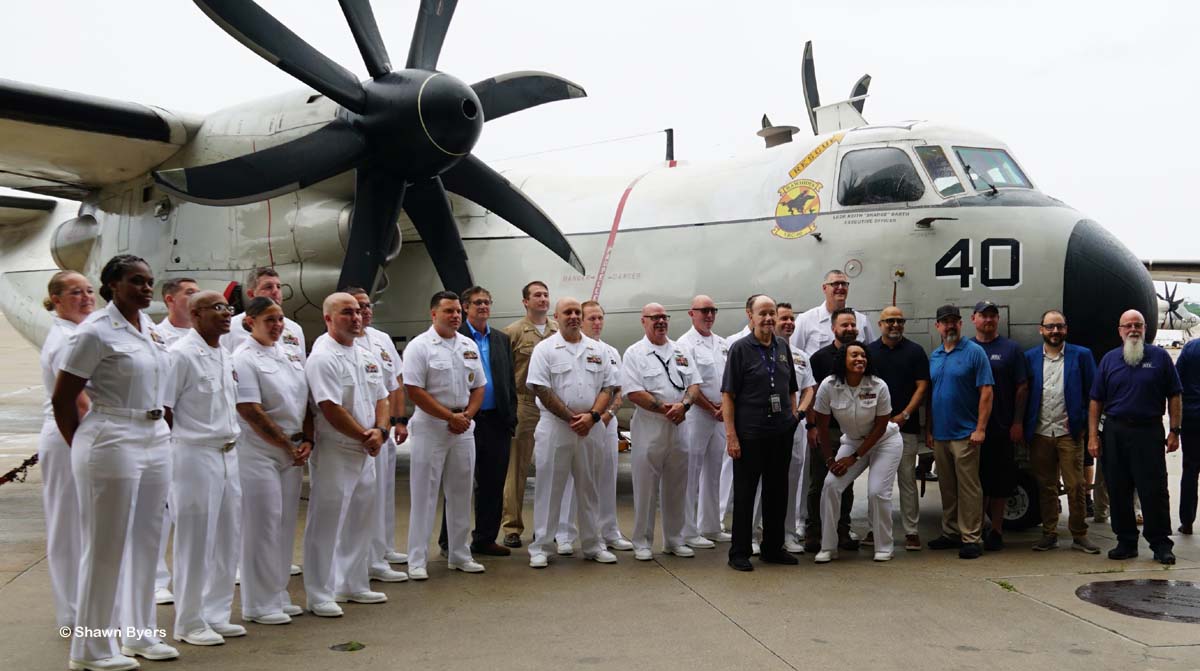
I saw a lot of pride in former crewmembers in attendance. It was both a safe and small community of crew over the long lifespan of the aircraft. I heard somewhere near 1,900 crewmembers over the life of the program and the lowest Class-A mishaps of any airframe. C-2 hats, patches and Hawaiian shirts were seen in the crowd.
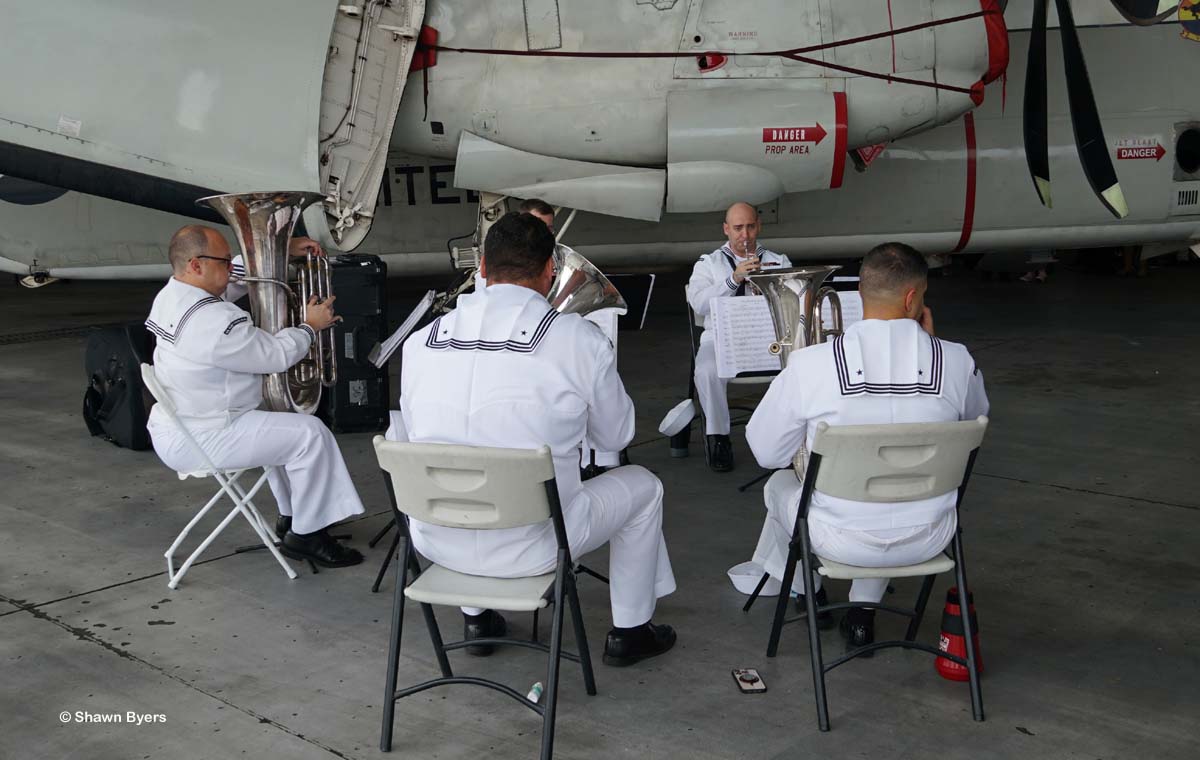
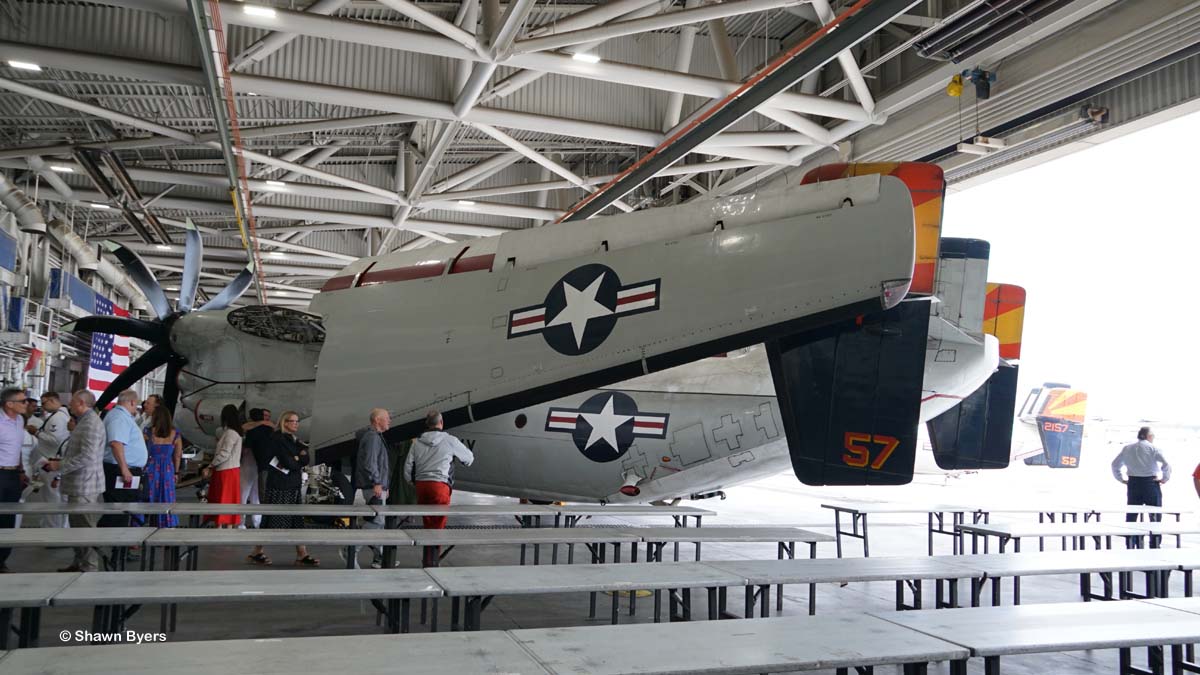
The ceremony began at 1000. A C-2A was parked in the hangar with wings folded and seating stretched the rest of the way. Two C-2As were parked nose to nose at 45-degree angles just outside the hangar. A stage was set up at the back of the hangar with special guests. A narrator station was off to the side at ground level.
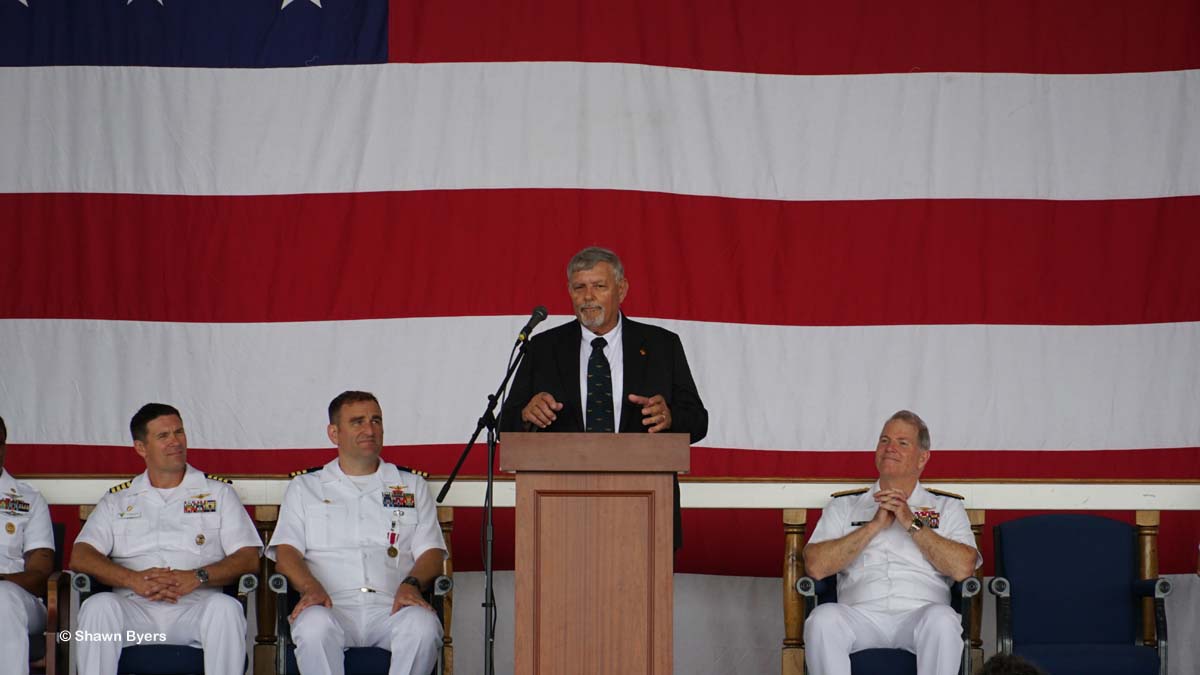
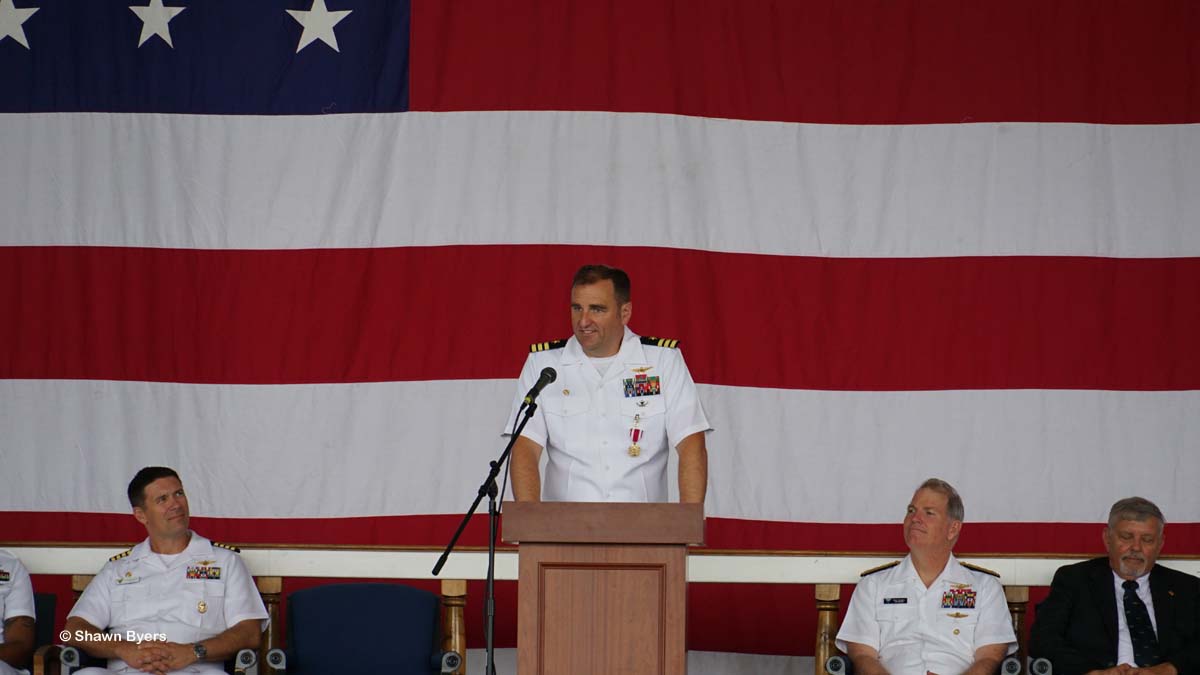
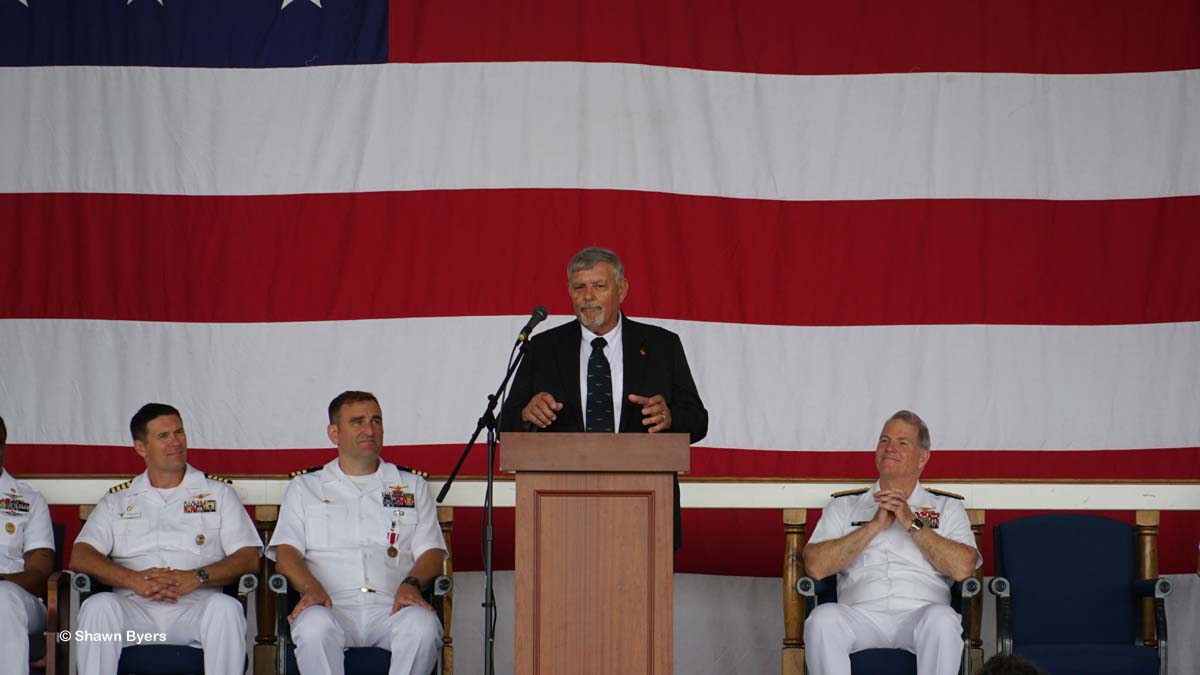
The official party consisted of the following:
RADM Richard Brophy, Commander, Naval Air Force Atlantic
CAPT David Wiltshire, Commander, Commodore of Airborne Command & Control and Logistics Wing
CDR Paul Ingram, Final Commanding Officer, VRC-40
LCDR Keith Barth, Final Executive Officer, VRC-40
LCDR (Ret.) Leonard Aube, Guest of Honor, VRC-40
After ceremonial and testimonial remarks, the Rawhides flag was retired and the formal ceremony concluded.
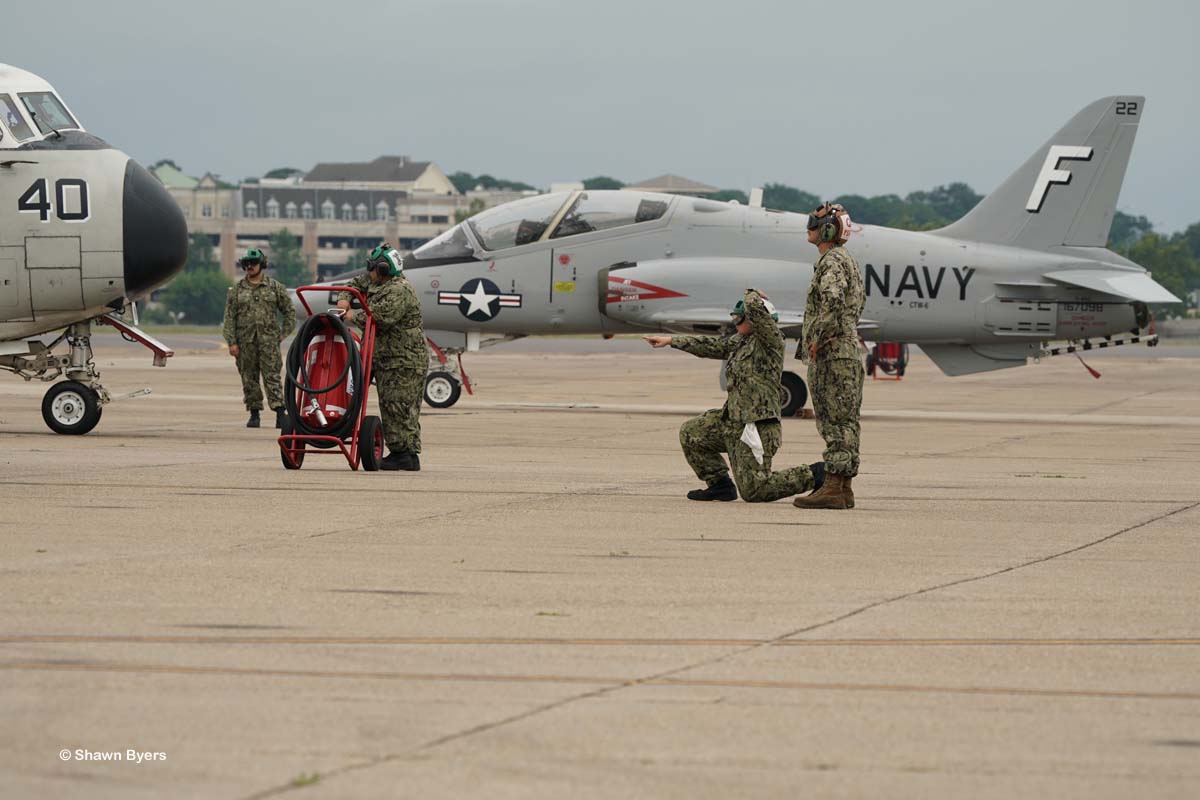
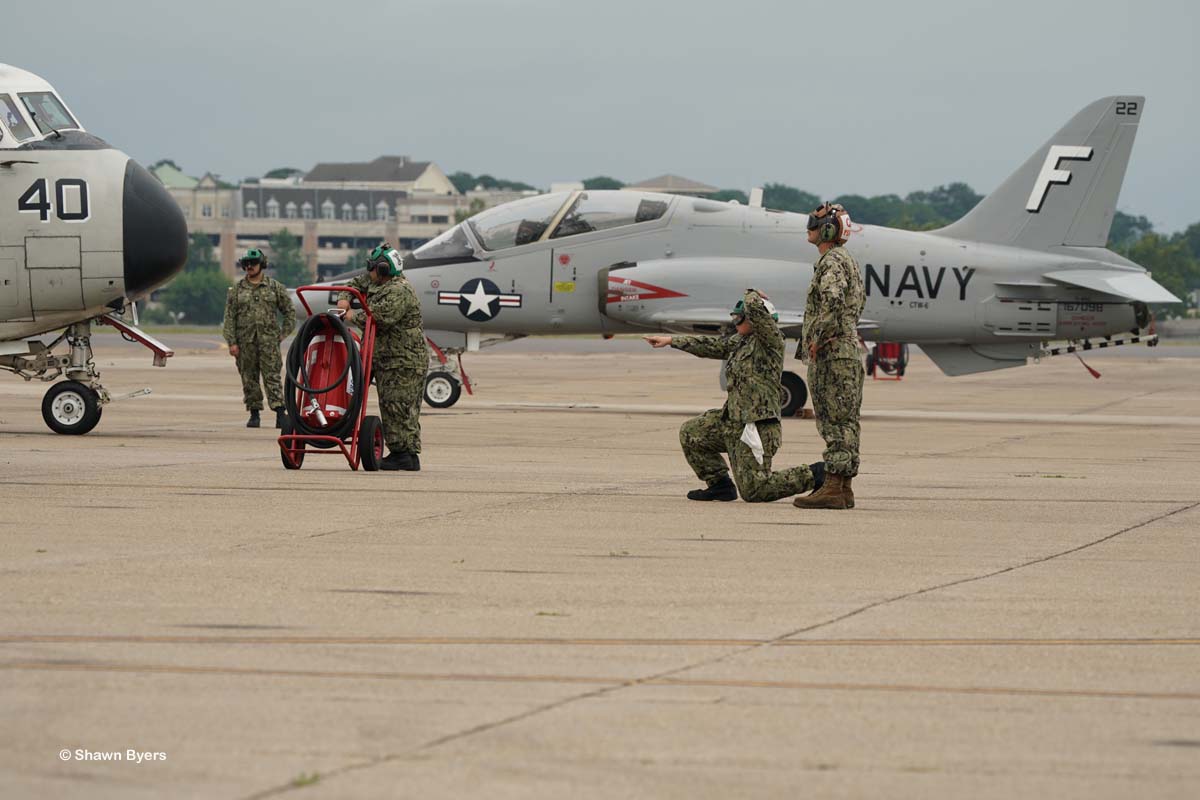
Approximately one hour later, the planned flight mission was a go. The crewmembers, many of whom were in dress whites an hour ago, walked out to the aircraft which had been towed away from the hangar onto the ramp.
Preflight and routine startup were all visible from our vantage point at the hangar.

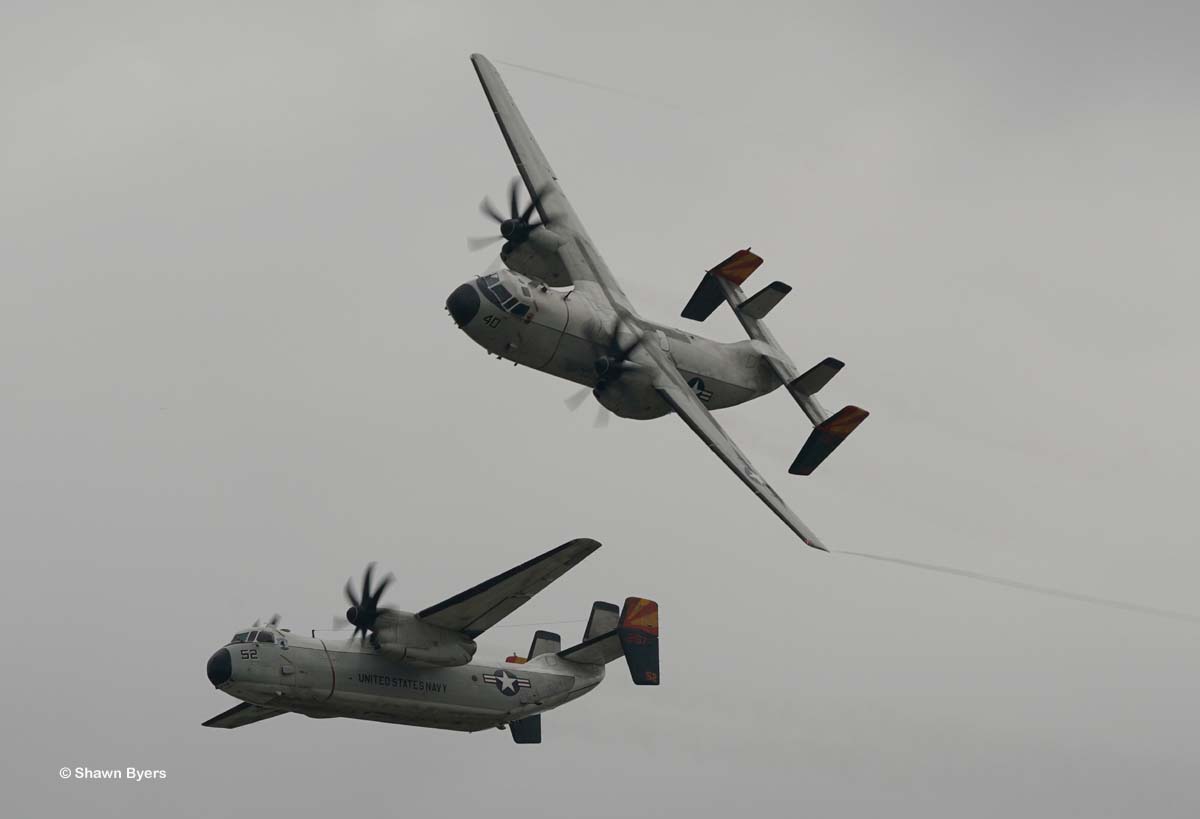
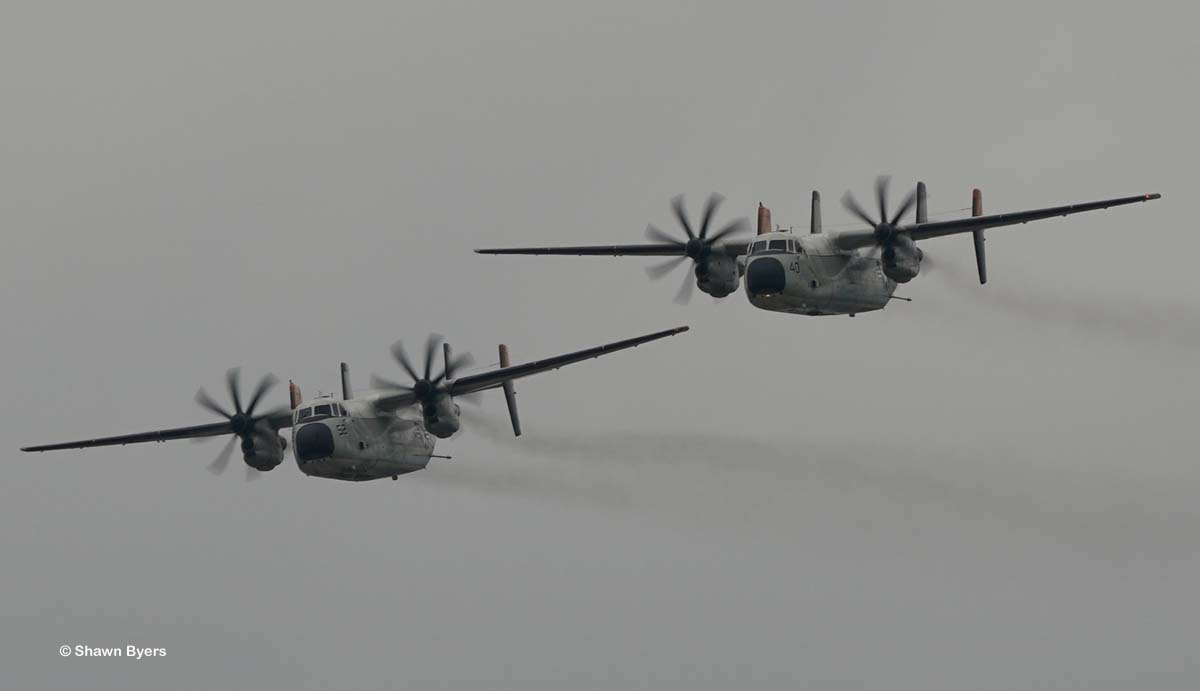
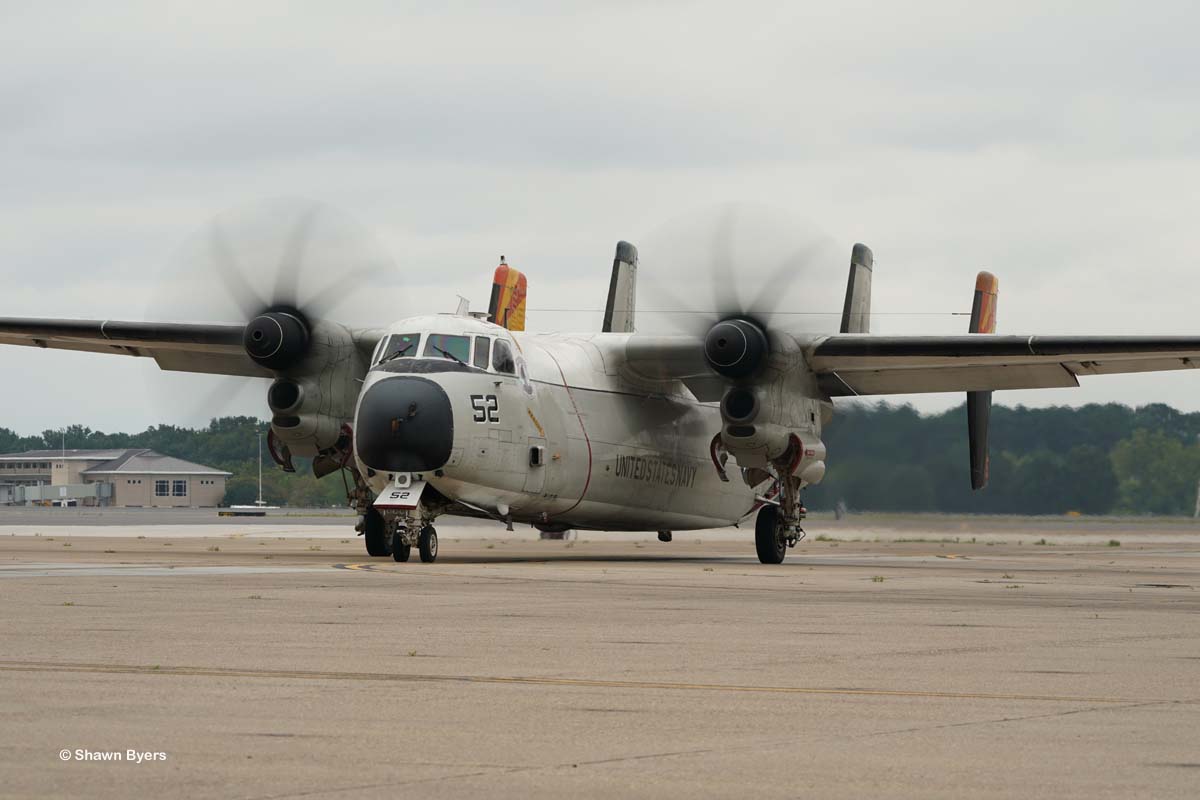
“Rawhide 40”, as flight lead, taxied out first, followed by “Rawhide 52”. Both aircraft were airborne quickly within view of the hangar.
The first pass came from behind the hangar. Rawhide 40 and 52 passed overhead in formation with their rear ramps open.

The second pass was a formation flyby right to left across the runway on a diagonal line toward the hangar.
The final pass was a carrier break along the runway. Rawhide 40 broke just over our location.
After touchdown, Rawhide 40 and 52 taxied toward the hangar and shut down just in front. The pilots were wet down with buckets of water, but I was not in a good position to capture that.

The ceremony concluded a short time later but everyone was able to stay and explore the aircraft.
As these were the final C-2s flying, they had one more mission the next week to fly to their final destinations. Rawhide 52 flew to Titusville, Florida for display at the Valiant Air Command Museum. Rawhide 40 flew to Pensacola, Florida and was escorted by the Blue Angels to the National Naval Aviation Museum.
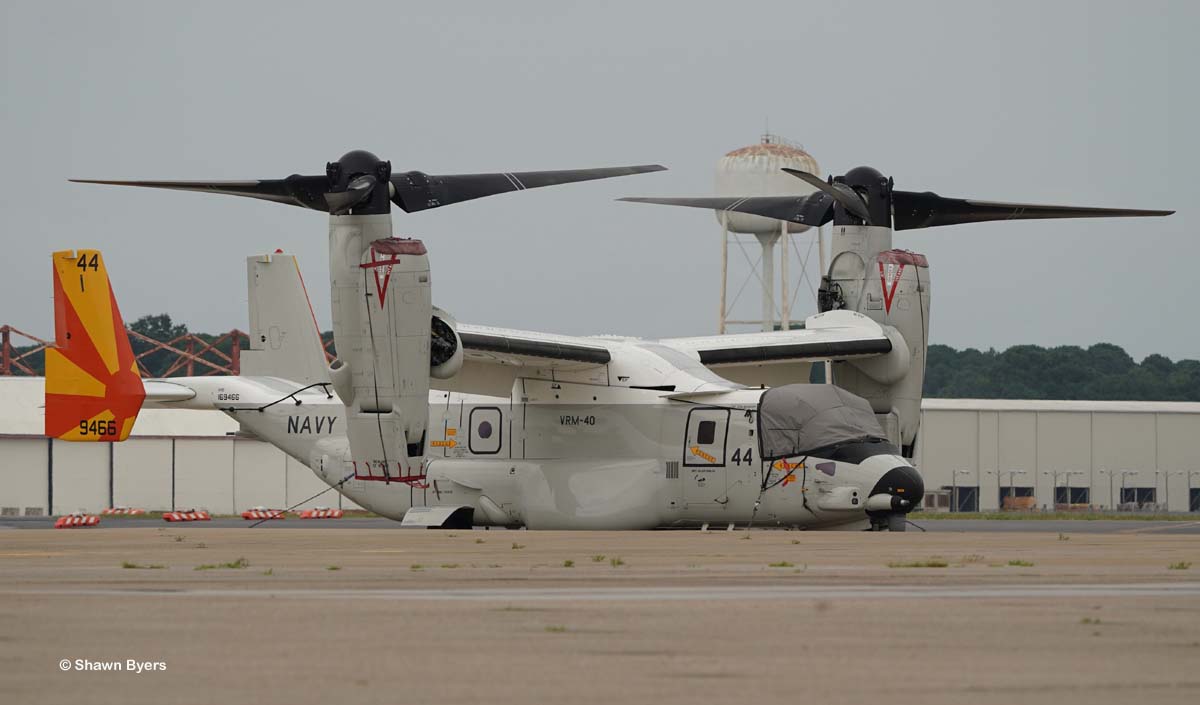
As the Rawhides and the C-2A retire, the new COD is in the form of the CMV-22 Osprey and flown by two new squadrons, VRM-30 “Titans” and VRM-40 “Mighty Bison”. This is definitely the end of an era as these new CODs will not catch a cable or give passengers the thrill of a catapult shot.
This event was open to the public with prior permission and security vetting, and I wish to thank LCDR Alex “PHROG” Vogel for his coordination allowing me to be present for this historic farewell. Fly Navy.