An Interview with Mark Palm
July 20, 2026
Interview by Del Laughery, photos courtesy of Samaritan Aviation and by Del Laughery
The notion of air ambulance is not a new one. As early as World War I, wounded soldiers were evacuated from the battlefield by air to rear areas where far better care was available for the most seriously injured. The process of doing so reduced the mortality rate from 60% to 10% by connecting the injured to hospitals via airborne means that also included the ability to monitor the patient while in the air. By the 1920s, airborne medical care found its way to the civilian sector; most notably, in very remote areas where access by road was either impossible, due to the lack of a road itself and/or impractical due to the great distances, and therefore, long travel time between the hospital and the potential patient.
Over 100 years later, there are still many populations that live quite remotely. Often, these locations are served by rivers, supplemented by foot paths, as the primary means of transporting people and goods. Neither is appropriate as a means for transporting a critically ill person, and as such, these people quite often do without medical care. An example of such a place is New Guinea, the second largest island in the world, and part of a chain of islands known as Melanesia in the southwestern Pacific Ocean.
New Guinea’s land mass is dominated by high, rugged mountains running like a spine, east-west, through the center of the island overlooking dense rain forests that follow the descending terrain down to the coast. To the north of the island is the Pacific Ocean. Looking generally to the east are the Bismark Sea, Coral Sea, and the Solomon Sea, while to the south is the Arafura Sea and the northern shore of Australia, which, at its closest point, is only 93 miles away. Politically speaking, the island exists in two halves. On the east is the nation of Papua, while the western side is known as Western New Guinea and is a part of Indonesia.
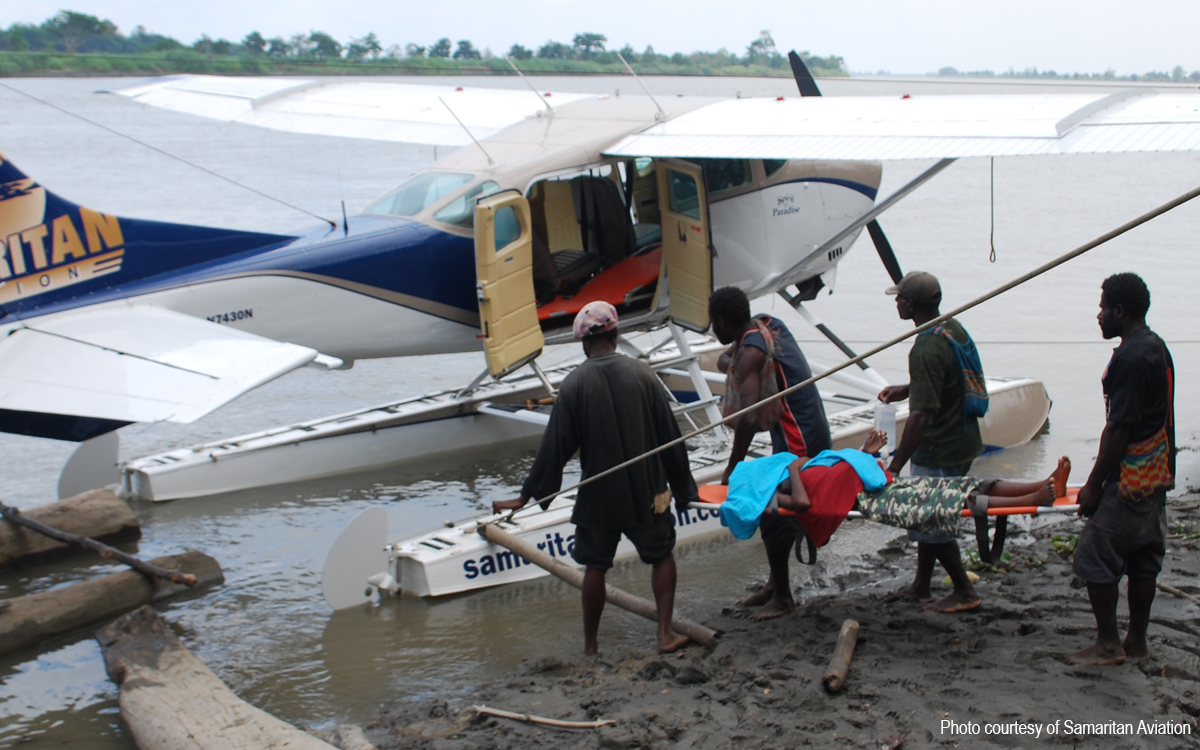
Starting in 2010, Samaritan established themselves in the town of Wewak, on the eastern half of the island’s northern shore in Papua. Its population of near twelve million is one of the least urbanized on the globe with over 86% living in rural areas relying on fishing and traditional agriculture to meet daily subsistence needs. Many must walk long distances over the course of days to seek medical care due to a nearly complete lack of infrastructure in the most isolated areas. That’s where Samaritan Aviation steps in. They serve 500,000 people on the Sepik River, which generally runs east-west, north of the island’s mountain range, using floatplanes to reach remote villages, carry patients to distant medical facilities in times of urgent need, and spread the message of God.
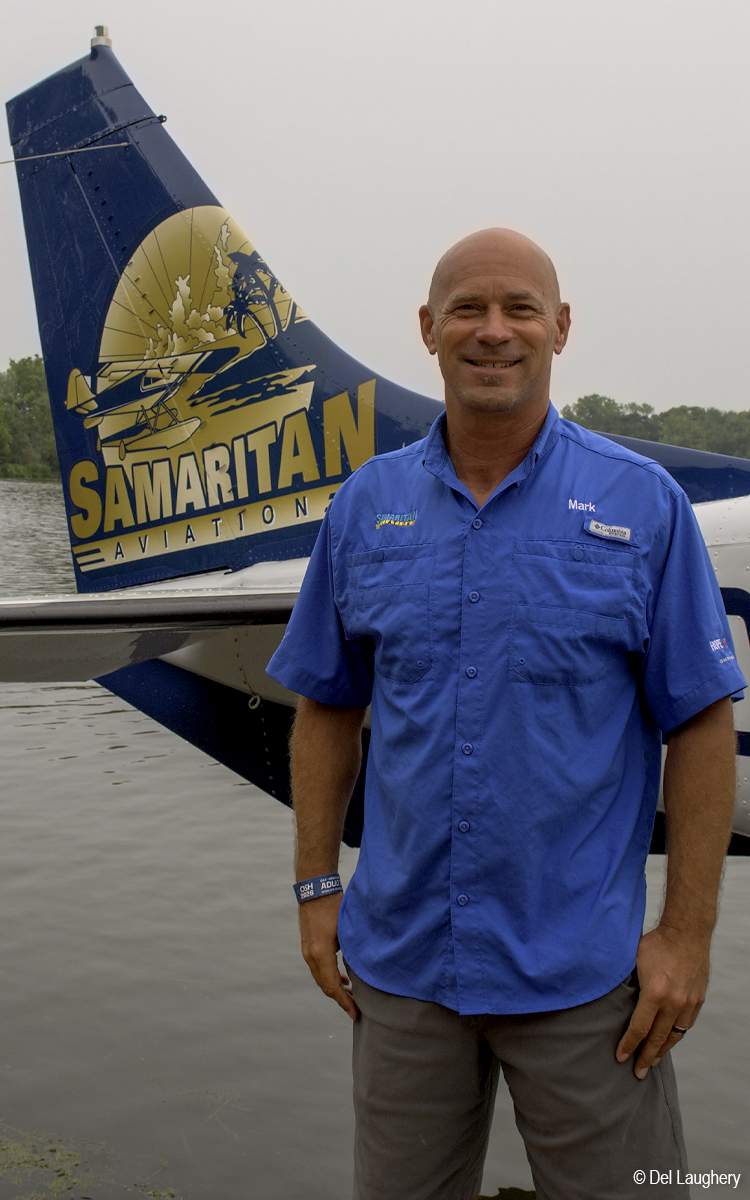
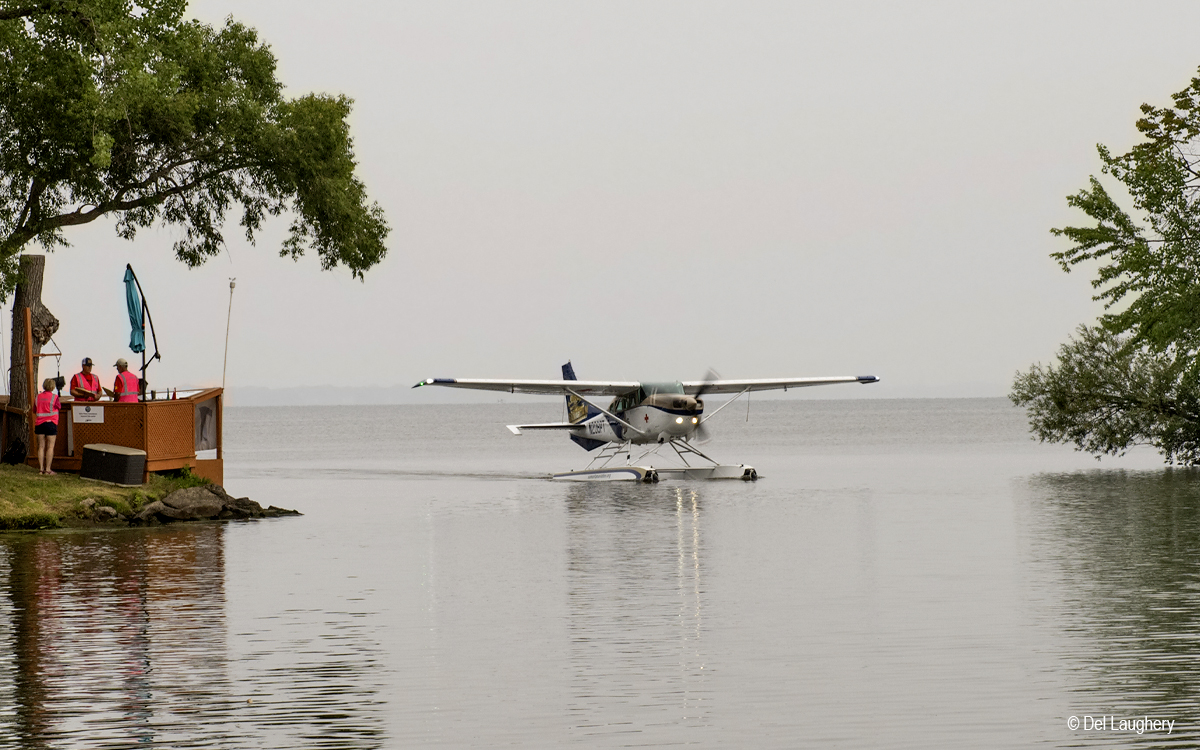
We had a chance to speak with Mark Palm, CEO and co-founder of Samaritan Aviation, on a cloudy Monday morning in July at the seaplane base located southeast of Wittman Regional Airport during this year’s EAA AirVenture in Oshkosh, Wisconsin. His story is quite heartwarming.
PHOTORECON: “So, Mark, thanks for taking the time. Please take me through your background. What got you into aviation? Where did you learn to fly? What were the steps between your first time in an airplane and today?”
PALM: “Yeah, you know, for me, the background is really my grandfather was a World War II pilot. And so, I grew up with my grandfather being in, you know, flying P-51s and DC-4s and hearing those stories. My uncles were both pilots, and then my cousin became a Prowler pilot in the Marine Corps and now flies for Delta. Kind of growing up with that aviation background, that was kind of something from the age of eight years old on. That was my goal was to be a military pilot or a commercial aviator and fly for the airlines.”
“At 13 we moved to California and my dad ran a home. We called it a homeless mission, but really feeding the homeless, feeding the less fortunate in Santa Cruz, California. So as a teenager, I was able to go down there with my parents every week and help people. My dad was a minister, and so obviously, you know, hearing about who God was from a young age, but having the ability to not just talk about how God loves you, but actually do something physically, tangibly, to change a life, give someone food, give them a coat if they’re cold, you know, give them food if they’re hungry. So doing that was a really just great training for me to see the difference you can make in someone’s life.”
“And then, at 16 I had a moment that changed my life. I went to Mexico with my church to build houses for those who didn’t have them; to see another culture for the first time; to see how most of the people live. We’re so blessed in the U.S. and going down there and building houses for people that lived in cardboard shacks and just didn’t have anything, was just perspective changer for me. And while I was down there, I just I had a moment where I just felt God speak to me and what I heard him say is, ‘Mark, I want to use your passion for people and aviation to share my love in a remote part of the world.’ Now, as a 16-year-old, when you hear something that was that clear — it was something that’s never happened since like that — but it was very clear for me. I came back home, and at 19 I found myself in Florida, at school, met a guy there who was born Papua, New Guinea, which is South Pacific, one of the most remote places in the world, and [soon after] the two of us found ourselves there. I was 19 and I’m sitting in a village with these people that don’t have anything: no running water, no electricity; they’re living in bush houses, and hearing stories of people dying, trying to get to the only hospitals.”
PHOTORECON: “Which, I imagine, wasn’t just around a corner.”
PALM: “Yeah, we’re talking, you know, one, to three, to four days away of canoe travel, and just stories of moms dying, getting halfway down to the hospital. Baby’s dying, you know, hours from finally getting to the hospital. And then people giving up when they realized, hey, I got bit by a snake. I’ve got eight hours to live. I’m not even going to try. And so, from that trip, this vision for medical service to these remote communities using seaplanes was something that came from that.”
PHOTORECON: “And if I may, by this time, were you already a licensed pilot?”
PALM: “I wasn’t yet. I was 19 when the vision came for this — for what we do today. And I came home and started flying a couple months later.”
PHOTORECON: “And learning how to fly where?”
PALM: “Learned how to fly in Watsonville, California, up near the Santa Cruz, Monterey area, and then ran out of money.”
PHOTORECON: “There’s a common tale.”
PALM: “Yeah. And moved down to San Diego, where I was going to aircraft mechanic school and finished up my flying at Gillespie Field in San Diego. Finished up my private there. Then I finished A&P school. I got my instrument rating in Palomar Airport, there in Carlsbad, and then finished my commercial a couple years later in Santa Monica, and my float training in Alaska. I’m not your typical, you know, sit down and do the commercial route as far as private to commercial, get your CFI. I didn’t do the CFI. But during all of these — this time where I was training — we started Samaritan Aviation. And so, in 2000, we incorporated as a nonprofit 501(c)(3) and started the journey for where we are today.”“And, you know, it’s hard. I was 25 at the time. I was an avid surfer in Southern California. I looked like an avid surfer and had a little bit longer hair.”
PHOTORECON: “Did most of your sentences start with, ‘Dude?’”
PALM: “Yeah, well, I wasn’t quite the total, like, typical, you know, dude guy, but I definitely looked the part. So, you can imagine, you know, I was with my buddy and the two of us started Samaritan, and you start thinking about how aviation is expensive. So, how are we going raise money? And so, one thing we did was we took a photo in front of someone else’s airplane at Montgomery Field in San Diego, my wife and I, and my buddy and his wife, and we printed up this little card that just said, well, here’s our five-year goal. We’re going to Papua, New Guinea. We had someone design a logo for us that’s still on the airplane – on the tail of the airplane. And we had business cards. That’s it. So, we sent out this card to 300 –”
PHOTORECON: “So, you’re a business in name only, really?”
PALM: “Name only, we were incorporated as a nonprofit, but we have nothing. And so, we did send this card out, with this picture, to 330 people, which, in those days, we didn’t have Facebook or Instagram. So, you had a Rolodex and we’d just sent that out in snail mail. And we kind of just put a steak in the ground and said, this is what we feel our lives are going to be used for: helping people.”
“Probably 80% of the people I talk to in America don’t even know where Papua, New Guinea is. They think it’s South America or Africa or somewhere. They have no idea.”
PHOTORECON: “Well, if you’re at all interested in World War II, you might have bumped into descriptions of battles in the location. But if not, there’d be little reason.”
PALM: “There’s no reason. Nobody realizes the island of New Guinea is the second largest island in the world and that’s just on the half that we work on, which is Papua, New Guinea. There’s twelve million people, 840 languages, 20% of the world’s languages exist just on the half of the island that we serve. And there’s 14,000 mountains running right through the middle of the island. And it’s big. It’s a big place. That 80% of the people live out in the remote communities with no running water, no electricity, and no access to healthcare. So that was when we started Samaritan Aviation, and we just started telling the story to whoever would listen. And we thought we’d be there in five years with a plane, and it took ten years. But we just kept telling the story, and telling the story, and people started believing in the dream, believing in the vision. And over time, we started getting support. We got our first plane. I had to basically refurbish the first plane myself.”
PHOTORECON: “And what was it?”
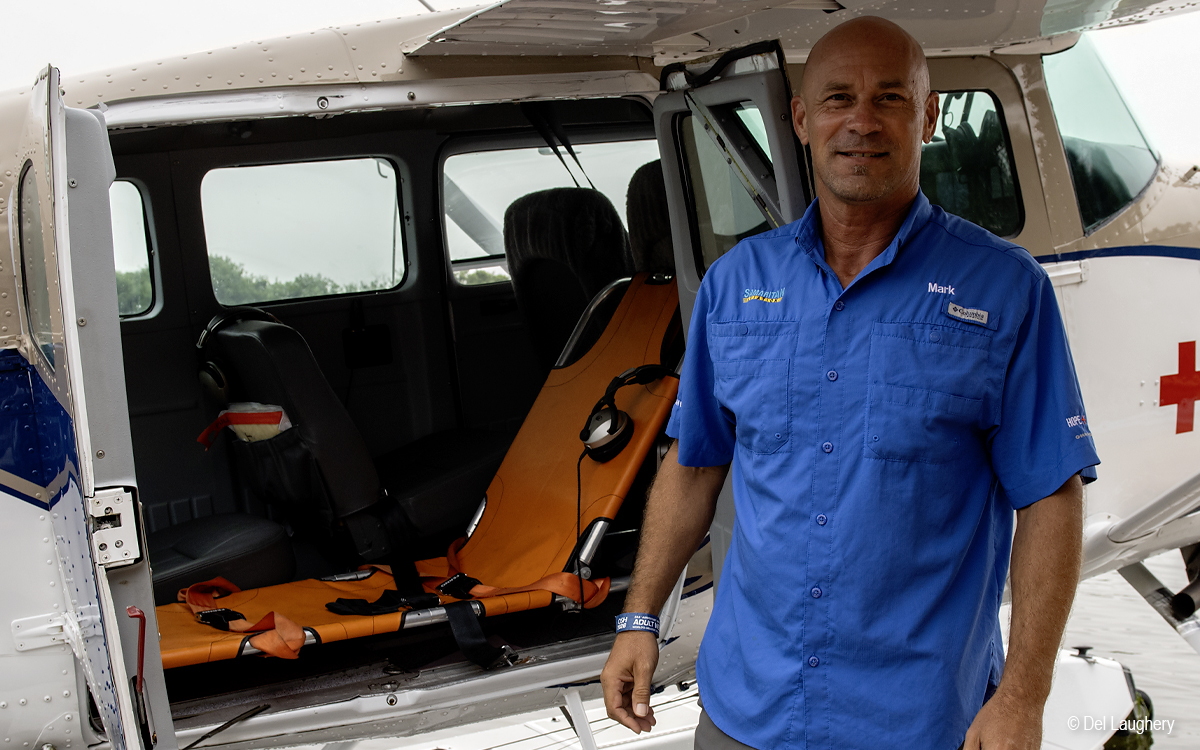
PALM: “It was a [Cessna] 206. Actually, our very first plane was a [Cessna] 182 that we got through our partner, Wings of Hope, in St. Louis. And we were able to do flights to Mexico with doctors and stuff like that, just to be involved.”
“The whole time was New Guinea, so we’re going back and forth to New Guinea developing relationships with the government, the people in the area that we work. Finally got the airplane (the 206) in 2006, but it took another two years to get it refurbished, because this plane had 11,000 hours. It was pretty beat up. We got it out of Hawaii.”
PHOTORECON: “Did it have floats on it already?”
PALM: “It came with floats, although we flew it on wheels first, broke the engine in, and then and then we put floats on it. But the floats were all beat up. It was a project that was non-ending, or so it felt. But finally got the plane on floats. We did a little tour around America, included Oshkosh since 2008. We came out here, I think, 2008 or 2009 was the Flight for Life. Oshkosh really focused on humanitarian aviation. So, we were part of that whole thing. And then in 2009, I packed it up in a 40-foot container in December and got my wife and my four, five, and seven-year-old on an airplane, and we flew to New Guinea.”
PHOTORECON: “Quite a leap.”
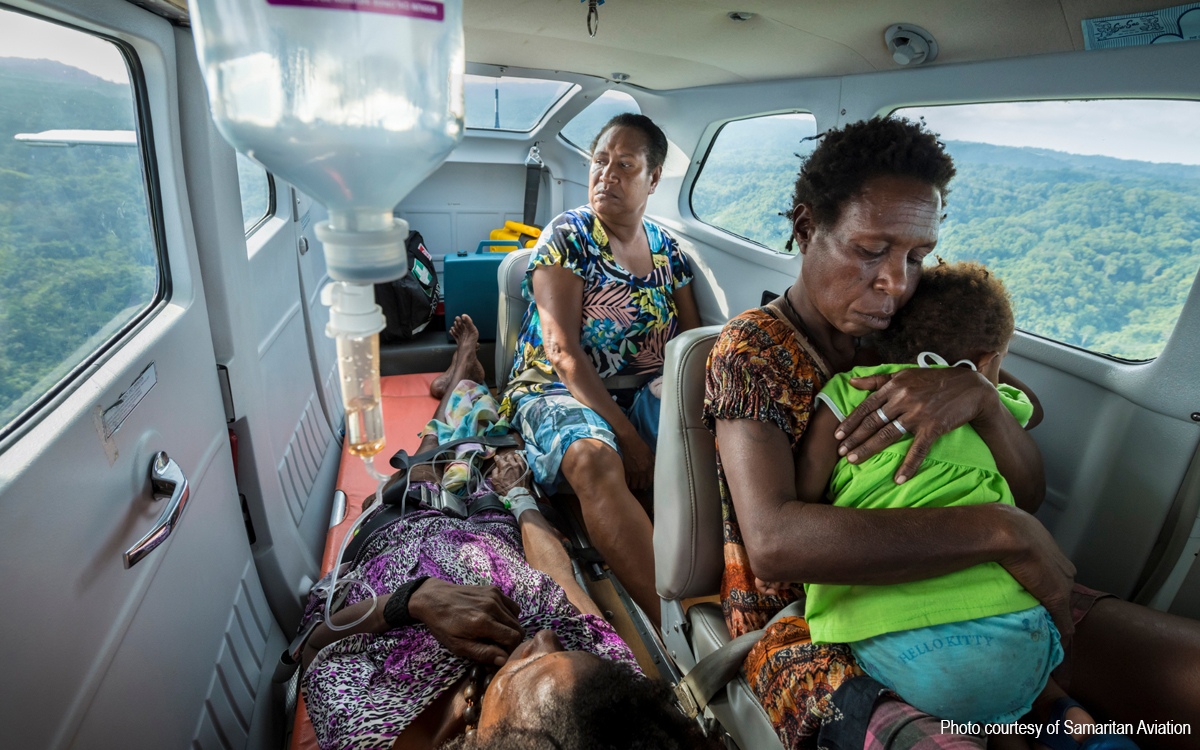
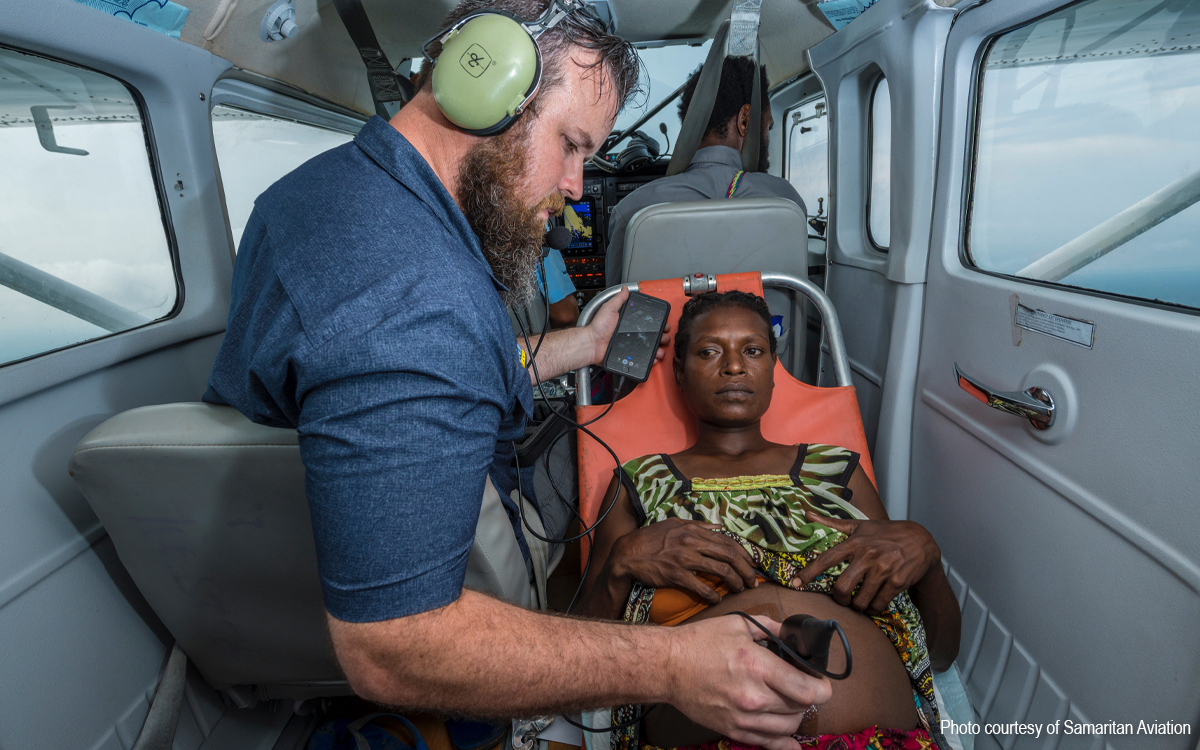
PALM: “Quite a leap. It was a long time from when we thought — I’d never realized I was going to be 34. I got the dream at 19 and I was going to be 34 before I actually flew a plane in Papua, New Guinea. I’ll tell you, getting over there finally, putting the plane back together, with a bag of tools, in the capitol, and then flying it 500 miles into where we worked. Uh, today, one of the places is the East Sepik Province, on the north coast of Papua, New Guinea. We work on a 700-mile river, the size of the Mississippi, with hundreds of thousands of people living out there. And those people are all one, to three, to four, five days, even, some of them away from the only hospital, which is in the town that we live in. And so, that’s what we’ve been doing. We do medevacs seven days a week, bringing in snake bite patients, mothers in labor, 40% of all of our flights are mothers and babies. Tuberculosis is a big deal over there. Malaria is huge. Tribal fighting is still happening where they’re shooting each other with bows and arrows, and machetes are pretty prevalent in their fights, as well as spears, and all the other things. So, a lot of trauma. Probably 18% is trauma. People falling out of trees, you know, any type, all the houses are 10 feet off the ground. So, you slip off the ladder, you know, fall and break your –”
PHOTORECON: And they have to allow for the river to flood seasonally.
PALM: “Yeah, so they’re always up on stilts. Some of the villagers live on the water all year round in some of the lagoons or lakes, and then half the year the water comes up and then it recedes. The Sepik River itself is, I think, it’s the largest freshwater volume of water in the Asian Pacific rim. It’s all fed by rain from the mountains, about 300 to 400 inches a year.”
PHOTORECON: “Gotcha. And that’s where you land, the aircraft is in the river?
PALM: “Yeah. So all of our flights out of Wewak, which is where we’re based, are on a runway. We have a hanger there. We do our maintenance and the hospital is there.”
PHOTORECON: “So, you have a grass or paved runway?”
PALM: “It’s a paved runway there. And so, then once we leave there, it’s all water. So, it’s lakes. It’s rivers. It’s lagoons up on the coast. We do some island work, but not a whole lot. The islands around there are not designed well for the wind. It’s just very rough on the airplane when we land on saltwater on the ocean.”
PHOTORECON: “Well, even a calm ocean is a rough ocean.”
PALM: “Yeah, that’s what I was going to say. There’s no such thing as a calm ocean.”
PHOTORECON: “No, there absolutely is not.”
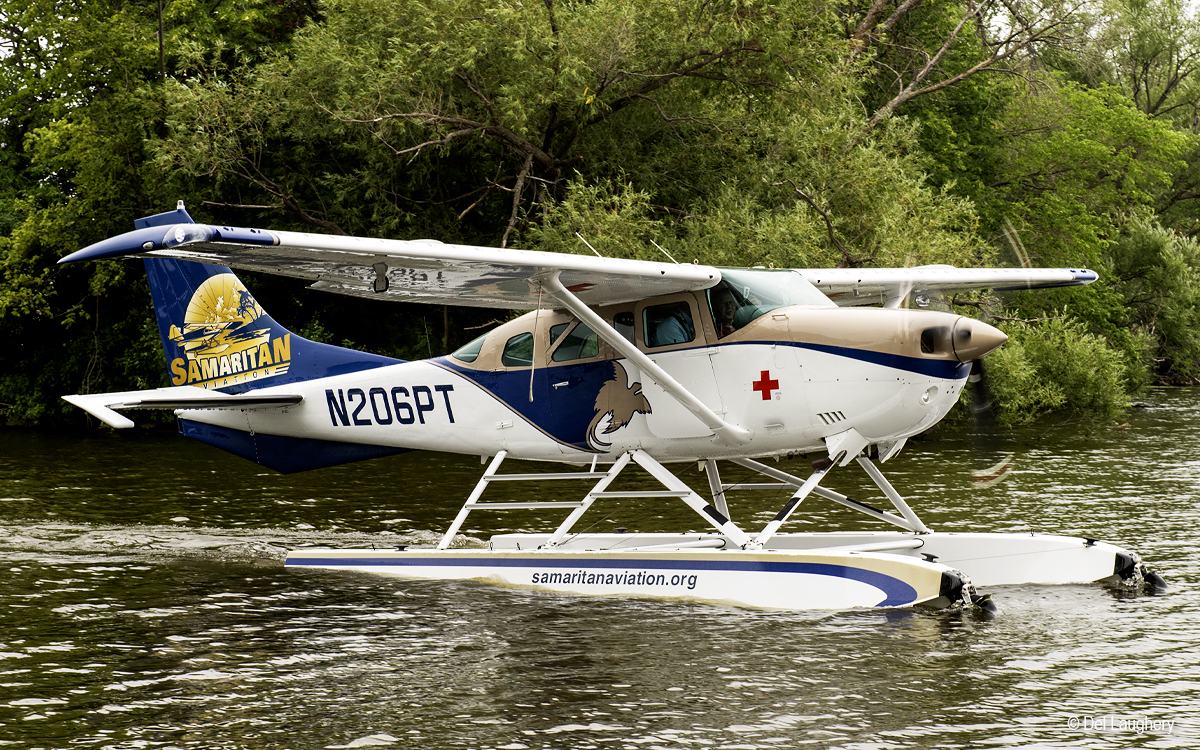
PALM: “It looks calm, so you touchdown, then it just beats the plane up. So, yeah, so we work on a river, this thousand-foot-wide river. I mean, it’ll rise and fall to 20 feet in three or four days. So as a pilot, you know, the things you’re checking out are, it’s different every time. It, not like you go to a runway and you know the winds after a while, you know, the contours, you know what the clouds are doing, and you know what the strip is like. This is like, every day is a new day.”
PHOTORECON: “Are you using the same visual references for your landing and takeoff points, or do they change?”
PALM: “Everything changes. You know, you’ll land one place and three weeks later, there’s a sandbar where you land.”
PHOTORECON: “So, it’s not just the depth of the water, it’s movement of silt underneath.”
PALM: “Movement, or it was flooded so that you didn’t see the sand bar, and then two weeks later it’s exposed. Now there’s a sandbar sticking up.”
PHOTORECON: “What does the aircraft draft? How much aircraft below the waterline when it’s sitting fully fueled and with people in it?”
PALM: “Yeah, you need about three feet. When you hit the power, the tail drops down.”
PHOTORECON: “Is that where it’s deepest? At the start of the takeoff run?”
PALM: “Start of the takeoff, yeah. After that, you know, it’s only, probably, a foot and a half, and then on when you’re on step, it’s very minimal. One of the challenges, too, is the docking. So, on the water we’ve got fishing nets, crocodiles, people paddling their canoes across the river. So, you’re trying to figure all that out from the air and I’ve been the one that landed at all these places for the first time. We have five pilots now on staff, so it’s a different world than it was when it was just me by myself over there for several years, fixing the plane and flying the airplanes. So, figuring out where you can land. Can I land there? The water’s the color of chocolate, so it’s very hard to see more than an inch under the water. There’s a lot of obstacles. And because the river rises and falls, we don’t have docks anywhere. So, you’re basically docking on the river. Well, sometimes your wing is, you know, you step off the float on the ground, and then the water drops three feet, now the wing’s three feet above the ground. And then it drops another two feet. Now the wing’s a foot over the ground. And then it’ll drop 15 feet. Now the bank of the river is, you know, ten feet above your wing. So, it’s always changing. Docking’s probably the most difficult thing we do.”
PHOTORECON: “Who would have thought that just taxing to parking, such as it is, would be the greatest challenge?”
PALM: “It’s the biggest risk, I think. I mean, after you touchdown, obviously, as long as you don’t hit anything on landing. But, yeah, you got the wind, you’ve got the current, you’ve got debris floating down into the plane. Sometimes I’ve seen 50-foot, 100-foot trees with roots sticking up out of the air 25 feet floating down the river.”
PHOTORECON: “So, if I may, when you’re approaching your destination, do you perform a flyover? Do you rely on observations from the ground? I mean, as the as the pilot in command, I’d think you’d want as much information as possible about current conditions on the surface.”
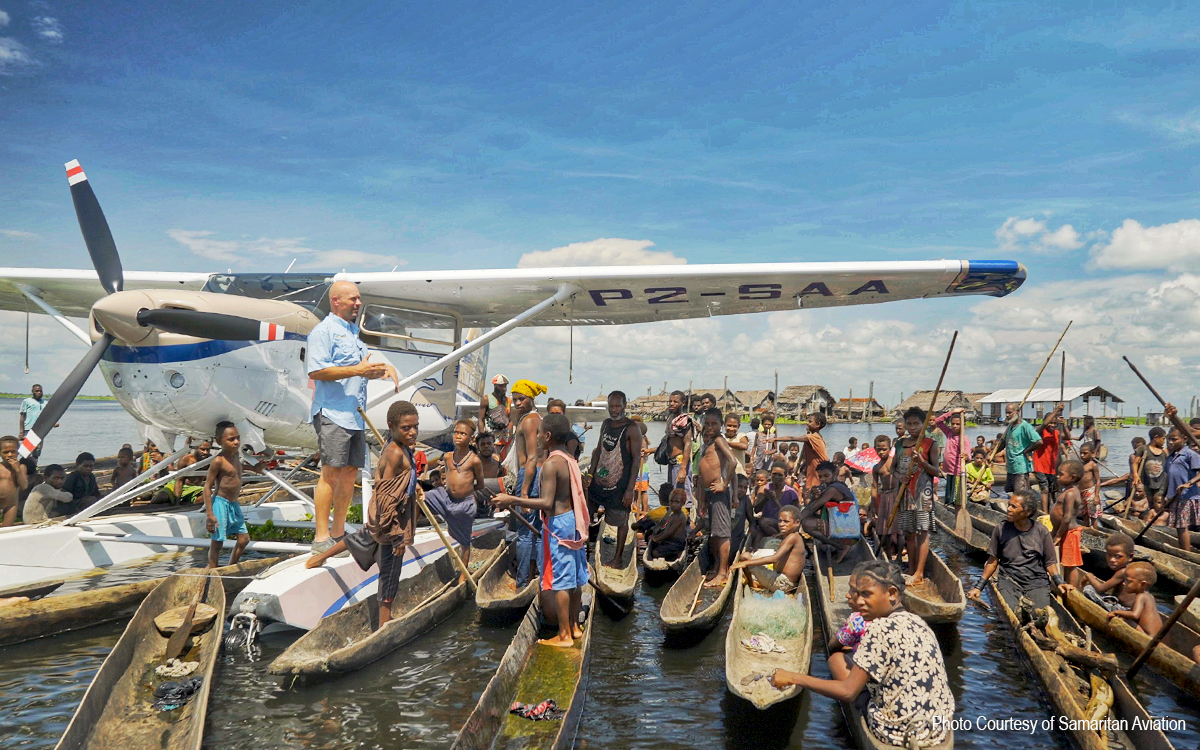
PALM: “We don’t have any contact with people down below. There’s no communication. We serve 120 villages. There’s nobody down there talking to us. And the four things we do is medivac, medicine delivery and disaster relief — we have flooding, we have sickness outbreaks, and we’ll respond with medicine and personnel. Then, the fourth thing we also do is we have, we have our hospital ministry, which is when we bring a patient in. So, imagine you’ve never seen an airplane, you’ve never been to town. You’ve never seen electricity or running water, and this plane lands at your village, it picks you up; and now you’re flying across the mountains, and then now you’re going to see an ocean for the first time. You’re in distress. Someone’s dying. Now you’re in a hospital. And you’re very fearful, you’re scared because you’re seeing all these things for the first time.”
PHOTORECON: “What is normal to us is completely abnormal to them”.
PALM: “Yeah. Completely mind blown. And I can’t even figure out how we would describe it for ourselves if we saw all this stuff for the first time, but your mind’s blown and you’re trying to figure it out. So, we have a team that goes into the hospital and we help feed them. We help clothe them if they need that. We pray with them. So, it’s not just a pick up. It’s a pick up to landing, and then we serve them.”
PHOTORECON: “Okay, so let’s touch base on the Christian side of your effort. Can you characterize for me the state of the faith in New Guinea? Do you find that most people are practicing Christians? Do you find that, in the places that you serve, that the, that the word of the Lord is already there, or are you spreading the word as a portion of the services you provide medically?”
PALM: “Yeah, in New Guinea, it’s a very spirit-based. Animism would be the word you would use for describe the religion. So, it’s nature, it’s creation, and the spirit world. It’s a very fearful thing for them. For example, if someone dies of a heart attack and you can’t understand why they passed away, the immediate reaction is there must have been a curse. Somebody put a curse on them, and we got to find out who it was. And so, there’s an eye-for-an-eye culture, so whenever there’s a tribal fight as well, it never ends until someone does a compensation. ‘Talk, sorry,’ we call it, and they give some pigs and some money, and they stop the fighting, but the fighting could go on for years, which is a big, big challenge. So, the idea of forgiveness really isn’t in the culture. And a gift is an obligation over there as well, culturally. So, if you give something to somebody, you’re fully expecting they’re going to repay you for that at some point. So, the idea of God and the idea of the gospel message is grace. And it’s a free gift. You don’t do anything to deserve it, but it’s something that God has given us through Jesus. And so, we are sharing that message. When we bring him into the hospital, we are sharing that the message of hope for them, the message for eternity, and we’re saying this is who God is, this is who Jesus is. And so, our goal is to share the faith and to share the gospel.”
PHOTORECON: “Talk to me about your staff. It was you and your buddy.”
PALM: “Yeah, his name is Gary Bustin. He’s no longer with the organization. He left around 2012. Our staff now, we have three airplanes in New Guinea. Three float planes that look exactly like the one here at Oshkosh.”
PHOTORECON: “All 206s?”
PALM: “All 206s on amphibious floats. We have done some modifications on the planes. We use Aerocet floats. They’re composite floats. We put a right-hand door in all of our airplanes. We’ve put VGs on them as well on the wings to stabilize the aircraft. We have Robertson STOL kits, where the ailerons droop down with the flaps. We also have a leading-edge cuff. We have Flint tip tanks on there, on the wing extensions that have fuel in them. We also put a 550 engine, so we take the 520 out and we put a 550 in it. “
PHOTORECON: “Normally aspirated?”
PALM: “Normally aspirated. The 550 allows you continuous horsepower for takeoff, and you can just leave it in full throttle, whereas a 520 has a limited amount of time at full power, then you’d pull it back some. We can hang a longer prop on it. The 520 would normally have an 80-inch prop. So, we’re able to put another half foot of prop on there, which gives you that extra torque to pull you out. We do the all interiors. We put an HF radio in there. We’ve also started putting a modification on the aircraft. Historically, on a 206 when the flaps are down, you can’t get the doors open. That’s been the biggest knock on them. So, we have an SDC out of Canada, where we’re able to fold the upper portion of the door down on a hinge, so you can actually open it with the flaps down. All of our planes are ‘77 to ‘81.“
PHOTORECON: “Okay, so they’re not new, but they’re rugged. Cessna makes a great airplane. And you said you had three in New Guinea. Is that the entire fleet?”
PALM: “So, we have three there. We have the one here. This one will be going. So, we have four total. So that is our fleet of float planes.”
PHOTORECON: “Okay. And then getting back to staff. How many staff do you have? You started with two and you’re at what now?”
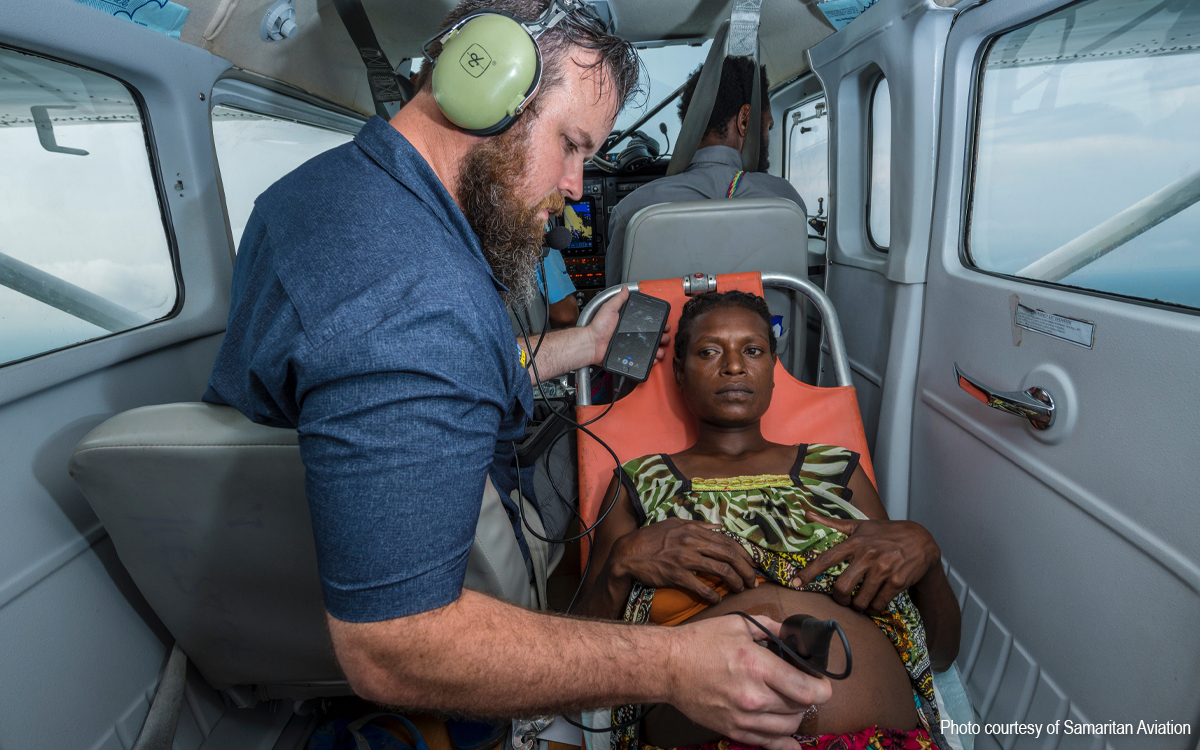
PALM: “We have nine stateside, and eight expat families that work in New Guinea. I say that, they go over there for two years at a time. So, it’s two years there and six months home is kind of the rotation. We have 30 Papua New Guinean staff as well that work for us on the ground over there. And that’s people working on the airplanes to help with maintenance and loading, unloading, all of the stuff we do. That’s people working on the houses. That’s people working in the hospital, on the hospital ministry side that we have. So yeah, started with two.”
PHOTORECON: “Do you have permanent facilities over there as well?”
PALM: “Yeah, we have property over there. We’re actually doing a big build right now. We’ve finished three homes, with three more houses, a triplex, and a training center to build in the next 18 months. So, we have a big construction effort going on. We own a hanger over there now that we work out of. And we lease houses for our staff as well.”
PHOTORECON: “And you mentioned a training center. What do you intend to be training on?”
PALM: “Yeah, our goal there, you know, we’ve been able to bring in nurses historically to train them. One of the things that we found is, you know, the more training and medical equipment that the nurses or community health workers can have at the remote villages, the better they can tell us what’s going on with the patient. So, when we do a triage they can give us the blood pressure, the heartbeat, all of those things.”
PHOTORECON: “Critical data that you wouldn’t have otherwise as you land and pick up this person. I imagine you generally know the nature of the issue but none of the specifics.”
PALM: “Correct. Yep. So, we want to know as much as we can to know if it is a true emergency. Some of the times someone faints, for example, and just falls over. Sometimes they just need water, right? But if you see that happen in your village, you’re going to think it’s, they’re dying. So, there’s a lot of that. We found that a lot of those people aren’t getting any training. So, say you got your nursing license 15 years ago. You’ve had zero skills training up to that point. We’ve gone, picked all the nurses up, brought them in, done training on baby deliveries and things to look for on that. And so, the goal is just to try to give them as much skill as we can, to upskill them, and then we also give them blood pressure cuffs and stethoscopes and oximeters, and things like that, so they can kind of give us more data when we call them.”
PHOTORECON: “Talk to me about the financial side. How do you fund this wonderful effort?”
PALM: “Yeah, one of the things that sets us apart, probably from any other organization that I’m aware of, is we don’t charge for our flights. And that’s been the model from day one. These people don’t have any money. They’re literally living in a place where finding food is a struggle. There’s no money in the villages. There’s no, in this area, there’s no gold or oil. There’s nothing helping them, resource wise, to afford anything. We always felt like we didn’t want to wait for someone to pay us to go pick them up, so we have just always done a free service there. Twenty percent of our operations costs come from the Papua, New Guinean government. They give us grants. So that’s a big help. And then 80% we raise here in the states.”
PHOTORECON: “So, literally, you have quite a fundraising effort going on, I imagine, all the time.”
PALM: “All the time. Like we have a capital campaign going on right now. That’s a $3.5 million raise, and we’re close to $2 million on that.”
PHOTORECON: “How would someone help you with that campaign?”
PALM: “Yes, so they can go on our website, samaritanaviation.org There’s a whole section on there about our capital campaign. We have operations costs. We’re about $1.7 million a year in operations.”
PHOTORECON: “So that’s just a break even on the items that keeps the airplanes flying, right?”
PALM: “Yeah, so it’s a lot. So that’s a lot of what I do now. I’m in New Guinea probably three months a year flying and working with a team, and then I’m over here eight, nine months a year raising money.”
PHOTORECON: “So, when it was just you and your buddy, let’s say by the time you got an airplane, you were the ad man; you were the finance man; you were the pilot man; and you were the maintenance man. You were whatever man was necessary in the moment.”
PALM: “Exactly. So, when I moved over there, he stayed back and I went over there with my family. So, I was everything on that side. And we just did it. My wife’s amazing and we were just a team, which I think is awesome. And so, for me, it’s like aviation. You think about an airplane, what it can do for someone. You know, it could be a fun toy on the weekend. It can be, get you from here to there, if you’re a business person. But a lot of aviation, especially here at Oshkosh, is fun aviation. It’s not about helping others necessarily. It’s about, we’re going have a good time. And so to see an airplane that can take — and in the new areas that we’re expanding to the south side of the island across the mountains – over there, it’s even more. I mean, on one side we can turn a three-day trip into an hour flight. On the other side, we can turn a two-day trip into a ten-minute flight. The airplanes have the ability to change a life, change the community.”
PHOTORECON: “Well, it’s literally is the difference between living and dying.”
PALM: “It’s hope. It’s access. The only hope they have. And I think that for us, that’s awesome. And then for what I was telling you, my wife is part of it, and we’re a team over there, and our kids are part of it. They’re all grown. They’re all in college now, but our families, that’s what they’re there for. They’re not just there for a guy to go fly an airplane. It’s about family’s feeling this call to use their life to serve people.”
PHOTORECON: “So, there you are in in New Guinea. How do you receive word? What’s the method by which you get the call for service?”
PALM: “So, in the old days, HF radio was very prevalent, like a ham radio. There’d be high frequency radios in the villages. Now they’ve dropped cell phone towers along the river. And so, now people sometimes have to run 30 minutes and climb a coconut tree call us.”
PHOTORECON: “That almost sounds like a joke, but I’m guessing it’s reality.”
PALM: “No, it’s true. Other times they have to climb a mountain to get a hold of us. Sometimes they’ll get in a boat, go down to a spot on the river where they know there’s cell phone reception, and then they’ll be able to call us that way.”
PHOTORECON: “Is there an event that you were involved in, a rescue or some service that you provided, that particularly stands out as defining what you do? Or, if you had to brag about something, what story would you tell?”
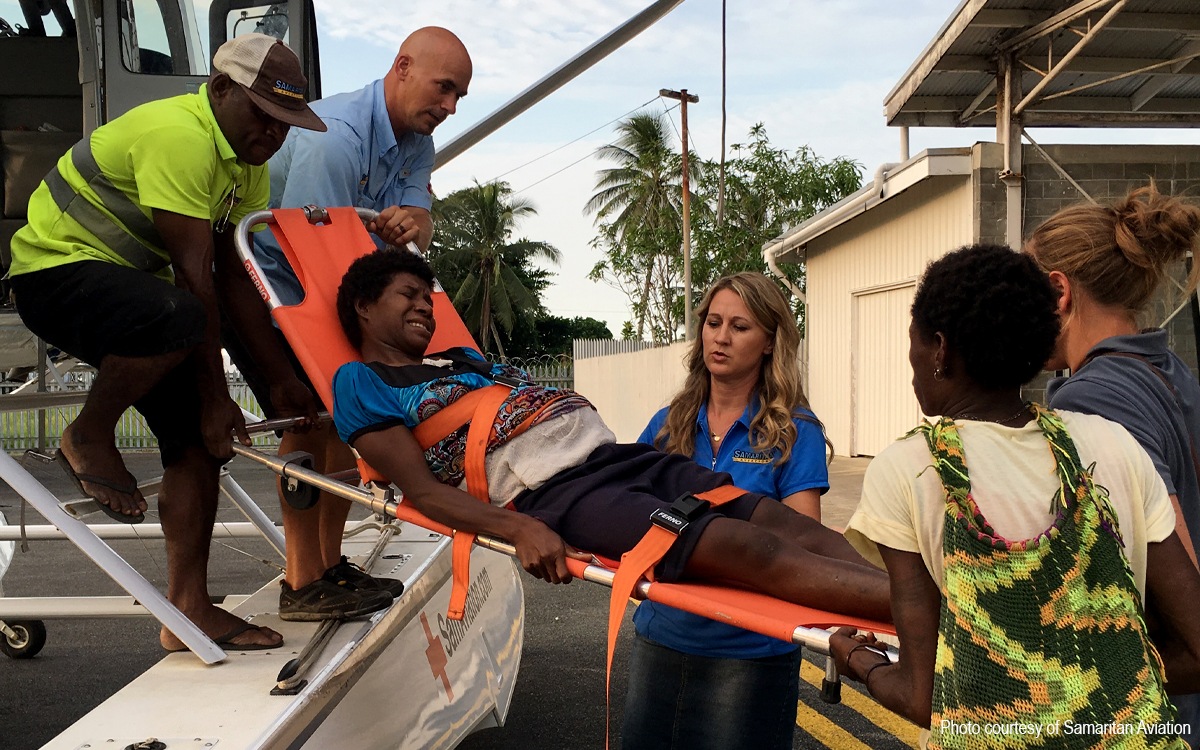
PALM: “Well, you know, I was just over there a couple weeks ago and I was there 22 days in the country. I flew 22 times. I brought in 20 patients. And that’s me. I’m one of the pilots that was there at the time. And so the need is great. And I can think of a couple just from that trip, you know?”
“There was this one lady. We got a call, one afternoon, from a very remote village. She’d been in labor for three days. They didn’t hear the heartbeat anymore, so they assumed the baby’s gone. The mom was very sick, obviously, from being in labor for that long. We got out there as quick as we could and loaded her in the plane. And you could tell she’s in labor. I mean, it was every six minutes at that point because we were timing it. As we’re flying back, you know, we’ve got this 30-minute flight. The float plane is very slow. It’s 120 miles an hour, even though for her it would have been a couple days, 30 minutes feels like an eternity when you’re flying and the patient is a foot away from you. There’s nothing I could do to relieve her issues. And I heard the noise of this lady in active labor. And I’m just trying to get there before the baby, you know, comes out. And so, we landed. We had an ambulance at the airport. So, we rushed her in right straight to the labor ward at the hospital. And it was just amazing. You know, later that night, early in the morning, she ended up giving birth to a baby that was alive. And, you know, because of us, because of what we did. And to go back in the next day and see the baby, see the mom. I could tell you hundreds of stories like that.”
PHOTORECON: “How would you describe in a word, or a short phrase, how you feel on the far side of helping someone?”
PALM: “You know, there’s a contentment there. I don’t even know if that’s it. It’s a special feeling that you can’t really put into words. It’s priceless. But it’s also with the realization that it’s because of the team behind us. We’re the ones doing the work, but they’re the ones allowing us to do the work, and being that thrust behind the engine, you could say. The power behind it is the people here that care about people on the other side of the world who say, I want to give them of my resources. I want to give them my time, talents, treasure, whatever that is, to make a difference. We are so grateful for every one of those people.”
(End of interview.)
It costs Samaritan Aviation about $680 for a 50-gallon barrel of aviation fuel delivered from Australia. Expenses related to aircraft maintenance, facilities, medical supplies, and staff are always on the organization’s collective radar. Donations, large and small, are gratefully accepted and critical to the future of the services they provide. There are many options regarding donations. Monthly donors, known as the Compassion Crew, allow the organization to predict future budgets. Single, one-time, donors are also key to success. So, hit this link: samaritanaviation.org There’s a lot of information about the group’s history, mission, and accomplishments, as well as opportunities to include this deserving organization in your annual giving.