

Airborne Warning and Control Aircraft Scrapbook

A U. S. Navy E-2D Advanced Hawkeye carrier-based AWACS
Story and photos by Ken Kula
Airborne early warning and control systems can trace their origins to the World War II era. Ground-based radars became operational by the early 1940s but were limited by their inherent “line-of-sight” short range, as well as electrical energy restrictions. During the latter stages of the war, the U. S. Navy used Grumman TBM-3Ws to search for enemy aircraft over wide areas of oceans, using early MIT/General Electric radar designs. Soon, larger PB-1W (a Naval version of Boeing’s B-17G model) aircraft were fitted with the same radar. Over 50 aircraft became early warning versions before the conflict ended. Over the years, the acronym of an “Airborne Warning and Control System” (AWACS) became common to use when talking about airborne early warning radar aircraft.

Lockheed EC-121T
By the late 1940s, Lockheed fitted larger versions of its Constellation 4-engined transport with airborne warning radar, building more than 250 U. S. Navy WV-1 and -2s and several versions of U. S. Air Force’s EC-121 Warning Stars. These were instrumental for the North American Air Defense Command (NORAD) sectors which insured the security of offshore airspace during the early Cold War years. Many Warning Stars served through the Vietnam War years before being replaced.

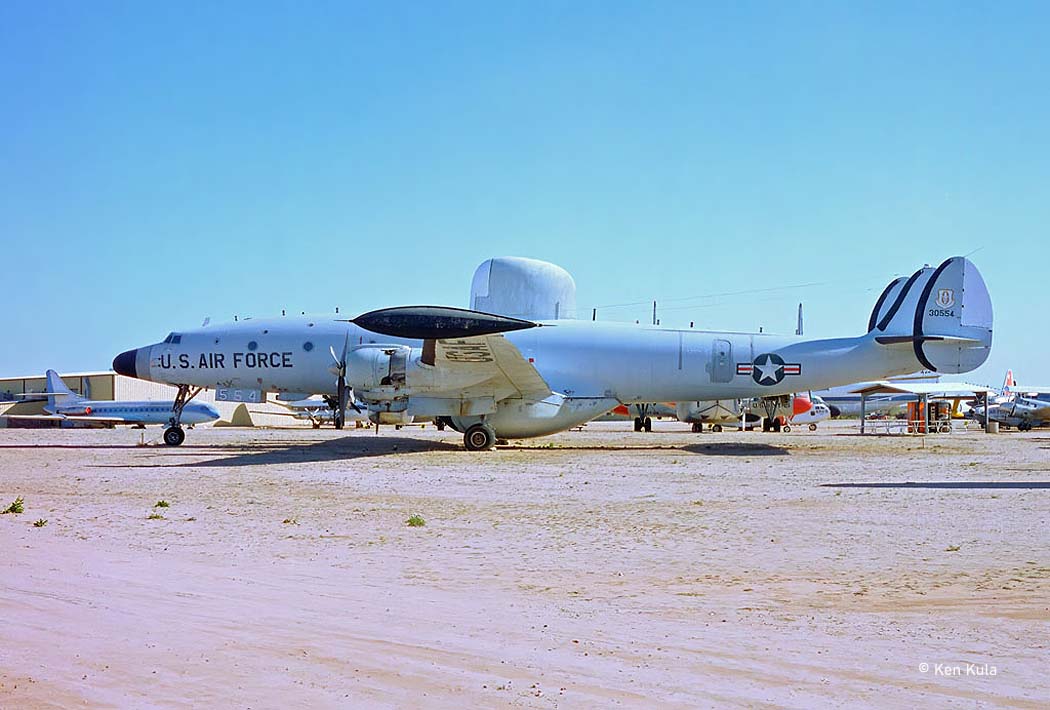


Lockheed WV/EC-121 Warning Stars

U. S. Navy Grumman E-1B Tracer
The U. S. Navy also improved upon their early design and used a modified Grumman S-2 Tracker with a bulging radar cover overhead the aircraft’s fuselage to house its tracking system. The new piston-engined E-1B Tracer operated easily from aircraft carriers, allowing to task-force radar coverage over the horizon from the ships.
The Soviet Union began using their new TU-126 turboprop AWACS during the late 1950s. These remained in service through the mid-1980s.

Fairey Gannett

Avro Shackleton AEW.2
The United Kingdom began using the radar-equipped Fairey Gannet AEW.3 turboprop during the 1950s, and when the type was retired, the radar equipped Avro Shackleton MR.2 (a later development of the World War II Lancaster) took over these duties. An attempt to modify Hawker Siddeley Nimrod jet (a modified Comet airliner design) did not pan out and the Shackleton soldiered on through the mid-1980s.
By the late 1980s, a space-based solution of airborne early warning was a main focus. However, land-based solutions continued to be developed and fielded.
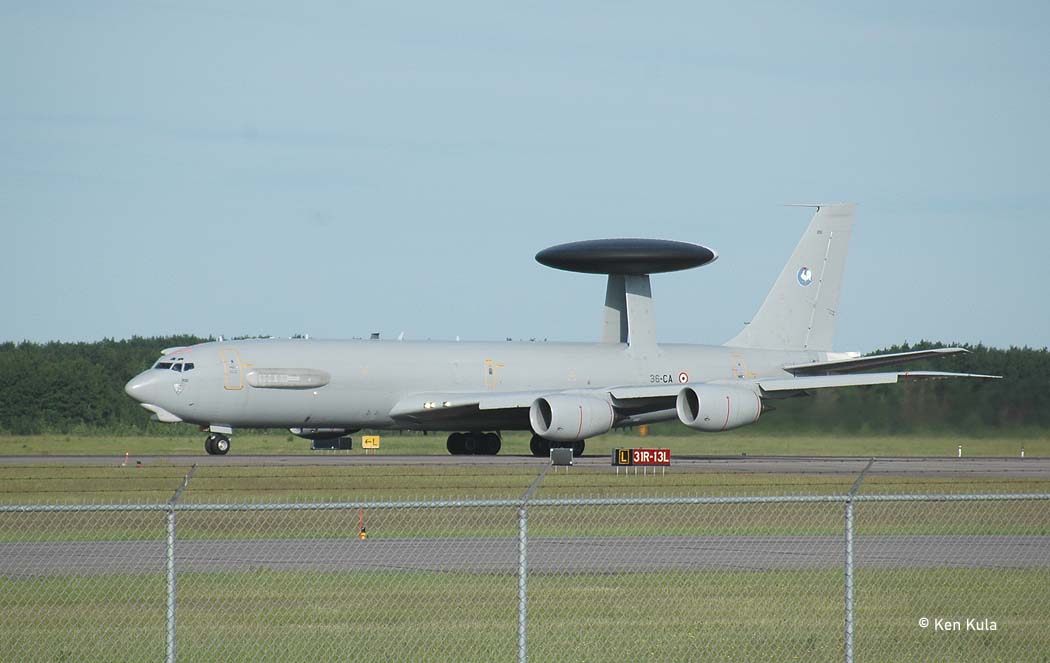
French Air Force E-3F at CFB Cold Lake during a Maple Flag exercise

Royal Air Force E-3D

USAF E-3A/G
By the 1980s, Boeing and the U. S. Air Force designed the E-3A Sentry, a B-707/C-137 platform with a “rotodome” radar. Subsequent upgrades to the radar and software were made to improve radar detection of both over water and over land targets… most systems up until this design were mainly concerned with the over water detection of aircraft first begun during World War II. More than 3 decades after the type’s first introduction, it still serves as the E-3G Sentry although a move is afoot to replace these with Boeing E-7 twin-jets. France, Saudi Arabia, NATO and the United Kingdom have also adopted the E-3 for their use.


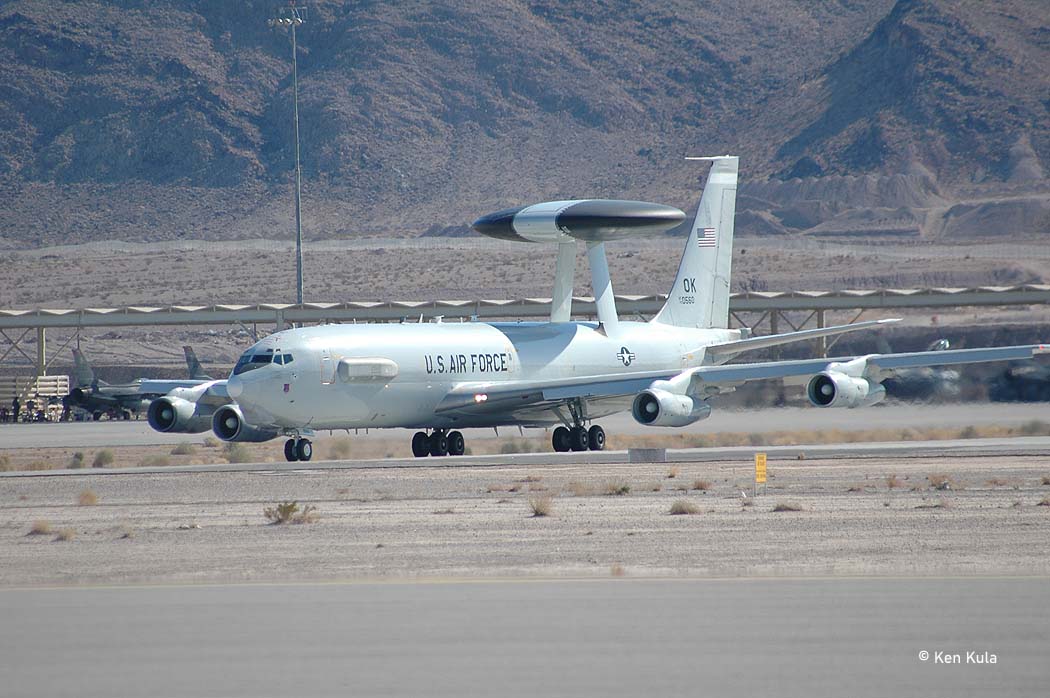


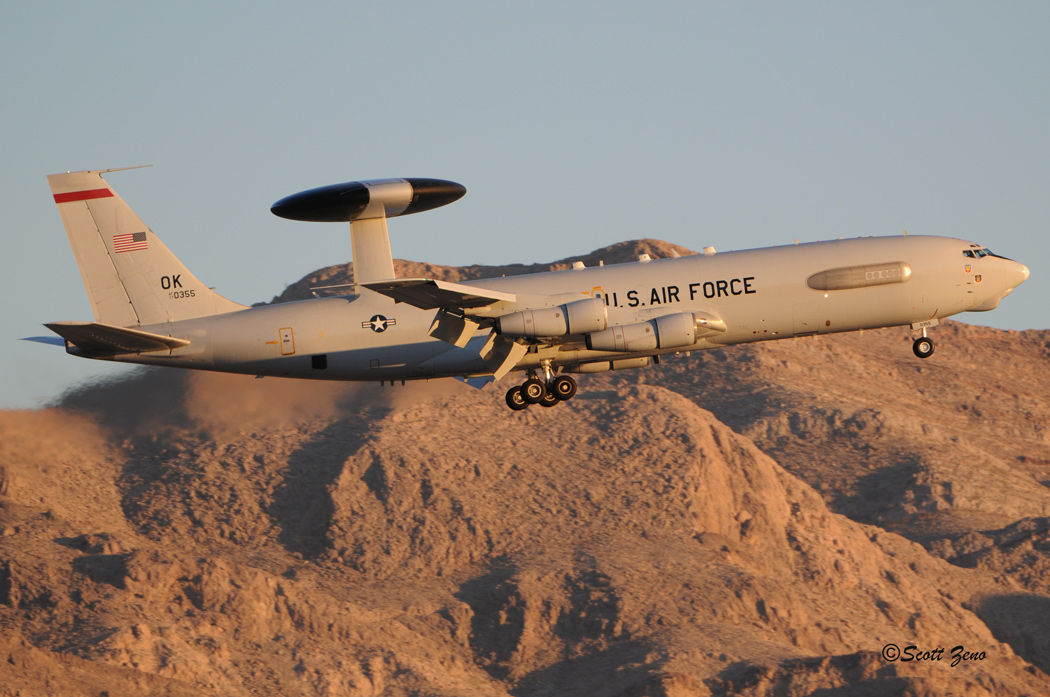


Boeing E-3A/C/G Sentry AWACS

Grumman/U. S. Navy E-2D Advanced Hawkeye
The U. S. Navy replaced their E-1B Tracers with the turboprop E-2 Hawkeye AWACS. The carrier-borne aircraft has been modified into today’s E-2D Advanced Hawkeye. Since the type’s introduction, at least six other countries operate the Hawkeye.


Grumman E-2 Hawkeye
The Soviet Union, and then Russia has modified several IL-76 transports into Beriev A-50 AWACS aircraft. A source also notes that North Korea has a modified version of the IL-76 flying. China has produced the similar KJ-2000.

JASDF E-767J AWACS
Japan operates four Boeing E-767J AWACS, based upon a B-767 airliner fuselage.
IAI and Elta Systems have produced the EL/W-2085 variant of the Gulfstream G-550 jet equipped with airborne radar. Previously, the IDF used the Phalcon AWACS system on a modified B-707 fuselage.
The Indian Air Force operates the Netra AEW&CS version of the Embraer 145 jet. A source notes and an A-320 version may be introduced. The Brazilian Air Force uses the Embraer R-99 in a similar role – another EMB-145 fuselage fitted with specialized radar.

Saab S100D Argus
The Swedish Air Force developed the S 100D Argus AWACS from the Saab 340 twin turboprop. Mexico and Greece utilize the aircraft version as well.


Swedish Air Force S-100D Argus AWACS

Lockheed EC-130V, originally developed for the U. S. Coast Guard
Several Lockheed designs have been modified into AWACS projects but have not seen widespread use. Lockheed was to produce 8 C-130 AWACS variants for the U. S. Coast Guard, but after the first airframe was modified, the program was cancelled. The Coast Guard operated several Grumman E-2 Hawkeyes until one crashed, and the Branch soon disbanded their AWACS operational mission.

U. S. Customs and Border Protection EP-3B AEWs
An AWACS version of the Lockheed P-3B Orion patrol aircraft was also begun. The U. S. Customs and Border Protection operated up to 8 of the aircraft as tools against drug smuggling. They are often teamed with “slick” P-3s used for interdiction.


Lockheed P-3B AEWs

RAAF E-7 Wedgetail
Boeing has produced another, smaller sized AWACS aircraft, known as the E-7. Australia ordered it first, and named it the E-7 Wedgetail, after an indigenous bird. Turkey, South Korea and Great Britain have several ordered, and a battle in the U. S. has a larger order being discussed.


Boeing E-7s of Australia and Turkey

Sea King ASaC7
Helicopters have also been modified as AWACS aircraft., The Royal Navy utilized the Westland (Sikorsky SH-3) Sea King ASaC7 during the Falklands War, and Spain used several airframes too.
The Italian Navy operates several Agusta Westland EH-101AEW versions of the 3-engined turbine helicopter.
The Russian Navy and India operate several versions of the Ka-31 twin-rotored helicopter fitted with AWACS equipment too.
As one can see, since World War II, airborne warning and control airframes have developed into a much-utilized asset for nations across around the world!


