Newcastle Williamtown Airshow 2023

Story and photos by David Campion
The weekend of November 18th and 19th saw the return of the RAAF airshow to the Newcastle region. The program was split over the weekend, with a flying day on Saturday at Nobby’s Beach in Newcastle and an open day at RAAF Williamtown on Sunday.

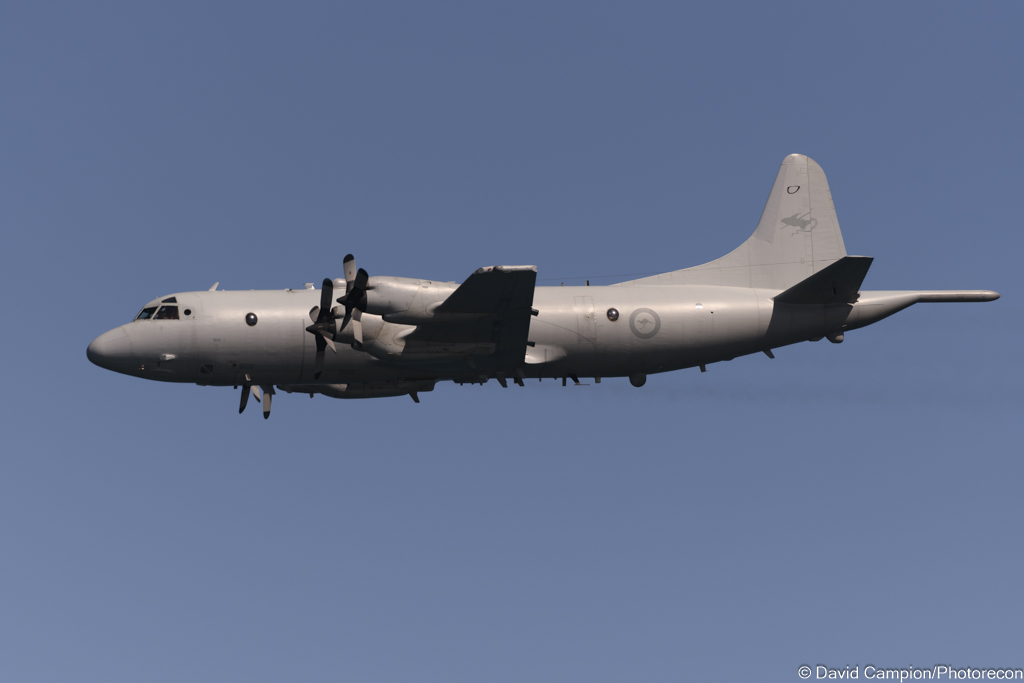
The last RAAF airshow was held in 2010 at RAAF Williamtown, marking the final public display of the F-111C and the introduction of the F/A-18F Superhornet to the Australian public. The RAAF has undergone significant changes since 2010 with the introduction of the PC-21, E/A-18G, KC-30A, C-27 Spartan, P-8/A Poseidon, completion of the E-7A Wedgetail fleet, F-35A, and the retirement of the classic hornet. To quote my brother, a former fast jet pilot, “Most of what I flew is now on sticks in a museum.” NWAS 23 marked the last public display of the AP-3C Orion, with the last two operational aircraft (A9-657 and A9-660) flying their final flights on the 5th of December 2023.

The flying display was split into morning and afternoon sessions with a slight variation in the afternoon program to include Matt Hall, the current Red Bull Air Race world champion, in his MXS-R, capable of 14G aerobatics.


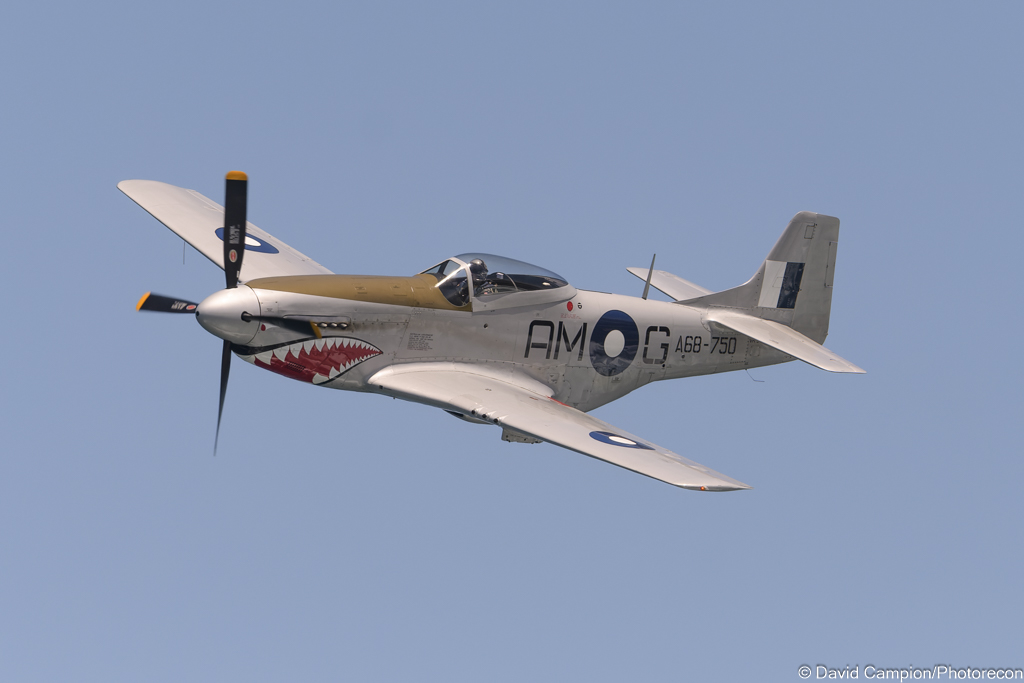
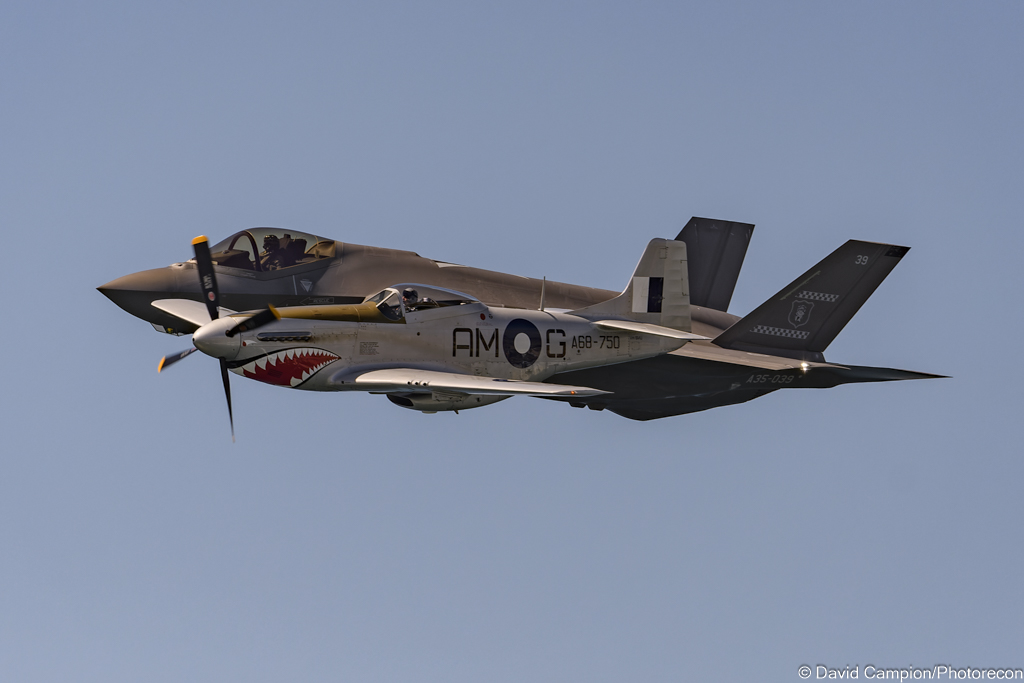
The program had a mixture of warbirds from the No.100 Squadron RAAF Heritage Squadron and current military aircraft. The 100 Squadron display included a three-ship display of historic trainers (Wirraway, Winjeel, CT4A). Solo displays by the English Electric Canberra Bomber, Lockheed Hudson Bomber (Only aircraft of this type flying in the world), Supermarine Spitfire Mk. XVI and P51-D Mustang. The warbird display concluded with a heritage flight featuring the F-35A and Mustang.

At the completion of the heritage flight the F-35A commence its solo demonstration. The pilot for the display was Flt Lt Ross “Bunga” Bowman, an instructor pilot from No.2 OCU. The display demonstrated the aerobatic capabilities of the fifth-generation fighter with plenty of high manoeuvres, afterburners, and flares. The C-27 Spartan was next to demonstrate its capability from an open cargo ramp and paratroop doors to an extensive flare drop lasting the entire display line.

Next in the lineup was a four-ship display of PC-21 flown by the Roulettes 1-4, demonstrating precision aerobatics and formation flying.

The E-7A Wedgetail demonstrated a flare drop along the display line. The Wedgetail has been a successful aircraft for the RAAF, setting the record for the longest airborne mission of an Early Warning Aircraft of 17.1 hours during Operation Okra. The radar array is affectionately dubbed “the surfboard” by its crew. Recently, the USAF and NATO have committed to purchasing the aircraft in addition to the current purchase order by the Royal Air Force.


The crowd was treated to a solo display by Roulette 5 in the PC-21. No. 11 Squadron P-8A Poseidon demonstrated the deployment of a sonar buoy, marine flare drop, open torpedo bay, and a low-level high-speed pass. The KC-30A flew a single pass of the beach before returning to RAAF Williamtown. The AC-P3 Orion demonstrated its ability to increase the loitering time by flying with three engines and rounded out its last display with a low-level pass of the beach.

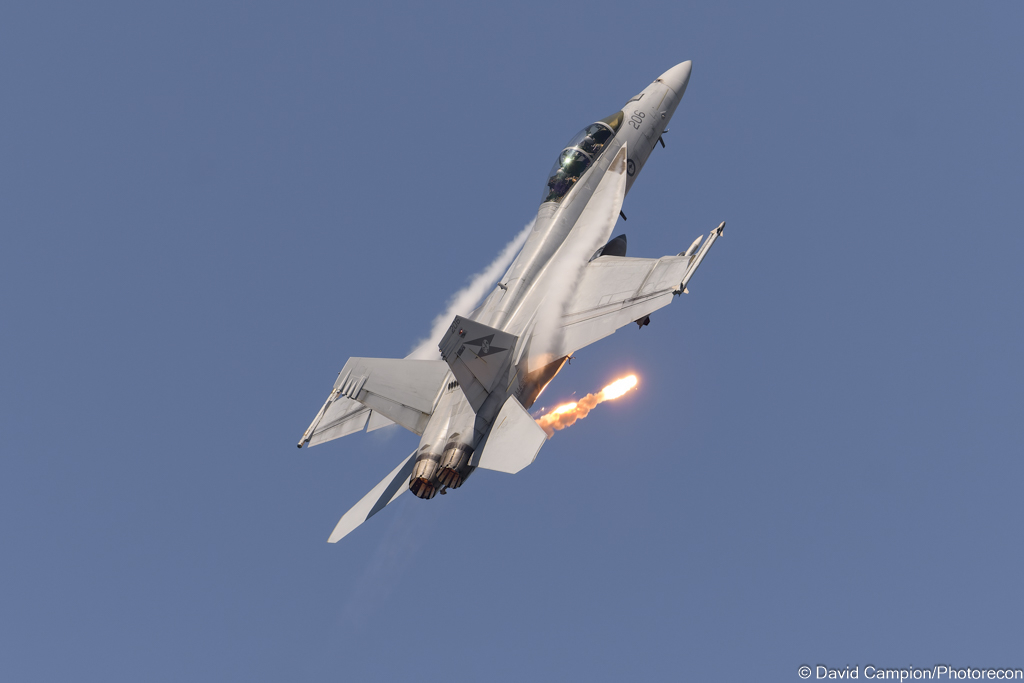
Wrapping up the flying program was No.82 Wing flying a F/A-18F Superhornet from No.1 Squadron and E/A-18G Growler from No. 6 Squadron. The display awed the attending crowd, commencing with a two-ship formation fly-past leading into the F/A-18F handling display with high g, afterburners, and flares. The airshow concluded with No.82 Wing performing a two-ship flypast to thank the crowd for attending with the Growler bursting flares along the flight line.
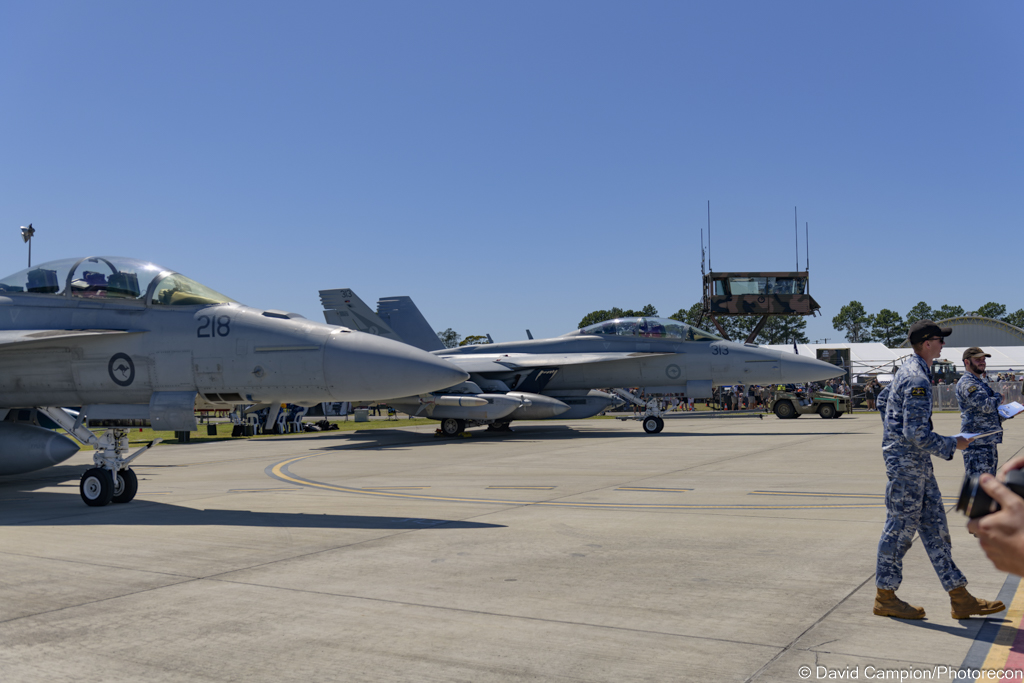
The static open day allowed the public to get an up-close look at the aircraft and chat with ADF personnel. The open day provided the opportunity to look through the KC-30A, C-27 Spartan, and the EC-135 of the Royal Australian Navy. The static displays included all the aircraft participating in the flying display, with the addition of the Hawk 127 and Air Force cadets. Vehicle displays included local law enforcement, RAAF ambulances, Firefighting equipment, EOD display, and RAAF security display. An extensive science and technology hall held numerous VR simulation pits, allowing the public to fly helicopters and fixed-wing aircraft. The English Electric Canberra bomber was perhaps the most interesting Warbird on display. It allowed you to look inside the open cockpit door to see how cramped it was with limited visibility and the navigators’ position, forcing them to lie prone near the pilot’s feet. All the static warbird displays included a brief service history of each aircraft and how it came to be acquired and restored by No. 100 Squadron.
A military working dog display was a crowd highlight. The military working dogs were put through their paces, demonstrating their ability to listen to commands only from their handler with crowd-encouraged distraction. Various takedowns were shown, from a single-person standoff to a pitched gun battle with the military working dog working as part of the section to disable a threat by jumping through a car window and incapacitating the attacker.

This was the first time I had attended an overwater airshow and the first time an overwater airshow had taken place in New South Wales. From a spectator perspective, there was plenty of room for viewing along the beach with no issues with space. The use of flares wowed the crowd and made for an excellent display. From a photography perspective, the program offered a practice during the morning, allowing you to dial in your photography with the better afternoon light.

The coastal location allowed plenty of vapour during high G and high-speed manoeuvres to add a little extra for photographers, and the improving light as the day went on was a massive positive for the location. Having the open day on Sunday avoided the issue of being torn between the flying program and static displays. The RAAF is onto a winner with this format. I suspect that there will be more over-water displays held in the future, replicating the two-day format. The Australian public turned out in large numbers for both days.